Cleaning products do more than remove dirt and stains. Their ingredients, chemical properties and the way they are used can affect people’s health, indoor air quality and the environment. That is why product selection should consider both cleaning performance and these wider effects.
Suitable cleaning products, responsible use and proper disposal help protect homeowners, building occupants, cleaning professionals and the environment. Whether cleaning a residential property or a commercial facility, choosing the right products involves considering health, safety, cleaning performance and environmental impact. This guide explains what to look for when selecting healthier and more environmentally responsible cleaning products.
WHAT I LOOK FOR
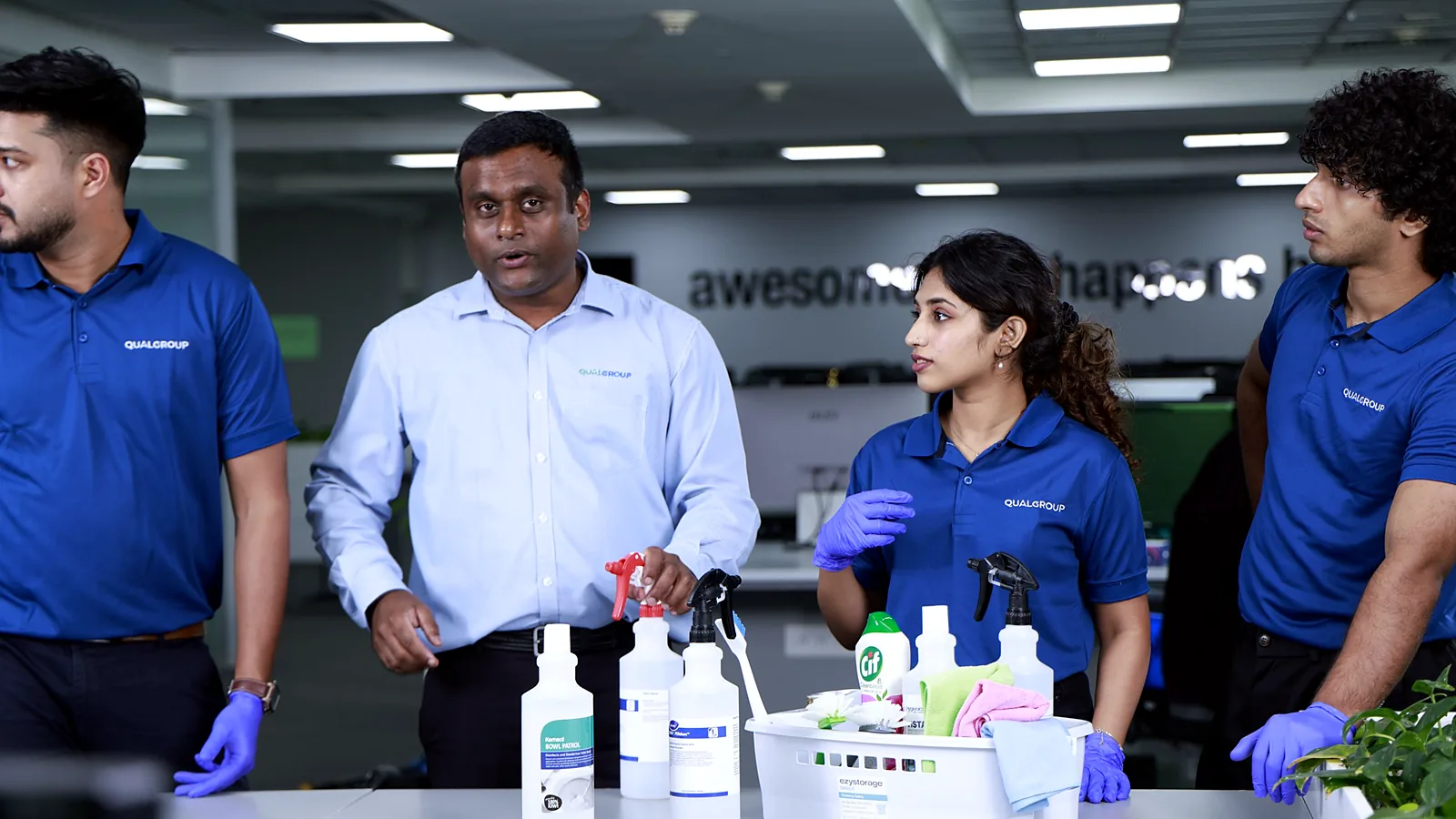
For me, a cleaning product has to be healthy for both our cleaning team and our clients. This is the Healthy Cleaning principle in our HPC methodology.
Certification matters too. Is it green certified? Is it sustainable? Is it less likely to cause allergies? Some scented products can cause allergies or headaches, and VOCs should be low.
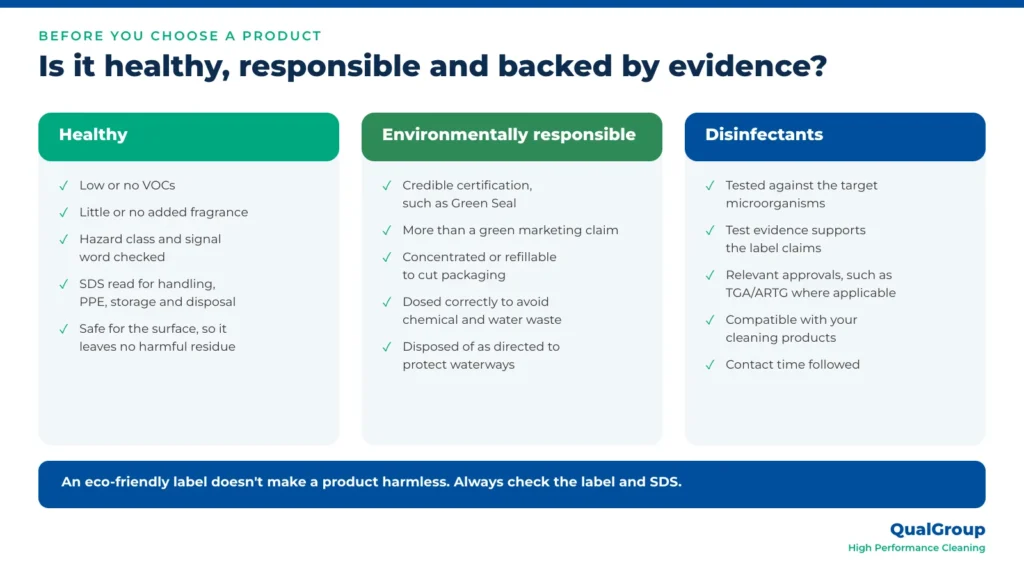
What Makes a Cleaning Product Healthy?
Cleaning products should remove dirt without putting people’s health at risk. Some chemicals can irritate the skin, eyes and respiratory system, and residues left on surfaces can cause further exposure. When selecting and using cleaning products, consider:
- Chemical exposure: strong fumes and aerosols increase exposure, particularly in enclosed spaces. Good ventilation helps reduce the risk.
- Product safety: check the hazard classification, intended use and handling instructions.
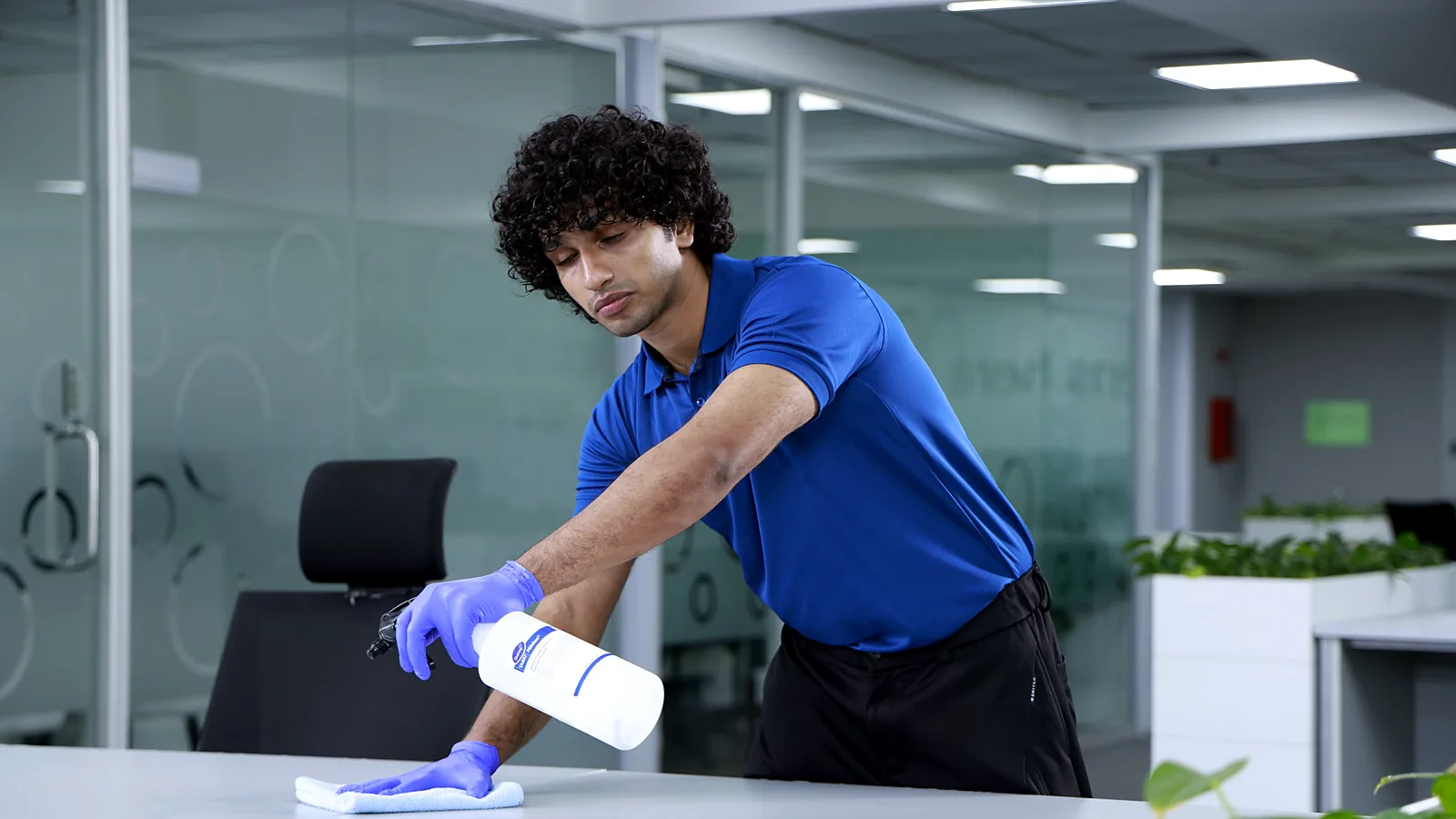
- Dilution and PPE: follow recommended dilution rates and wear appropriate personal protective equipment (PPE).
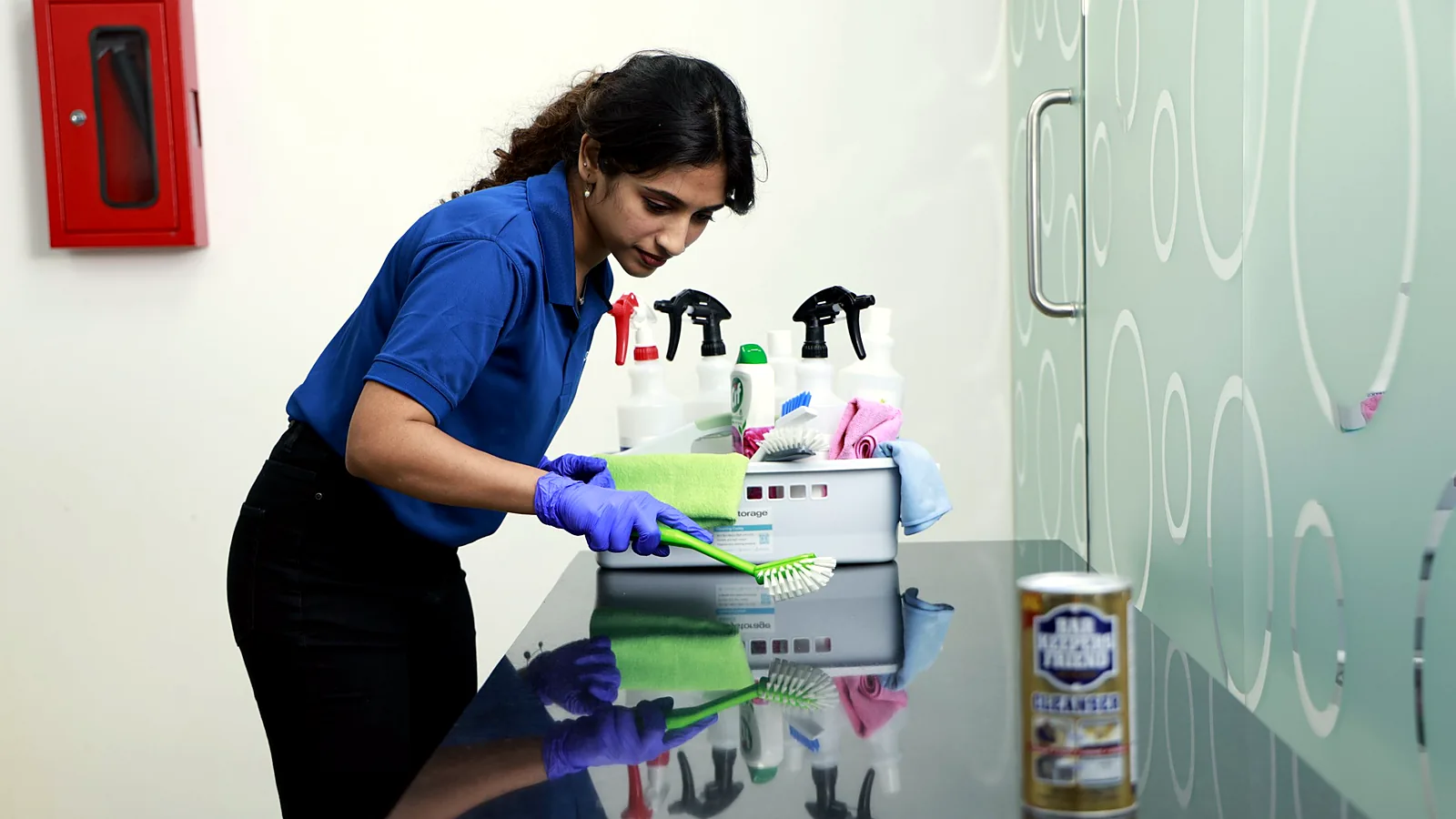
- Surface compatibility: use products suited to the material. Acidic cleaners can etch marble, while unsuitable chemicals can damage cement-based grout.
These practices reflect the Healthy Cleaning principle in QualGroup’s High Performance Cleaning (HPC) methodology, which focuses on reducing chemical exposure and protecting cleaning professionals and building occupants. Correct dilution and handling are covered in how to use cleaning chemicals safely.
Understanding VOCs and Indoor Air Quality
Volatile organic compounds (VOCs) are chemicals that evaporate easily into the air. They are present in many everyday products, including some cleaning chemicals and air fresheners. Depending on the compound and the level of exposure, indoor VOCs can cause:
- Eye, nose and throat irritation
- Headaches
- Discomfort in poorly ventilated spaces
Low-VOC cleaning products can help reduce the amount of chemical vapour released indoors. They are worth considering in residential homes, offices and other occupied spaces, provided they are suitable for the cleaning task.
Application matters too. Avoid unnecessary spraying, which releases chemical droplets into the air, and ensure adequate ventilation to reduce the build-up of airborne pollutants. For more on this topic, see how workplace air quality affects your health.
Fragrances, Allergies and Chemical Exposure
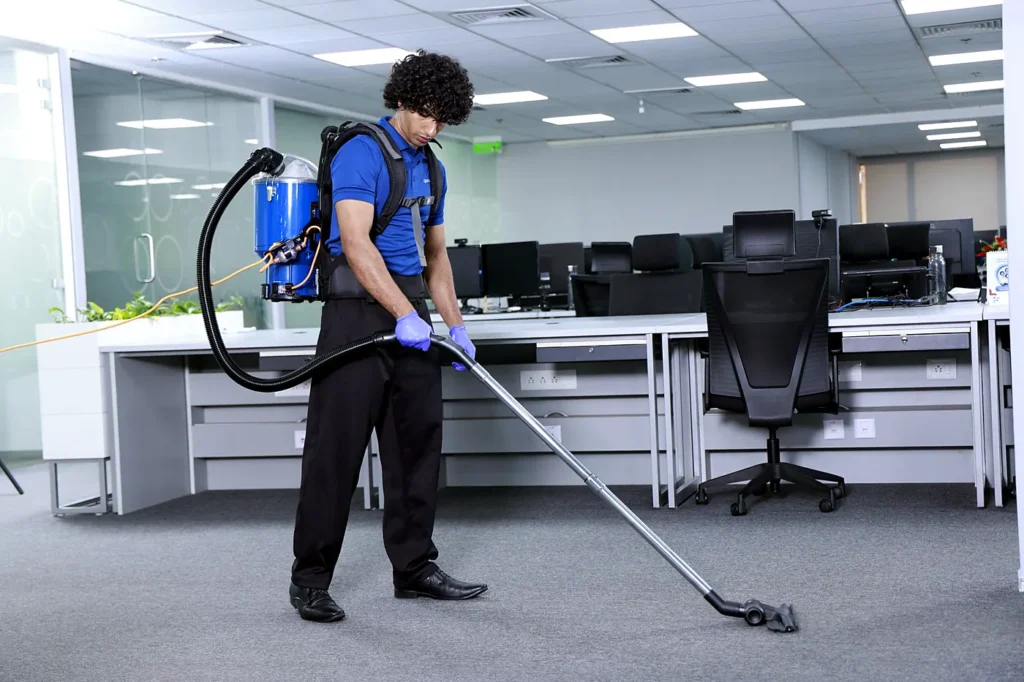
Not everyone responds to fragrance in the same way. Strongly scented products can cause headaches, skin irritation or breathing discomfort in people sensitive to certain ingredients, and cleaning professionals may experience repeated exposure through regular use. When choosing products, consider:
- Fragrance levels: products with little or no added fragrance can be a better choice for workplaces and occupied spaces.
- Cleaning effectiveness: a strong scent does not mean a product cleans better. Fragrance can mask unpleasant odours without removing the dirt or bacteria causing them.
- Product suitability: fragrance-free options should still meet the cleaning requirements of the task.
Using fragrance only where it is needed creates a more comfortable environment for cleaning teams and building occupants.
What Makes a Cleaning Product Environmentally Responsible?
An environmentally responsible cleaning product should do more than remove dirt effectively. Its environmental impact also depends on:
- Ingredients: the chemicals and materials used in the formulation.
- Packaging: how much packaging is used, what type, and whether it can be recycled.
- Usage: how much product and water each cleaning task needs.
- Disposal: how leftover chemicals and empty containers are handled.
Marketing terms such as “green” or “eco-friendly” do not automatically prove a product is environmentally responsible.
At QualGroup, the Sustainable Cleaning principle within our HPC methodology focuses on using products and resources responsibly, reducing waste and preventing unnecessary environmental harm across residential and commercial cleaning operations. Read more about sustainable and eco-friendly cleaning practices.
Green Seal Certification
Environmental certifications help identify products that meet recognised standards for environmental performance. Green Seal is an independent organisation that evaluates products against environmental and health-related criteria. Look for credible certifications rather than relying only on general claims such as “green” or “eco-friendly”, and check:
- Which environmental and health criteria the certification covers.
- Whether it applies to the specific product.
- Whether the product meets the requirements of your intended cleaning task.
QualGroup’s own cleaning plan records the certification of each product we supply to sites, and several of our concentrated cleaners meet the Green Seal GS-34 standard.
Product Hazard Classification
Cleaning product labels provide important information about potential hazards. Signal words such as “Warning” and “Danger” indicate the level of risk and the precautions needed. Before using a cleaning chemical, check its label and Safety Data Sheet (SDS) for:
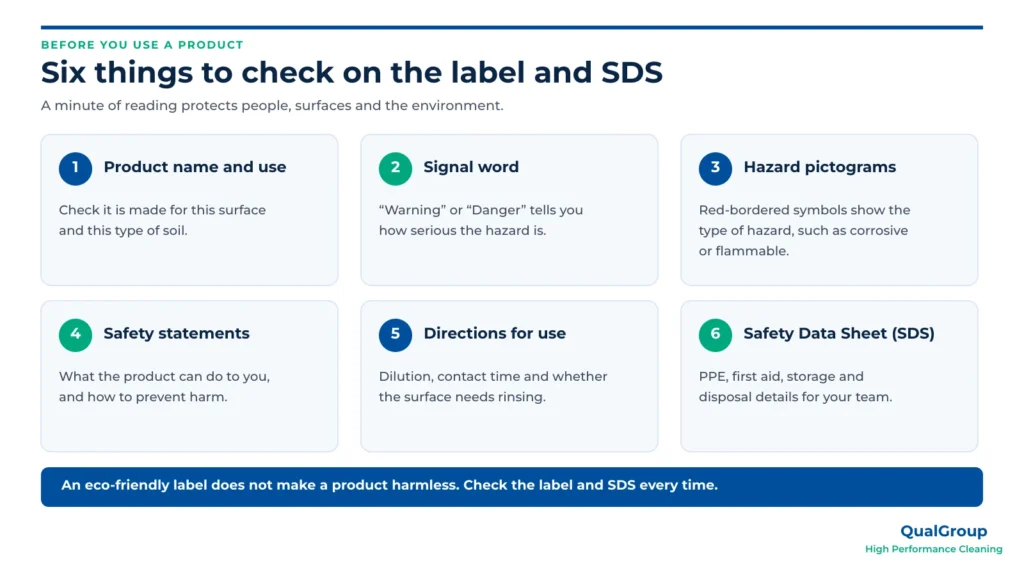
- Potential health and safety hazards.
- Safe handling and usage instructions.
- Recommended storage conditions.
- Disposal requirements.
A product classified as not hazardous is not automatically harmless or suitable for every task. Always consider its intended use and follow the manufacturer’s instructions.
Concentrated Products and Chemical Waste
Many professional cleaning products are supplied as concentrates that must be diluted before use. Following the manufacturer’s dilution instructions helps control chemical consumption and reduce waste. Excess product leaves residue and wastes resources, while too little reduces cleaning effectiveness and leads to repeat applications.
Packaging and Water Consumption
Packaging and water use also contribute to environmental impact. A few practices help reduce it:
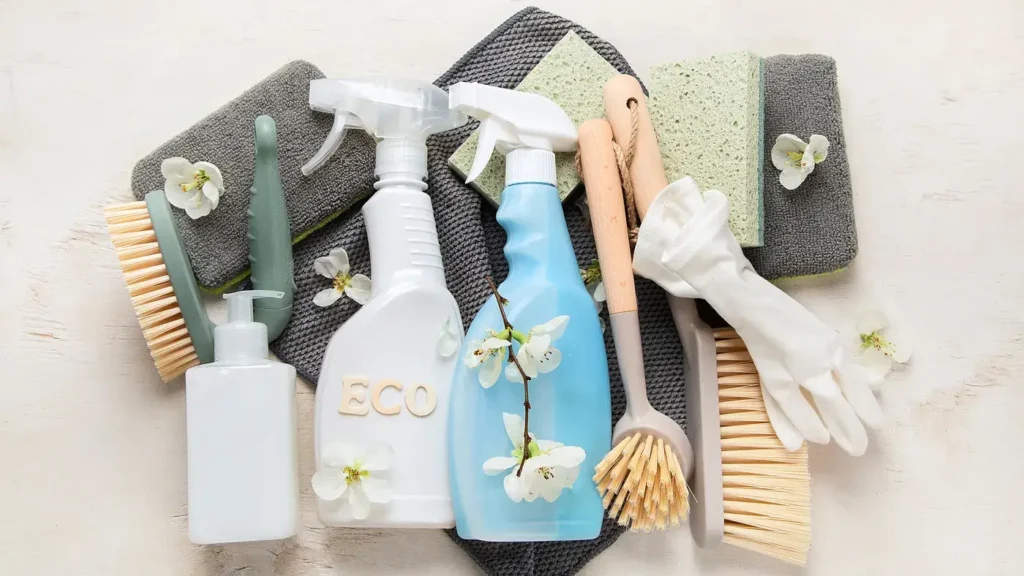
- Concentrated products reduce the amount of packaging needed.
- Refillable containers and reusable packaging limit single-use waste.
- Use water carefully when preparing solutions and carrying out cleaning tasks.
- Dispose of unused chemicals and empty containers according to the manufacturer’s instructions to keep pollutants out of waterways.
Quick Reference: Healthy vs Environmentally Responsible
| Question to ask | Why it matters |
|---|---|
| Is it low- or no-VOC? | Less chemical vapour indoors and better indoor air quality |
| Is it fragrance-free or low-fragrance? | Reduces headaches, irritation and allergy-type reactions |
| What does the label and SDS say? | Hazards, handling, PPE, storage and disposal |
| Is it independently certified? | Credible evidence beyond “green” marketing claims |
| Is it concentrated or refillable? | Less packaging, transport and waste |
| Is it right for the surface and task? | A “green” product that damages a surface or fails to clean is not a good choice |
Choosing Effective and Suitable Disinfectants
Cleaning removes dirt, grease and visible soil, while disinfection uses chemicals to reduce or kill microorganisms. Surfaces should generally be cleaned before disinfection because dirt and organic matter can affect disinfectant performance.
A WORD OF CAUTION
Disinfectants should be approved by the TGA or the relevant regulator. There are a lot of false claims out there.
Understanding Disinfectant Claims
Claims such as “kills germs” or “kills bacteria” do not tell the whole story. Before selecting a disinfectant, check:
- Which microorganisms the product has been tested against.
- Whether test results support its stated claims.
- Whether it suits the intended cleaning environment.
A product proven effective against certain bacteria should not automatically be assumed to work against viruses or fungi.
TGA/ARTG and Other Relevant Evidence
Regulatory approvals and supporting evidence help you assess disinfectant claims. When selecting products, consider:
- Relevant approvals, such as TGA approval where applicable.
- Evidence supporting the product’s claimed antimicrobial effectiveness.
- Whether the product suits its intended use.
For disinfecting high-touch points after cleaning, QualGroup’s validated cleaning approach specifies a disinfectant that is ARTG-registered by the TGA and/or provides evidence of meeting equivalent international standards.
Different cleaning chemicals also serve specific purposes. For example:
- Acidic cleaners are used for certain toilet cleaning tasks.
- Window cleaners are formulated for glass surfaces.
- Neutral floor cleaners are designed for suitable floor surfaces.
- Disinfectants target microorganisms according to their supported claims.
Residues from one product should not interfere with the next cleaning or disinfection step. Accelerated Hydrogen Peroxide (AHP), a hydrogen peroxide-based formulation, is used by QualGroup for general cleaning and disinfection in suitable applications. Its use should follow the manufacturer’s instructions, including recommended dilution and contact time. Never mix cleaning products unless the manufacturer specifically permits it.
Contact Time and Product Instructions
Disinfectants need to remain on a surface for the contact time specified by the manufacturer. Where a wet contact time is required, the surface must stay visibly wet throughout. Wiping it dry too early can reduce the product’s effectiveness. Before applying a disinfectant, check the instructions for:
- Recommended dilution and concentration.
- Application method and contact time.
- Pre-cleaning and rinsing requirements.
- Surface compatibility and restrictions on use with other cleaning products.
Following these instructions achieves effective disinfection while avoiding unnecessary chemical exposure and product waste. To understand how chemical types differ, see what are cleaning chemical types and how do they work.
QualGroup’s High Performance Cleaning Approach
QualGroup’s High Performance Cleaning (HPC) methodology looks beyond visible cleanliness. It considers the health and safety of cleaning professionals and building occupants, environmental responsibility, hygiene standards, fair working conditions and building security. It is built around five principles.
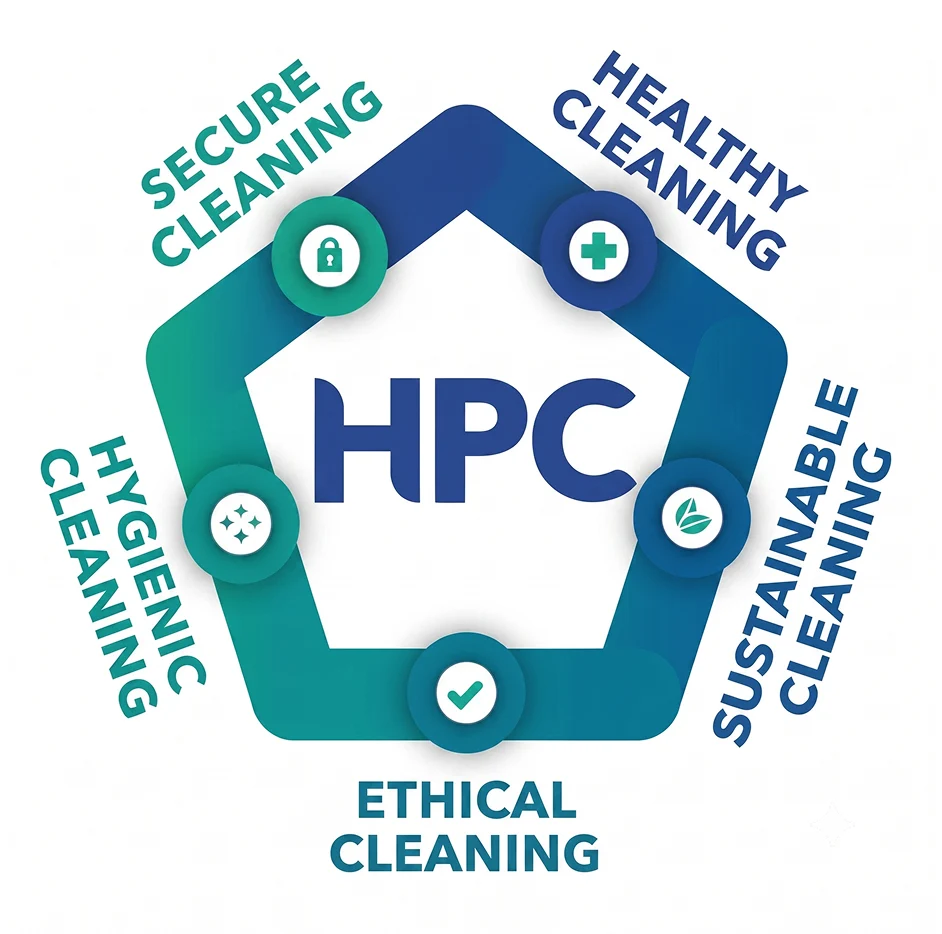
Healthy Cleaning
Protecting cleaning professionals and building occupants from unnecessary exposure to cleaning chemicals and other workplace risks. This includes:
- Selecting products with lower or no VOCs where suitable.
- Using appropriate PPE and following safe chemical-handling practices.
- Preventing chemical residues on cleaned surfaces.
- Limiting unnecessary fragrances, air fresheners and chemical aerosols.
- Preventing slips, trips and physical strain during cleaning.
- Keeping cleaning chemical bottles out of reach of building occupants.
- Not dispensing chemical mists or aerosols in enclosed spaces.
- Using hard floor sealants and cleaning agents that meet slip-resistance standards.
Sustainable Cleaning
The responsible supply, use and disposal of cleaning resources, including:
- Selecting products with credible environmental certifications.
- Choosing cleaning agents that are not harmful to waterways or aquatic life.
- Using detergents made with sustainably harvested palm oil.
- Using concentrated products and preventing chemical waste.
- Reducing packaging and choosing reusable cleaning tools.
- Conserving water and energy.
- Separating waste and disposing of chemicals and packaging responsibly.
Hygienic Cleaning
Achieving consistent standards through effective, validated cleaning processes, including:
- Removing soil effectively before disinfection.
- Using cleaning products that are compatible with the selected disinfectant.
- Keeping cleaning tools and equipment hygienically clean.
- Preventing cross-contamination between surfaces and areas.
- Following a suitable cleaning sequence, such as top to bottom and cleanest to dirtiest.
- Monitoring cleaning quality and giving teams sufficient time and training.
Validation can include ATP testing of high-touch points and UV fluorescent marking to check cleaning completion – explained in from “looks clean” to proven clean.
Ethical Cleaning
Supporting the people who carry out cleaning work through fair and legal employment, adequate working hours, proper supervision, opportunities to improve skills and knowledge, and appropriate support for cleaning teams.
Secure Cleaning
Protecting the building, its occupants and cleaning personnel before, during and after cleaning. This includes responsible handling of keys and access cards, securing cleaning supplies and following building security procedures.
Learn more in what is QualGroup High Performance Cleaning (HPC)?
Our quality systems are independently certified too: QualGroup is an ISO 9001:2015 registered company (QAS International, certificate NZ1089).
Training Through QualClean Academy
QualClean Academy supports the HPC methodology by training cleaning professionals and supervisors to select and use suitable products, tools and techniques for different cleaning tasks.
Training includes practical guidance supported by customised, colour-coded manuals with photographs and simple, step-by-step instructions. These resources help teams prepare supplies, carry out cleaning tasks, maintain equipment and store materials safely, so they follow consistent procedures and maintain the standards expected under HPC.
MORE FROM THIS GUIDE SERIES
Frequently Asked Questions
What should I consider when choosing a healthy and environmentally responsible cleaning product?
Check its ingredients, hazard classification, environmental certifications and intended use. Choose a product that cleans effectively while limiting unnecessary chemical exposure and environmental impact.
Are low-VOC cleaning products better for indoor air quality?
Yes. Low-VOC products release fewer volatile organic compounds into the air, which helps reduce indoor air pollution, particularly in enclosed spaces.
Can scented cleaning products cause headaches or allergies?
Yes. Strong fragrances can trigger headaches, skin irritation or breathing discomfort in people sensitive to certain ingredients. Fragrance-free products help reduce unnecessary exposure.
What does Green Seal certification mean?
Green Seal is an independent organisation that certifies products against recognised environmental and health-related standards. It helps buyers identify products that meet specific sustainability criteria.
Are environmentally friendly cleaning products always safe?
No. An eco-friendly label does not mean a product is harmless. Some ingredients can still irritate the skin, eyes or respiratory system. Always check the label and Safety Data Sheet (SDS).
Why should I check the Safety Data Sheet (SDS) before using a cleaning product?
An SDS explains a product’s hazards, safe handling requirements, storage conditions, first-aid measures and disposal instructions, helping cleaning professionals understand and manage potential risks.
What do cleaning product hazard classifications mean?
Hazard classifications indicate potential risks such as skin irritation, eye damage or flammability. Labels and SDS documents explain the precautions needed for safe use.
How can I check whether a disinfectant’s claims are reliable?
Look for supporting test evidence showing which microorganisms the disinfectant targets. Check relevant approvals or registrations where applicable, and read the product documentation to understand its effectiveness and limitations.
How can cleaning products affect the environment after use?
Cleaning chemicals can enter wastewater and waterways during use or disposal, and some ingredients may harm aquatic life or contribute to pollution. Choosing suitable products and following disposal instructions reduces these impacts.
Make Informed Choices for Healthier and More Sustainable Cleaning
Cleaning products affect people’s health, indoor air quality and the environment. Whether maintaining a residential home or a commercial property, selecting suitable products means considering their safety, cleaning performance and environmental impact rather than relying on labels or marketing claims alone.
At QualGroup, these considerations guide our High Performance Cleaning approach. Through trained teams, responsible product selection and effective cleaning practices, we support healthier residential and commercial environments while reducing unnecessary environmental impact. Contact QualGroup to discuss our residential and commercial cleaning services.