A cleaning chemical only delivers good results when it is used correctly. Choosing a suitable product is important, but how it is applied matters just as much. Over the years, I have seen how simple mistakes in chemical use can affect cleaning results, damage surfaces and create safety risks.
In this guide, you will learn about common mistakes in chemical application, practical lessons from professional cleaning operations in New Zealand and how to handle cleaning products safely for better results. If you are still deciding which product to use, start with our main guide on choosing the right cleaning products for different surfaces.
THE SHORT VERSION
- Dilute exactly as the label says – stronger is not better, and weaker may not work.
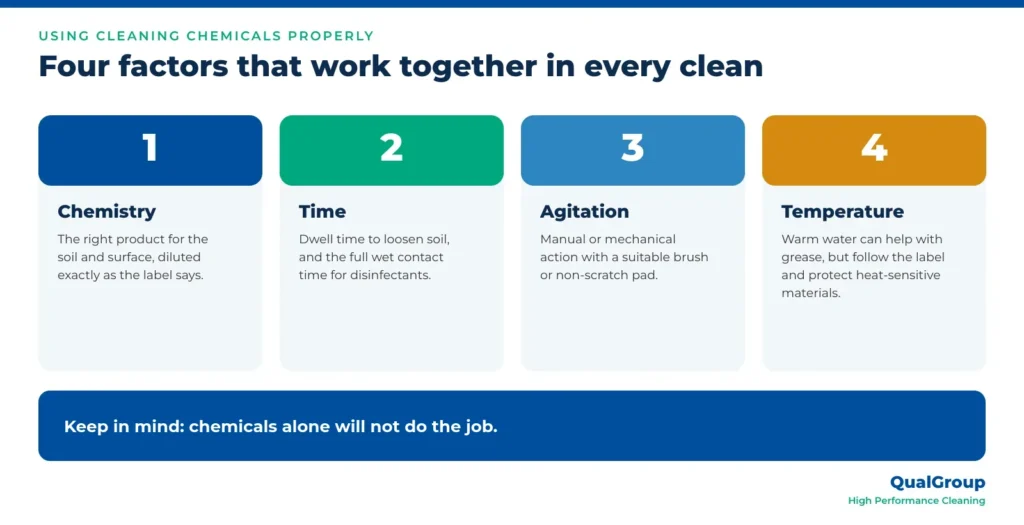
- Give the product time – follow the dwell time for cleaning and the wet contact time for disinfection.
- Add the right agitation – a suitable brush or non-scratch pad, never an abrasive on a delicate finish.
- Check temperature and rinsing – follow the label on water temperature and whether to rinse, wipe or leave.
- Never mix chemicals unless the manufacturer permits it, and always read the SDS and wear the right PPE.
Chemistry is only one of four factors that work together in every cleaning task. In my experience, chemicals alone will not do the job: dwell time, agitation and temperature matter too.
Getting the Chemical Dilution Right
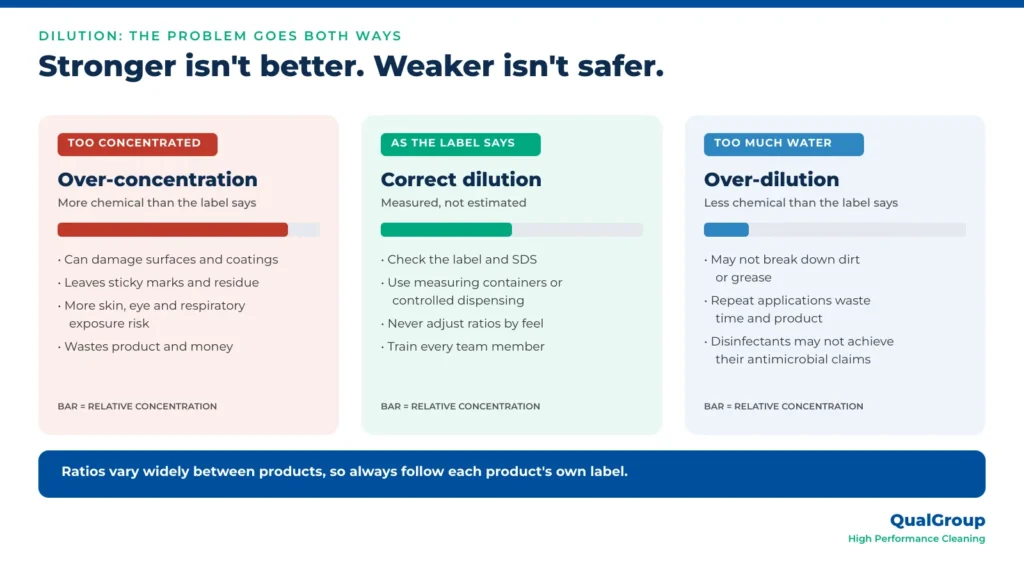
The amount of water mixed with a cleaning chemical sets its concentration and affects how well it performs. I have come across both over-concentration and over-dilution. Some cleaners use more product than recommended, believing it will improve results, while others add too much water.
THE PROBLEM GOES BOTH WAYS
Some people dilute more; some dilute less. That is why I believe chemical handling training is so important.
Both practices affect cleaning effectiveness and safety. The sections below explain these mistakes and how to avoid them.
Problems with Over-Concentration
Using more chemical than recommended does not necessarily produce better results. A stronger solution can create several problems:
- High concentrations can damage sensitive surfaces, finishes and protective coatings.
- Excess product can leave sticky marks, streaks or visible residue.
- Stronger solutions increase the risk of skin, eye and respiratory exposure.
- Using more product than necessary increases chemical consumption and cost.
Problems with Over-Dilution
Adding too much water reduces the concentration of a cleaning solution, which can make it less effective for its intended purpose:
- A weak solution may not break down dirt, grease or other contamination effectively.
- Cleaners may need to repeat the application, increasing time and product use.
- Diluting disinfectants beyond their recommended ratio can compromise their antimicrobial effectiveness.
Following Manufacturer Dilution Ratios
Preparing cleaning solutions correctly starts with the manufacturer’s instructions. Teams should not estimate quantities or adjust ratios based on personal preference. Different products need very different ratios: in QualGroup’s own cleaning plan, for example, some concentrates are diluted at 1:40 while another is diluted at 1:256. Guessing simply does not work.
- Check product labels for the recommended dilution ratio and application instructions.
- Read safety data sheets (SDS) to understand hazards, handling precautions and PPE requirements.
- Use suitable measuring containers or controlled dispensing systems to prepare solutions accurately.
- Train cleaning staff to understand dilution ratios and prepare solutions correctly.
Why Dwell Time Matters
Applying a cleaning chemical and wiping it away immediately is a common mistake. Products need enough contact time to loosen, dissolve or break down contamination, and removing them too soon reduces their effectiveness. The required dwell time depends on:
- The product formulation
- The type of soil or contamination
- The cleaning task
Always follow the manufacturer’s instructions. Products should stay wet for the recommended period and should not be allowed to dry on the surface unless the manufacturer specifically permits it.
Cleaning dwell time and disinfection contact time are not the same:
- General cleaning: the chemical needs enough time to act on the soil and help loosen or remove it.
- Disinfection: the surface must stay visibly wet for the contact time stated on the label to achieve the claimed antimicrobial effectiveness.
Wiping a disinfectant away too early can stop it working as intended.
The Importance of Mechanical Agitation
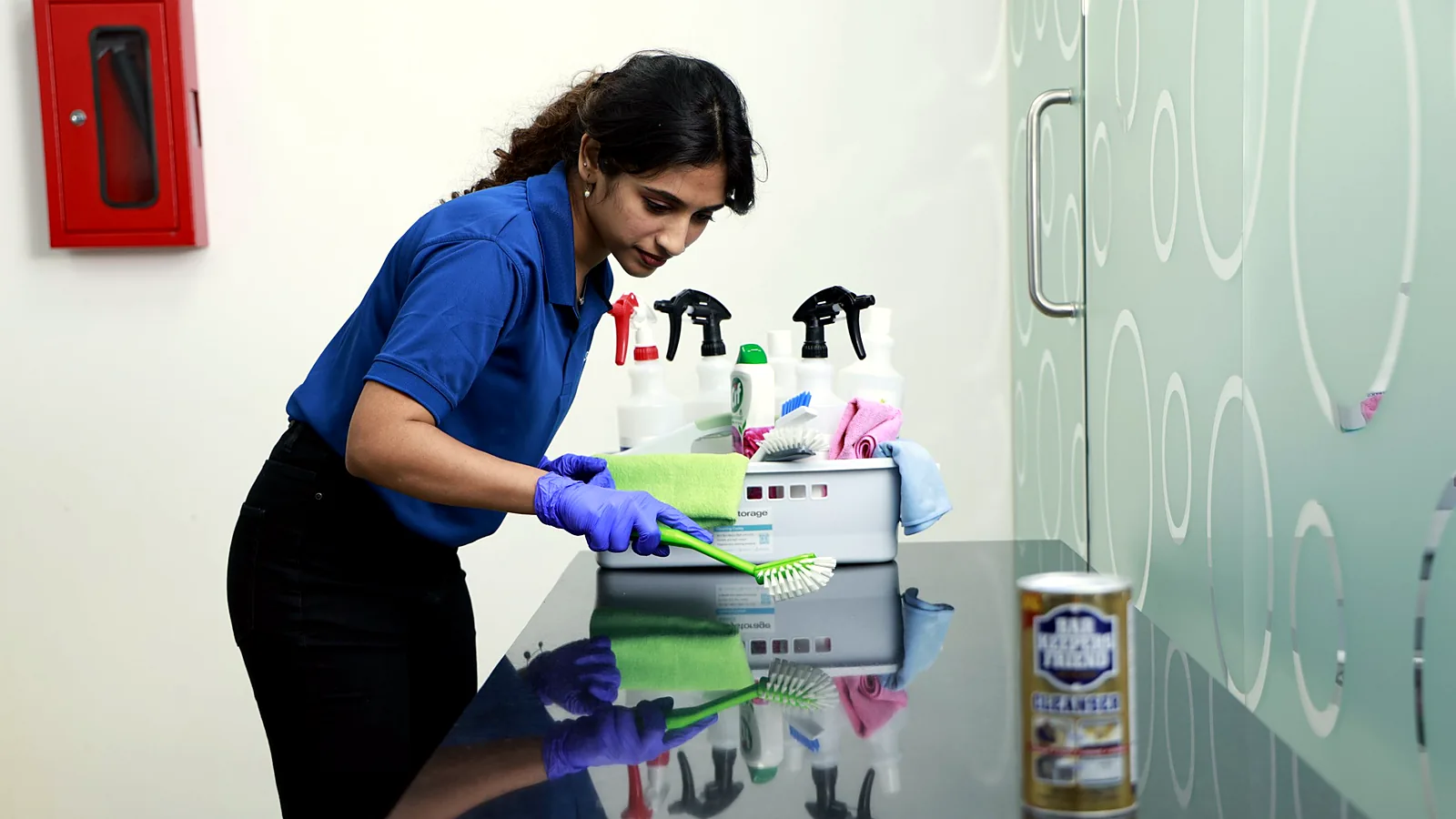
Chemical action alone does not always remove stubborn contamination. Physical action helps loosen deposits so the product can work more effectively. Depending on the surface and contamination, cleaning teams can use:
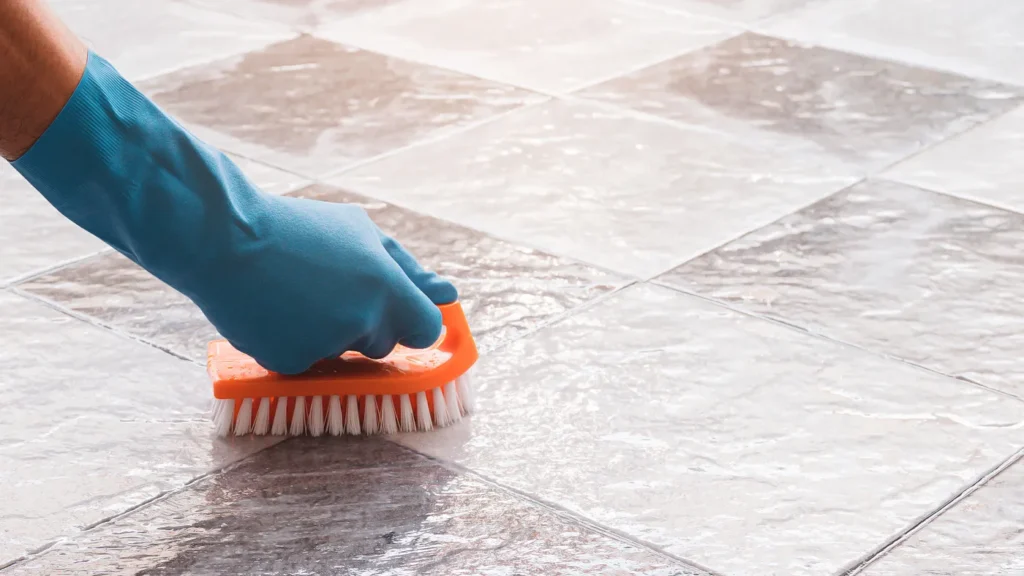
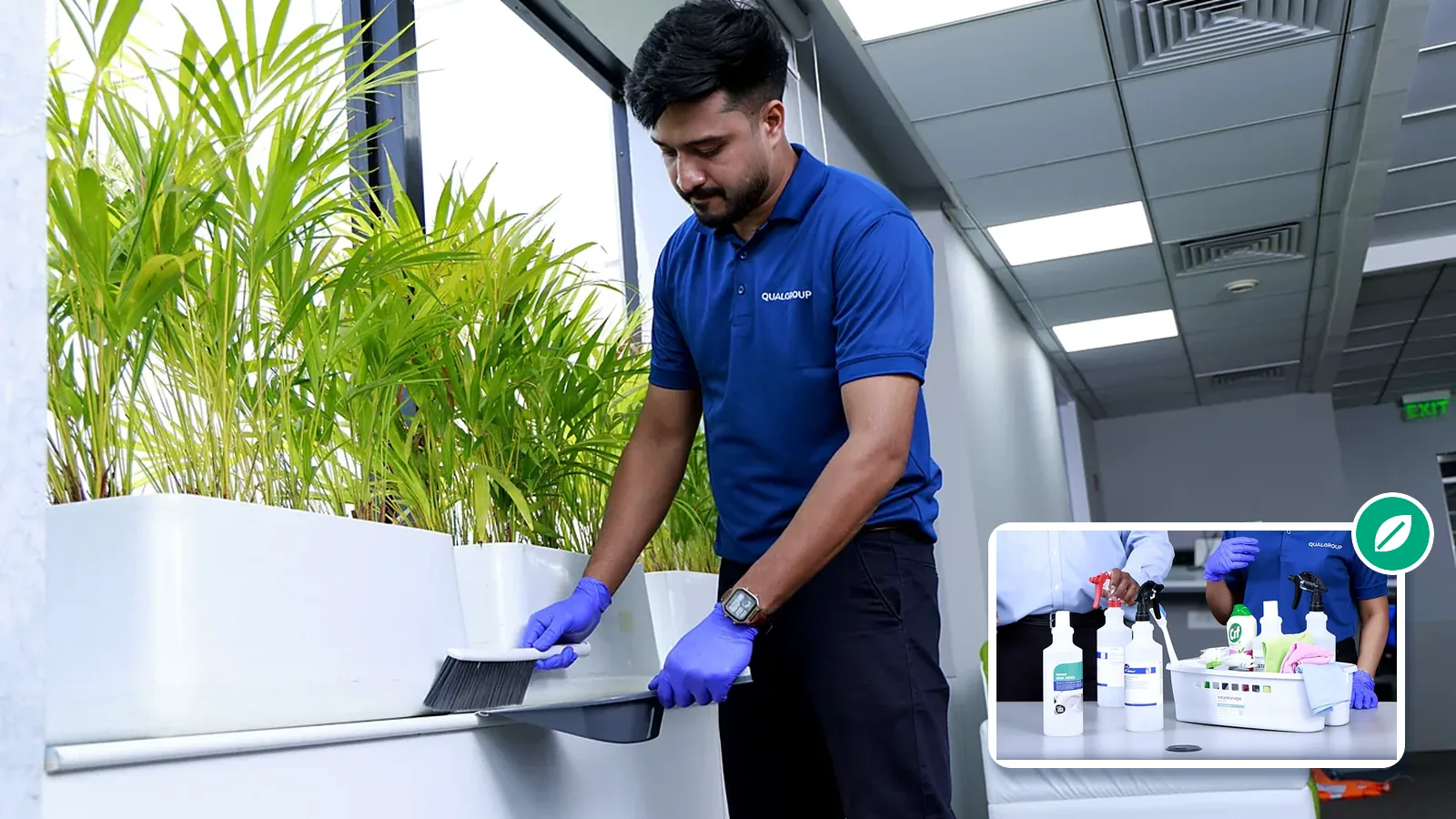
- Brushes for scrubbing suitable surfaces.
- Non-scratch pads for removing deposits without damaging delicate finishes.
- Mechanical equipment to support soil removal on appropriate surfaces.
Choosing the right tool is just as important as choosing the right chemical. An abrasive pad or unsuitable brush can scratch surfaces, damage protective coatings or affect the finish. The aim is to combine chemical action with suitable agitation to remove contamination without causing damage, always following the material’s care recommendations.
How Temperature Affects Cleaning Performance
Warm water can help loosen certain types of grease and oily soil, but higher temperatures do not automatically produce better results. The effect depends on three factors:
- Chemical formulation: some products are designed for cold or room-temperature water.
- Soil type: warm water can help loosen certain greasy or oily deposits.
- Surface material: excessive heat can damage heat-sensitive materials.
Always follow the manufacturer’s temperature recommendations. The right temperature, combined with correct concentration, dwell time and agitation, delivers effective cleaning without compromising the surface or the product.
Correct Rinsing and Chemical Residue Removal
Removing visible dirt does not always mean a surface is free from chemical residue. If a product is not removed according to its instructions, leftover chemicals can cause:
- Streaks or marks on cleaned surfaces.
- Changes to surface finishes.
- Residue build-up that attracts dirt.
- Unnecessary chemical exposure for building occupants.
Not every product needs rinsing with water. The correct removal method depends on the formulation and its intended use:
- Some products need thorough rinsing with clean water after application.
- Others are designed to be wiped away without rinsing.
- Certain products are intended to remain on the surface, as directed by the manufacturer.
Check the label for rinsing, wiping and residue-removal instructions. The aim is to remove residue as directed while leaving the surface clean and suitable for its intended use.
THE MISTAKES I SEE MOST OFTEN
Even after the right chemical has been chosen, these are the application mistakes I come across most:
- Not allowing proper dwell time.
- Not using sufficient or appropriate agitation.
- Not washing or rinsing the chemicals off properly where required.
The Spray-and-Wipe Misconception
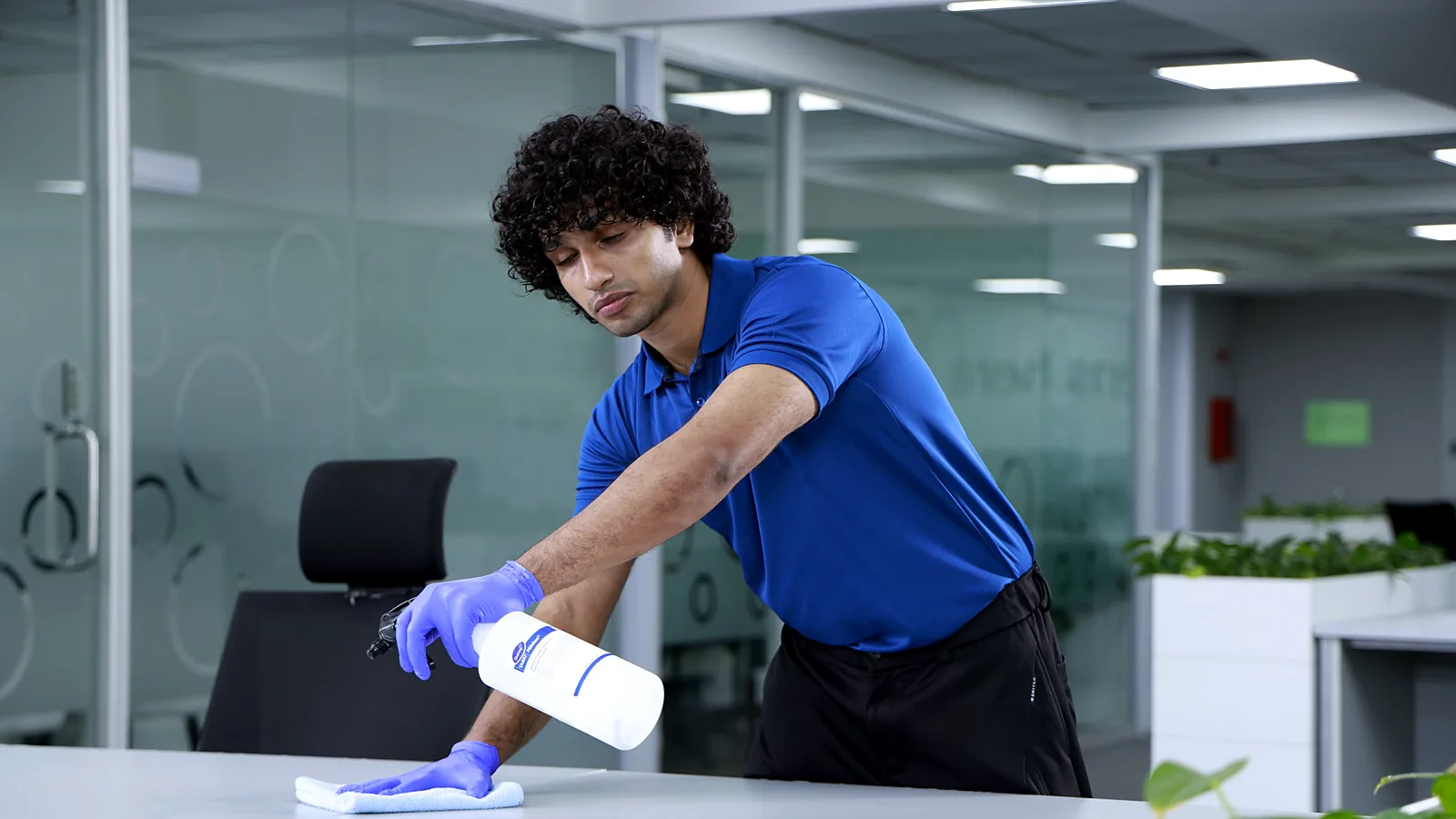
I call it a myth that spraying a product and immediately wiping it is enough for every task. In my experience, it is far less effective than people assume. Some products need time to loosen dirt and break down contamination before they are removed. The right approach depends on the type of cleaning:
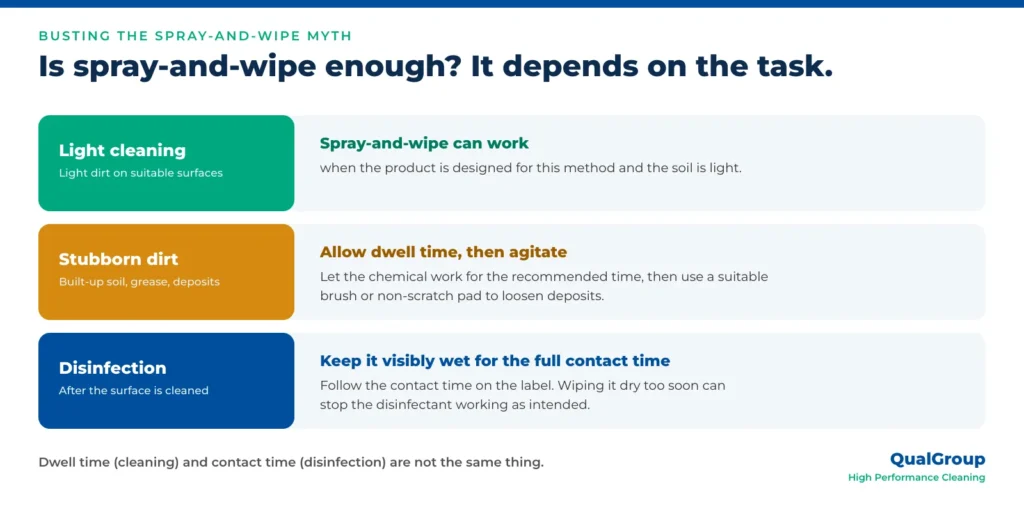
- Light cleaning: spray-and-wipe can work when the product suits this method and the surface has only light dirt.
- Stubborn dirt: allow the chemical to work for the recommended dwell time. Scrubbing with a suitable brush or pad also helps loosen deposits.
- Disinfection: keep the surface visibly wet for the full contact time on the label. Wiping it dry too soon can reduce the disinfectant’s effectiveness.
The problem is not the spray-and-wipe method itself, but using it for every task. Professional cleaners need to know when a product needs more time, mechanical agitation or a specific contact time.
Chemical Compatibility and Safe Handling
The correct cleaning chemical must do more than remove dirt. It must also be compatible with the surface and safe for the people handling it and using the space. Follow these basic precautions:
- Check surface compatibility before applying a chemical, especially on delicate materials and finished surfaces.
- Never mix cleaning chemicals unless the manufacturer specifically permits it. Mixing incompatible products can cause dangerous reactions.
- Read product labels and safety data sheets (SDS) to understand dilution instructions, hazards and handling precautions.
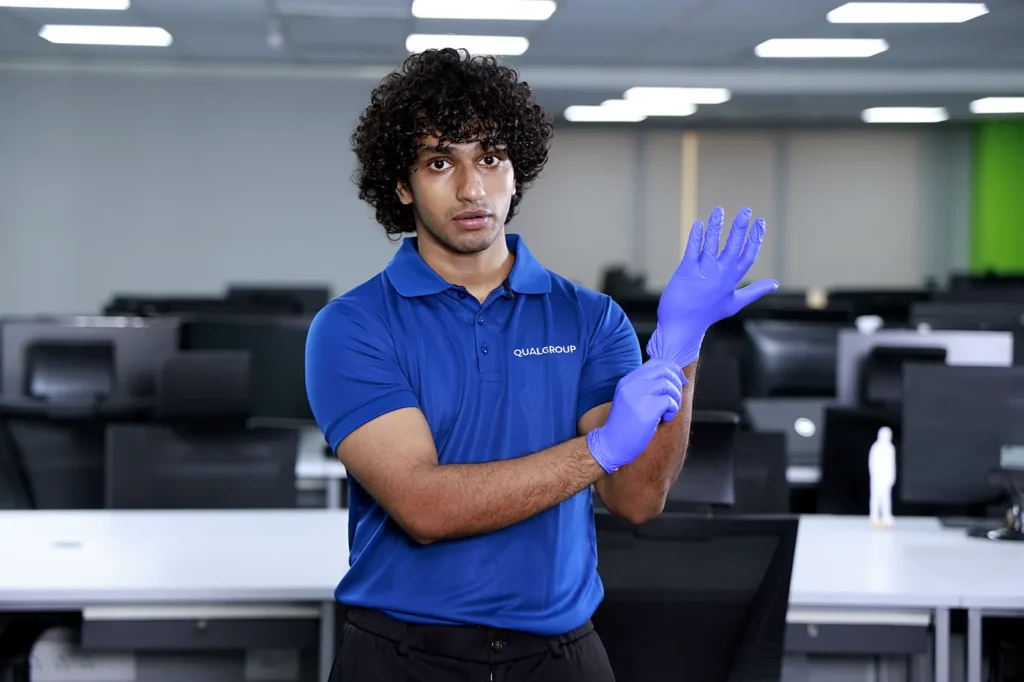
- Wear suitable personal protective equipment (PPE), such as gloves and eye protection, according to the product instructions and task.
- Store chemicals in their original, labelled containers and keep incompatible products separate.
- Consider the health of cleaning staff and building occupants when selecting and using products.
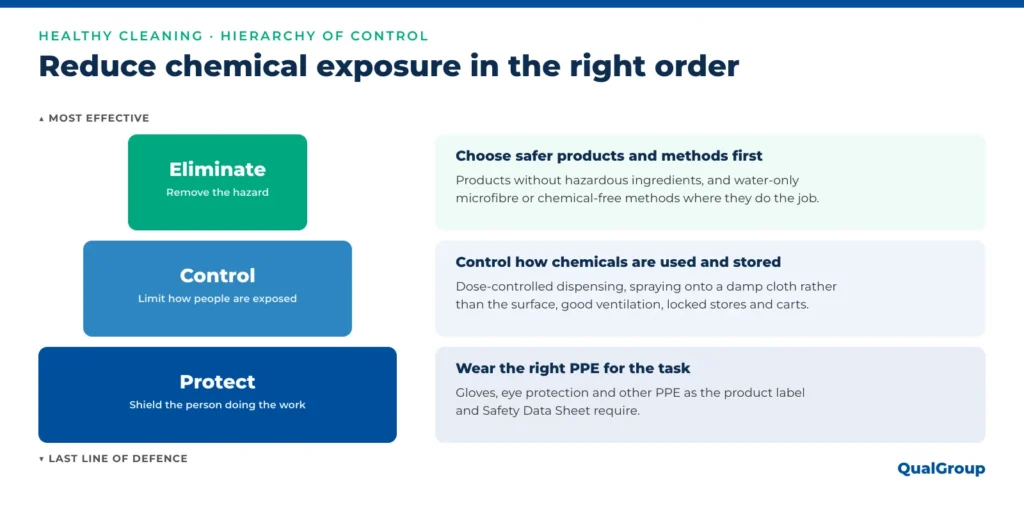
In our HPC Healthy Cleaning framework, I think about chemical safety as a hierarchy of control. The most effective step is to remove the hazard altogether by choosing safer products and methods. Next, we control how chemicals are used and stored: dose-controlled dispensing, spraying onto a damp cloth rather than the surface, good ventilation, and locked cleaner’s rooms and carts so building occupants never have access to chemical bottles.
PPE comes last. It is essential, but it is the last line of defence, not the first.
Healthy Cleaning is one of the five principles of QualGroup’s High Performance Cleaning (HPC) approach. It focuses on reducing unnecessary chemical exposure and protecting the wellbeing of cleaners and building occupants – looking beyond cleaning performance to how products are selected, handled and used. Read more in what makes a cleaning product healthy and environmentally responsible.
What Should Be in a Professional Cleaner’s Caddy?
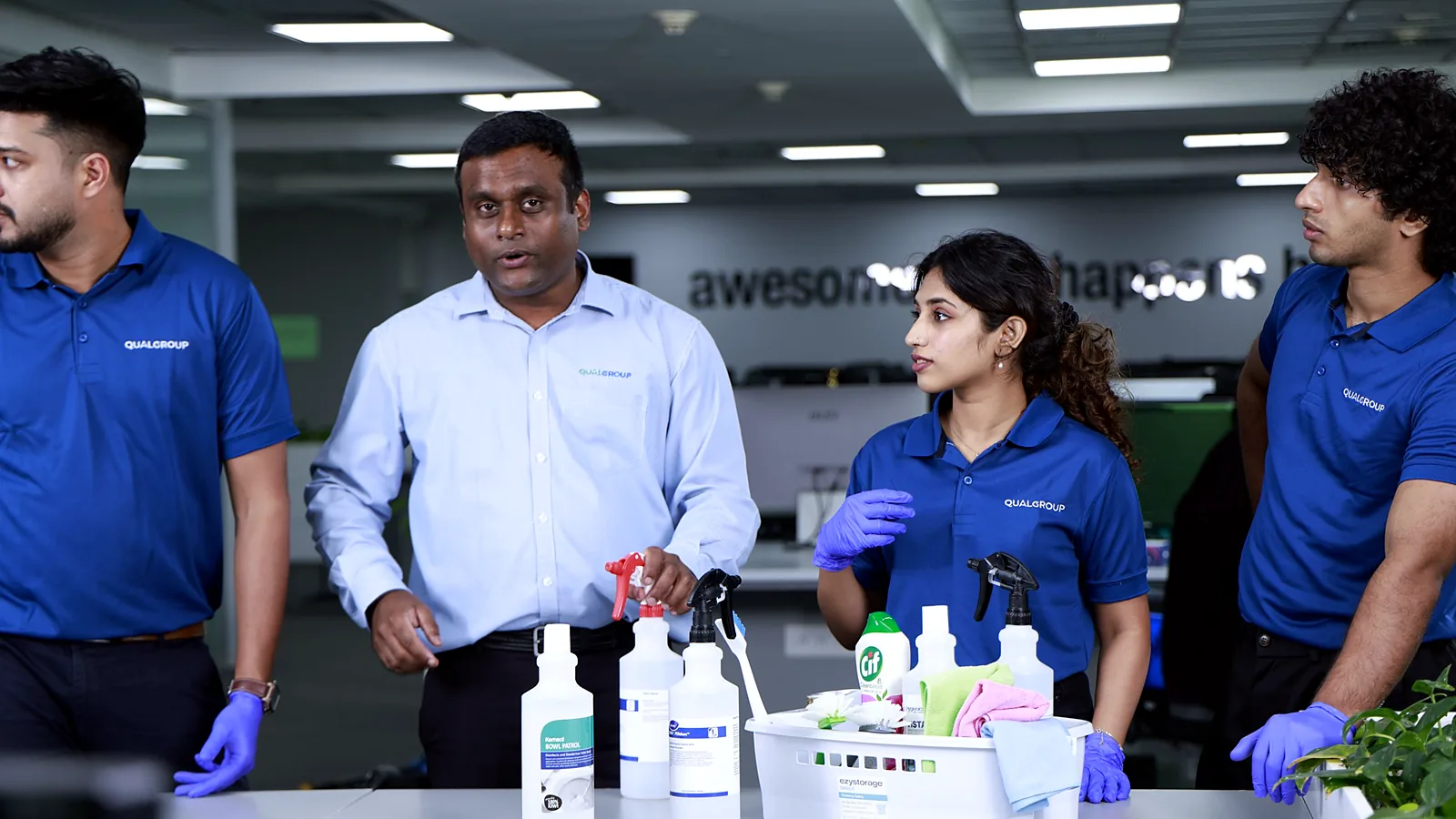
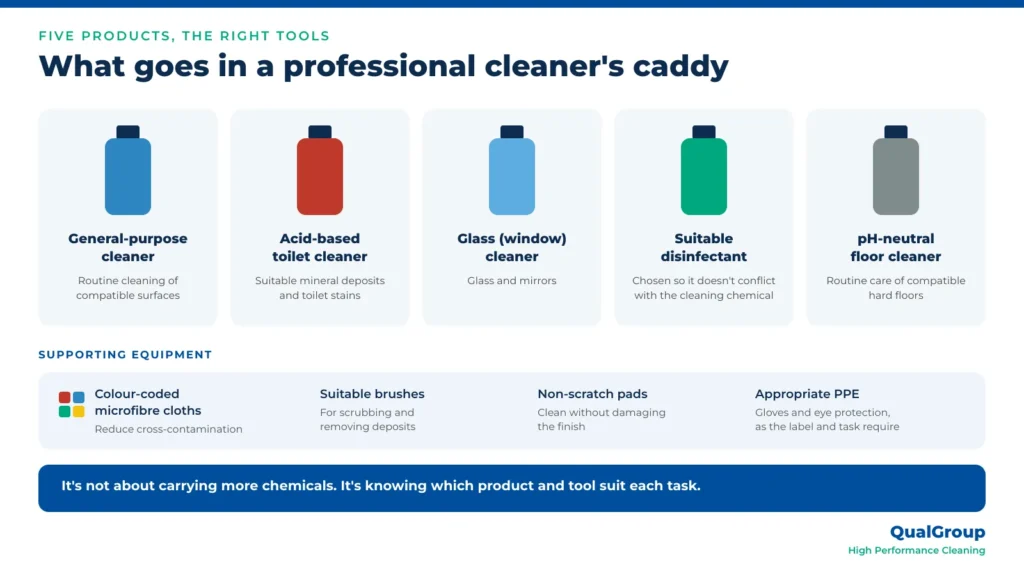
A professional cleaner does not need dozens of products for everyday tasks. A small selection of suitable chemicals, supported by the right equipment, covers most routine requirements. These are the products I believe every cleaner’s caddy should have:
| Cleaning product | Purpose |
|---|---|
| General-purpose cleaner | Routine cleaning of compatible surfaces |
| Acid-based toilet cleaner | Removing suitable mineral deposits and toilet stains |
| Glass (window) cleaner | Cleaning glass and mirrors |
| Suitable disinfectant | Controlling microorganisms on compatible surfaces – chosen so it does not conflict with the cleaning chemical being used |
| pH-neutral floor cleaner | Routine maintenance of compatible hard floors |
WHAT WE USE
At QualGroup, we use Accelerated Hydrogen Peroxide (AHP)-based products as a general cleaner and as a disinfectant in suitable applications. Product choice should still depend on the task, the surface and the manufacturer’s instructions.
Before using any cleaning chemical, check:
- The recommended dilution ratio.
- Whether the product is compatible with the surface.
- The required dwell time or wet contact time, where applicable.
- Whether the surface needs rinsing after application.
Chemicals are only part of the caddy. The right supporting equipment matters too:
- Colour-coded microfibre cloths to support cleaning practices and reduce cross-contamination.
- Suitable brushes for scrubbing and removing deposits.
- Non-scratch pads for cleaning compatible surfaces without damaging the finish.
- Appropriate PPE, such as gloves and eye protection.
Professional cleaning is not about carrying more chemicals. It is about knowing which product and equipment to use for each task.
How QualGroup Trains Cleaning Teams to Use Chemicals Safely
Using cleaning chemicals safely requires an understanding of product instructions, dilution ratios, dwell time, surface compatibility and application methods. This knowledge helps teams use products correctly and avoid unnecessary risks.
Established in 2020, QualClean Academy reflects QualGroup’s commitment to developing knowledge and skills within the cleaning industry. It is part of our High Performance Cleaning approach, which brings together five principles: healthy, sustainable, hygienic, ethical and secure cleaning.
Through QualClean Academy, frontline cleaning teams and supervisors are trained to identify suitable products, tools and techniques for each task. They also learn how to prepare and handle cleaning supplies correctly, work efficiently and prevent cross-contamination. To support consistency, QualGroup provides customised, colour-coded cleaning manuals with photographs and simple, step-by-step instructions for each task.
Why so much structure? Many people who join cleaning teams are students or new migrants, often without a cleaning background, and much of the work happens after hours across very different sites. My approach is simple: the right tools, systems, process and working environment lead to the right working behaviour. The right way should be the easiest way.
Once the right products, tools and PPE have been supplied for each site, the training covers five practical stages:
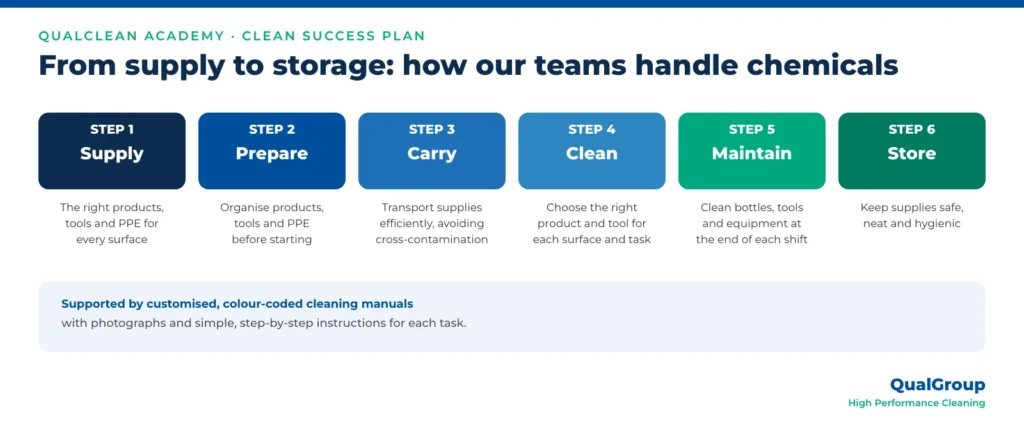
- Prepare: organising the required cleaning products, tools and PPE before starting work.
- Carry: transporting supplies efficiently while reducing the risk of cross-contamination.
- Clean: selecting appropriate products and tools for different surfaces and tasks.
- Maintain: cleaning and maintaining bottles, tools and equipment at the end of each shift.
- Store: keeping cleaning supplies in safe, neat and hygienic storage conditions.
These practices help teams handle chemicals responsibly and follow consistent procedures. You can read more in QualClean Academy: expert training for high-performance commercial cleaning.
MORE FROM THIS GUIDE SERIES
Frequently Asked Questions
Why is correct chemical dilution important?
Correct dilution helps cleaning chemicals work effectively while reducing surface damage, chemical exposure and product waste.
What happens if cleaning chemicals are too concentrated?
Over-concentrated chemicals can damage surfaces, leave residues and increase the risk of skin, eye and respiratory irritation.
How long should a cleaning chemical remain on a surface?
Follow the manufacturer’s recommended dwell time. It varies depending on the product and the cleaning task.
What is the difference between dwell time and contact time?
Dwell time allows a cleaner to act on soil. Disinfectant contact time is the period a surface must stay wet for the product to achieve its claimed antimicrobial effectiveness.
Should cleaning chemicals always be rinsed off?
No. Some products need rinsing, while others are designed for use without rinsing. Follow the product instructions.
Why is spray-and-wipe not suitable for every cleaning task?
Stubborn dirt can need dwell time and scrubbing, and disinfectants need their specified wet contact time.
Can different cleaning chemicals be mixed together?
No. Never mix cleaning chemicals unless the manufacturer specifically permits it. Mixing incompatible products can cause hazardous reactions.
What should a professional cleaner carry in a cleaning caddy?
A suitable selection of cleaning products, colour-coded microfibre cloths, brushes, non-scratch pads and appropriate PPE.
Get the Right Cleaning Support for Your Property
Safe and effective chemical use involves more than selecting the right product. Correct dilution, sufficient dwell time, suitable agitation, proper rinsing and safe handling all contribute to better results while protecting surfaces, cleaning staff and building occupants.
Looking for reliable professional cleaning services in New Zealand? Contact QualGroup to discuss your property’s cleaning requirements and find the right commercial & residential cleaning support for your space.