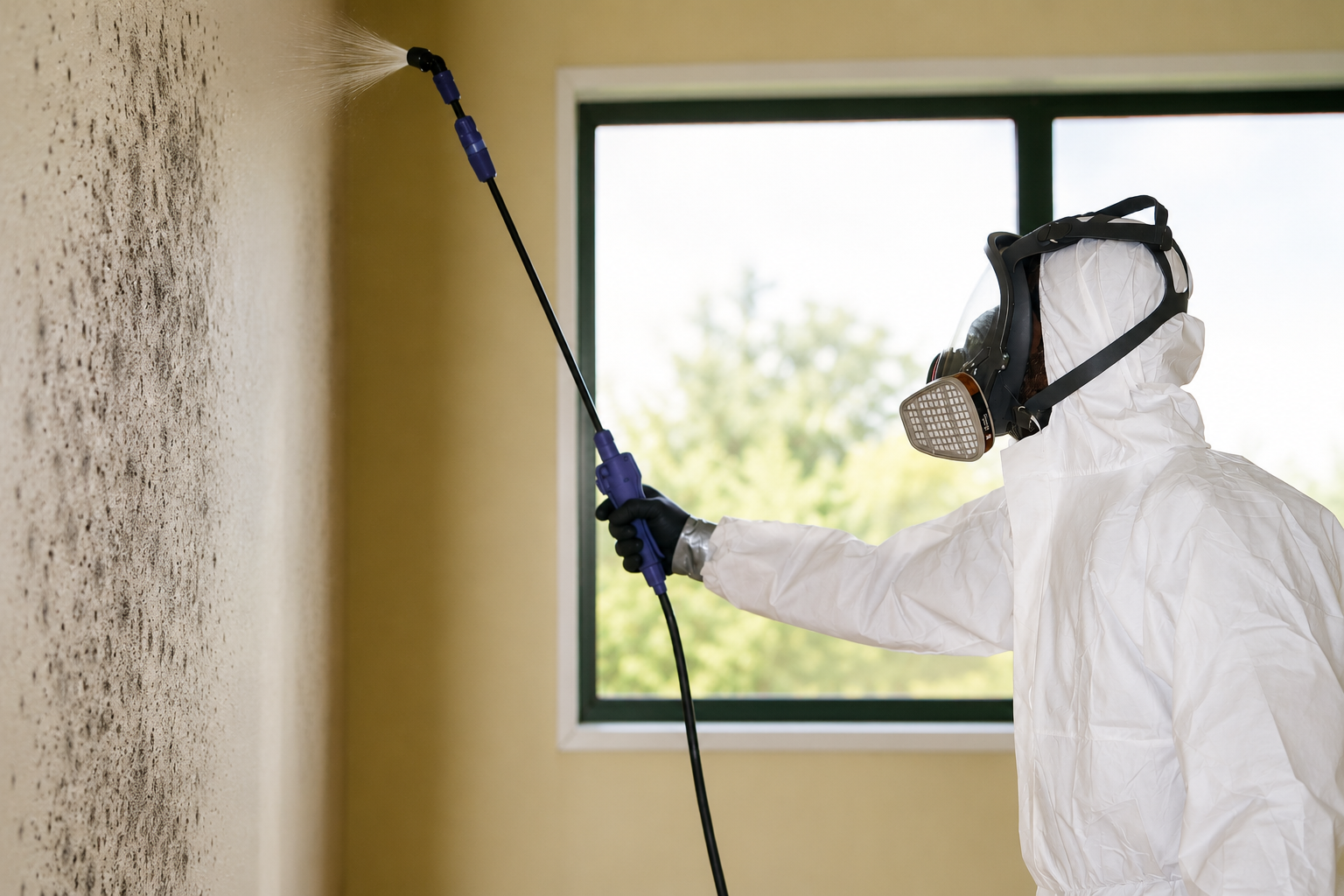
The right cleaning chemical depends on the type of soil and the surface being cleaned. Grease, mineral deposits and food residue respond differently to cleaning agents, while materials such as glass, stone, wood and ceramic have their own cleaning requirements. Using the wrong product can lead to poor results or surface damage.
This guide explains the common types of cleaning chemicals used in professional cleaning across New Zealand, their properties, how they work and how they interact with different soils and surfaces. It also supports our main guide on how to choose the right cleaning products for different surfaces.
KEY TAKEAWAYS
- Match the chemical to the soil: alkalis for organic soils, acids for inorganic (mineral) soils, solvents for oils and grease, and bleaching agents for colour stains.
- pH is a useful guide, but ingredients, concentration, contact time and surface compatibility also decide the result.
- Soils change with age, so a fresh stain and an old one may need different approaches.
- Cleaning removes soil; disinfection controls microorganisms. They are separate steps.
Common Types of Soil
In cleaning, “soil” means the dirt, stains and other contaminants that need to be removed from a surface. Different soils have different chemical properties, so they do not all respond to the same cleaning agents. Identifying the soil helps cleaning professionals choose a suitable chemical and method.
Organic Soils
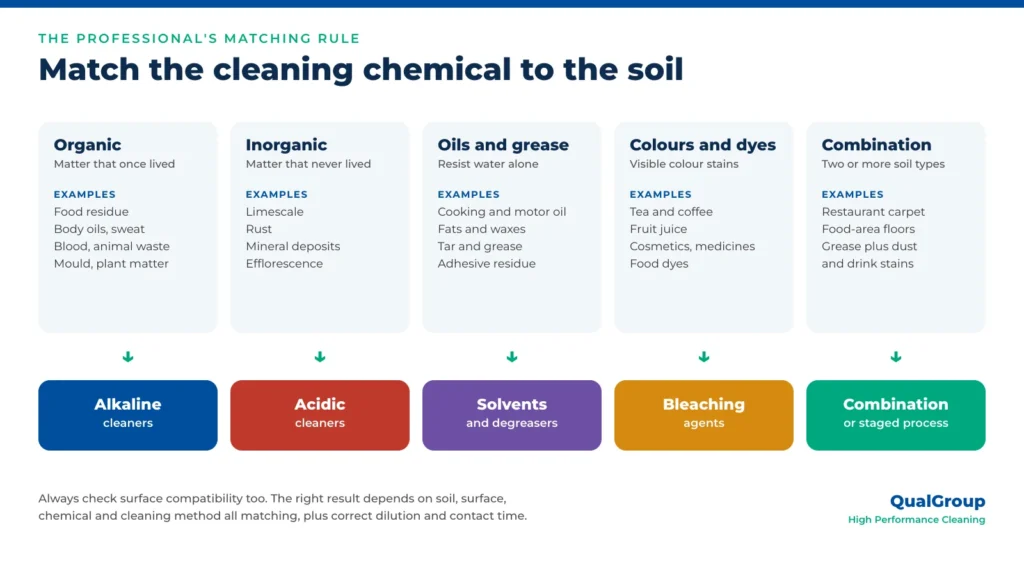
Organic soils come from living organisms or biological materials – matter that was once alive. Examples include food residue, body oils, blood, sweat, animal waste, mould and plant matter. Alkaline cleaning agents are often used to break these soils down.
Inorganic Soils
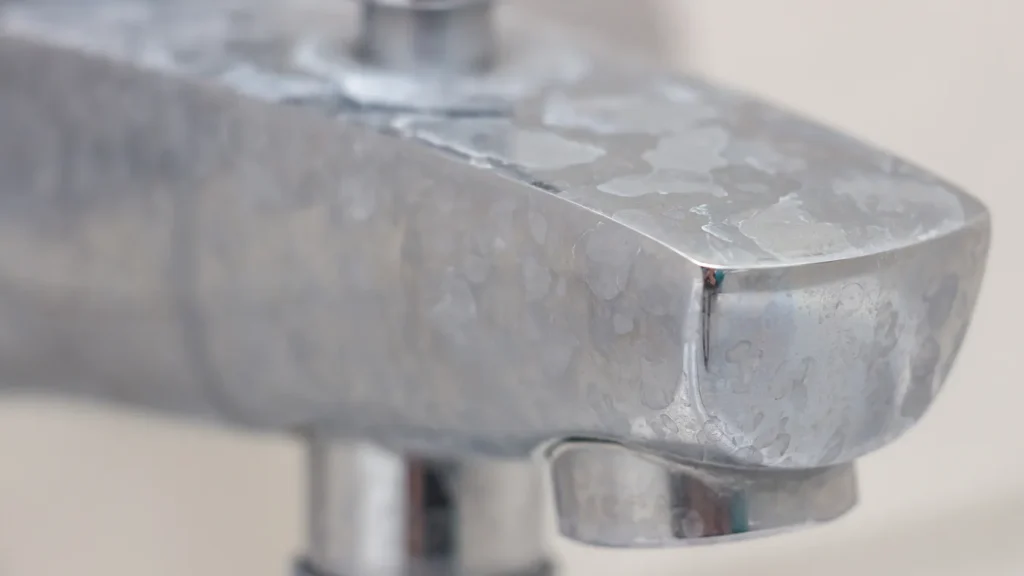
Inorganic soils usually come from minerals and non-living materials. Examples include limescale, rust, mineral deposits and efflorescence. Acidic cleaning agents are commonly used to dissolve suitable mineral deposits.
IN PRACTICE
Sulphur stains are a good example. They are inorganic, yet most people use an alkaline-based cream cleanser for scrubbing. Stains like sulphur may need an acid-based cleaner instead.
I see this often in geothermal areas such as Rotorua, where sulphur-related staining on sinks and toilets is easily mistaken for poor cleaning. I explain it in more detail in my guide to choosing cleaning products for different surfaces.
Oils and Grease
Oily soils include cooking oil, motor oil, fats, waxes, tar and grease. They cling to surfaces and resist removal with water alone. Solvent-based cleaners and suitable degreasers help break down or dissolve these residues.
Colours and Dye Stains
These soils contain colour compounds that leave visible stains on surfaces and fabrics. Common examples include tea, coffee, fruit juice, cosmetics, medicines and food dyes. Suitable bleaching agents can help break down or remove some colour stains.
Combination Soils
Combination soils contain two or more types of contamination. Restaurant carpet soil, for example, can include food residue, grease, dust and drink stains. These soils often need a combination of cleaning agents or a staged cleaning process.
| Soil type | Examples | Typical chemical match |
|---|---|---|
| Organic | Food residue, body oils, blood, sweat, mould | Alkaline cleaners |
| Inorganic | Limescale, rust, mineral deposits, efflorescence | Acidic cleaners |
| Oils and grease | Cooking oil, motor oil, wax, tar | Solvent-based cleaners, degreasers |
| Colours and dyes | Tea, coffee, juice, cosmetics, food dyes | Bleaching agents |
| Combination | Restaurant carpet, kitchen floors | Combination formulations or a staged process |
What Is pH and Why Does It Matter in Cleaning Products?
pH measures how acidic or alkaline a cleaning solution is, on a scale from 0 to 14. The pH level helps explain a product’s chemical properties and how it interacts with different types of soil.
- Acidic (below 7): commonly used to remove mineral deposits, limescale and rust.
- Neutral (7): generally suitable for routine cleaning on many surfaces.
- Alkaline (above 7): commonly used to break down grease, fats and other organic soils.
However, pH alone does not determine how well a product works. Its ingredients, concentration, contact time and the type of soil all influence cleaning performance, and surface compatibility must be considered to avoid damage.
Different Types of Cleaning Chemicals and Their Properties
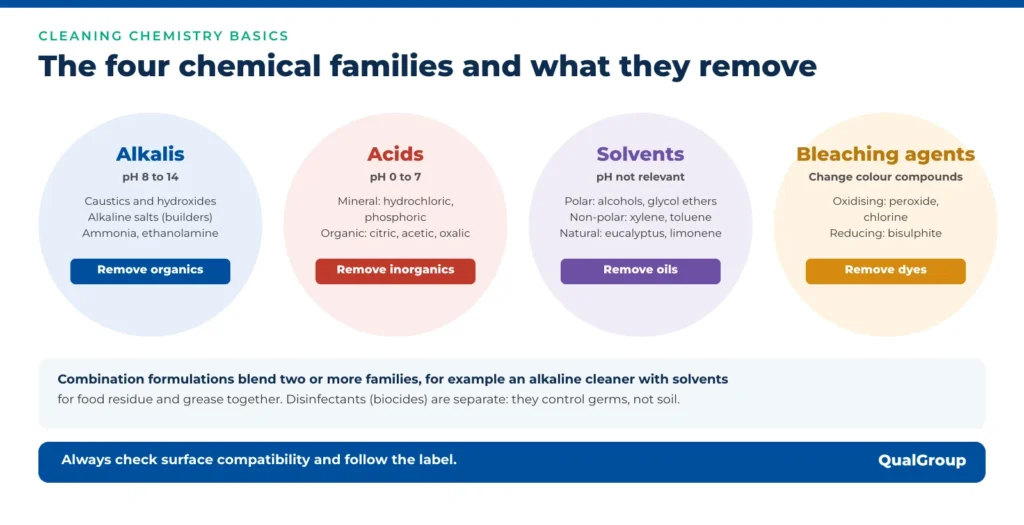
Cleaning chemicals work in different ways depending on their ingredients. Some remove mineral deposits, while others break down grease, lift stains or control microorganisms. Understanding these differences helps cleaning professionals choose suitable products for each task.
Acidic Cleaners: Properties and Uses
Acidic cleaners have a pH below 7. They are mainly used to remove mineral-based deposits that ordinary cleaning products cannot easily shift. Common uses include:
- Removing limescale and hard water deposits.
- Treating certain rust stains and mineral build-up.
- Cleaning surfaces affected by mineral residue.
Common acids in cleaning products include hydrochloric, phosphoric, citric, acetic and oxalic acid. Each has different properties and applications depending on its strength and formulation.
Note: Some acidic cleaners can damage natural stone, certain metals and other acid-sensitive materials. Always check surface compatibility before use.
Alkaline Cleaners: Properties and Uses
Alkaline cleaners have a pH above 7. They are commonly used to break down organic soils, particularly grease, fats and food residue, loosening the soil so it is easier to remove by wiping, scrubbing or rinsing. Common alkaline ingredients include:
- Sodium hydroxide
- Potassium hydroxide
- Ammonia
- Alkaline salts
Mild alkaline cleaners are used for routine cleaning, while stronger formulations tackle heavy grease and stubborn soil. Highly alkaline products can irritate skin and eyes or damage certain surfaces, so they need careful handling.
Solvent-Based Cleaners: Types and Applications
Solvent-based cleaners remove substances that do not dissolve easily in water, such as oil, grease, wax, adhesives and some inks. Common solvent types include:
- Polar solvents: alcohols and glycol ethers, used to dissolve certain oils and other residues.
- Non-polar solvents: xylene and toluene, found in some formulations for removing oily and resin-based substances.
- Natural solvents: eucalyptus oil and limonene, used to loosen grease and adhesive residues.
The right solvent depends on the substance being removed. Some solvents are flammable, produce strong vapours or affect surface coatings, so always follow the product instructions and safety precautions.
Bleaching Agents: Oxidising and Reducing Actions
Bleaching agents remove or reduce the colour of certain stains by changing the chemical compounds responsible for their appearance. There are two main types:
- Oxidising agents: hydrogen peroxide and chlorine-based compounds break down colour compounds through oxidation.
- Reducing agents: bisulphites alter colour compounds through a reaction called reduction.
These agents are used on certain tea, coffee, food, beverage and dye stains. Their suitability depends on the stain and the material, as some can discolour or damage surfaces and fabrics.
Disinfectants and Biocides: Their Role in Microbial Control
Disinfectants and biocides control microorganisms such as bacteria, viruses and fungi. Unlike general cleaning agents, their main purpose is microbial control rather than removing visible soil. For effective disinfection:
- Clean the surface first to remove dirt and organic matter.
- Choose a product suitable for the target microorganism.
- Follow the recommended dilution and contact time.
Dirt and organic matter can interfere with some disinfectants, which is why cleaning before disinfection matters. Our complete guide to sanitisation and disinfection covers this in depth.
Combination Formulations
Some products combine different chemical ingredients to tackle more than one type of soil. For example, a formulation containing alkaline ingredients and solvents can remove both food residue and oily deposits. Performance depends on the formulation, concentration and application method, so always follow the manufacturer’s instructions.
Quick Reference: Cleaning Chemical Types at a Glance
| Chemical type | How it works | Typical targets | Watch out for |
|---|---|---|---|
| Acidic | Reacts with and dissolves mineral deposits | Limescale, rust, hard water marks | Natural stone, some metals, cement-based grout |
| Alkaline | Breaks down fats, proteins and organic soil | Grease, food residue, body oils | Skin and eye irritation; some finishes |
| Solvent-based | Dissolves residues water cannot | Oil, wax, adhesives, tar, some inks | Flammability, vapours, coatings |
| Bleaching | Changes the structure of colour compounds | Tea, coffee, food and dye stains | Discolouring surfaces and fabrics |
| Disinfectant | Reduces or inactivates microorganisms | Bacteria, viruses, fungi on cleaned surfaces | Needs pre-cleaning and correct contact time |
How Cleaning Chemicals Interact with Different Types of Soil
Cleaning products work by dissolving, breaking down or loosening soil so it can be removed from a surface:
- Acidic cleaners react with mineral deposits such as limescale and calcium build-up, helping dissolve them.
- Alkaline cleaners break down suitable organic soils, including fats, proteins, food residue and body oils.
- Solvent-based cleaners dissolve or loosen oily residues such as cooking oil, grease, wax and adhesives.
- Bleaching agents change the chemical structure of colour compounds, reducing certain stains from tea, coffee, food and dyes.
- Combination formulations combine different chemical actions to address multiple soils, such as food residue and grease on restaurant floors.
The result also depends on the soil’s condition, product concentration, contact time, surface material and cleaning method. We cover these application factors in how to use cleaning chemicals safely.
Real-World Matching Examples
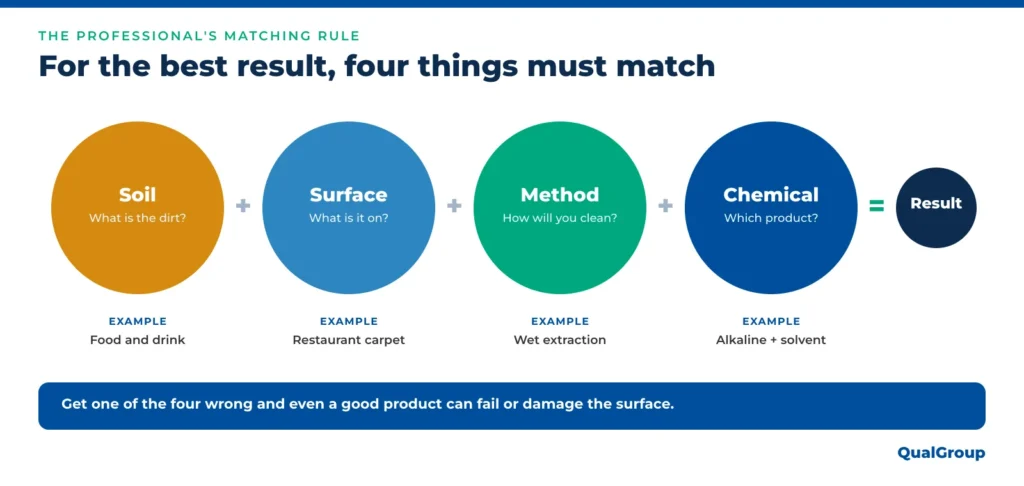
The matching rule becomes clearer with real soils. Notice how the same “soil” can need a different chemical depending on where it builds up.
| Soil | What it is made of | Best chemical approach |
|---|---|---|
| Pub or restaurant carpet | Organic soil plus oil | Alkaline cleaner with a solvent |
| Soap scum in a sports changing room | Mainly organic (body oils), some inorganic | Alkaline cleaner |
| Soap scum in an aged care bathroom | Mainly inorganic (minerals), some organic | Acidic cleaner |
| Lipstick | Oil plus dye | Solvent spotter first, then a peroxide-based bleach |
| Detergent residue | Alkaline | A compatible acidic rinse or cleaner |
Exceptions worth knowing: urine is organic, but its residue can turn alkaline over time, so it usually responds to an acid. Bacteria, viruses and mould need a suitable disinfectant rather than a cleaner, and old sealers or coatings need a specialist stripper.
A Real-World Example of Cleaning Chemistry
Cleaning chemistry is not always straightforward. The properties of some soils change over time, which affects how they respond to cleaning chemicals.
One interesting example from my cleaning experience is urine contamination. Fresh urine is generally slightly acidic, although its pH can vary. As bacteria break down urea, ammonia can be produced, which can make the residue more alkaline.
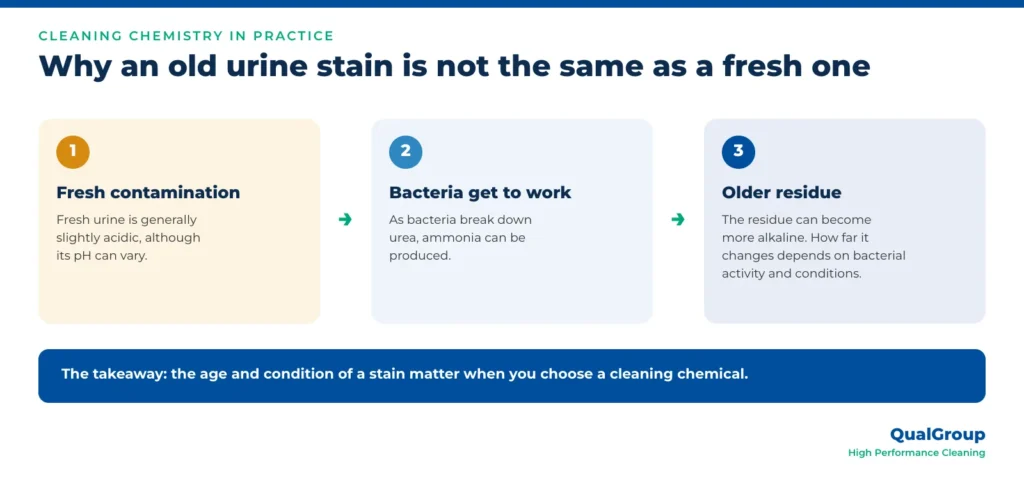
How far this change goes depends on factors such as bacterial activity and the conditions the contamination is left in. Older urine deposits can therefore behave differently from fresh ones and may need a different cleaning approach.
It is a good reminder that the age and condition of a stain matter when choosing a cleaning chemical.
Common Misconceptions About Cleaning Chemistry
Choosing the right cleaning chemical involves more than looking at the soil type or product pH. Watch out for these common misconceptions:
- Assuming all organic soils – food residue, body oils, blood and urine – need the same cleaner.
- Choosing a cleaner on pH alone and ignoring its ingredients, concentration and surface compatibility.
- Ignoring soil age, even though fresh, dried and old stains respond differently.
- Treating mixed soils as one type of contamination when they need different cleaning actions.
- Assuming one chemical works for every cleaning task and surface.
- Confusing cleaning, which removes dirt, with disinfection, which controls microorganisms.
MORE FROM THIS GUIDE SERIES
Frequently Asked Questions
What are the main types of cleaning chemicals?
The main types are acidic cleaners, alkaline cleaners, solvent-based cleaners, bleaching agents and disinfectants. Each has different properties and cleaning applications.
How does pH affect cleaning chemical performance?
pH shows whether a cleaning solution is acidic, neutral or alkaline. It helps explain the product’s chemical properties, but ingredients, concentration and contact time also influence performance.
Why do different types of soil need different cleaning chemicals?
Different soils have different chemical properties. Mineral deposits, grease, food residue and colour stains respond to different cleaning actions.
Can one cleaning chemical remove different types of soil?
Some products contain several ingredients that work on different soils. However, no single product suits every cleaning situation.
Why does the age of soil matter when choosing a cleaning chemical?
Fresh, dried and aged contamination can respond differently to cleaning chemicals, and some soils change their properties over time – urine is a good example.
What is the difference between cleaning and disinfection?
Cleaning removes dirt, grease and other soil from surfaces, while disinfection targets microorganisms such as bacteria, viruses and fungi.
Looking for Professional Cleaning Services in New Zealand?
Choosing the right cleaning products and methods is important for effective results and for reducing environmental impact. At QualGroup, our High Performance Cleaning approach focuses on responsible practices and environmentally conscious products where suitable, delivered by teams trained through QualClean Academy.
Contact QualGroup today to discuss your cleaning requirements and how our professional team can help maintain your property.