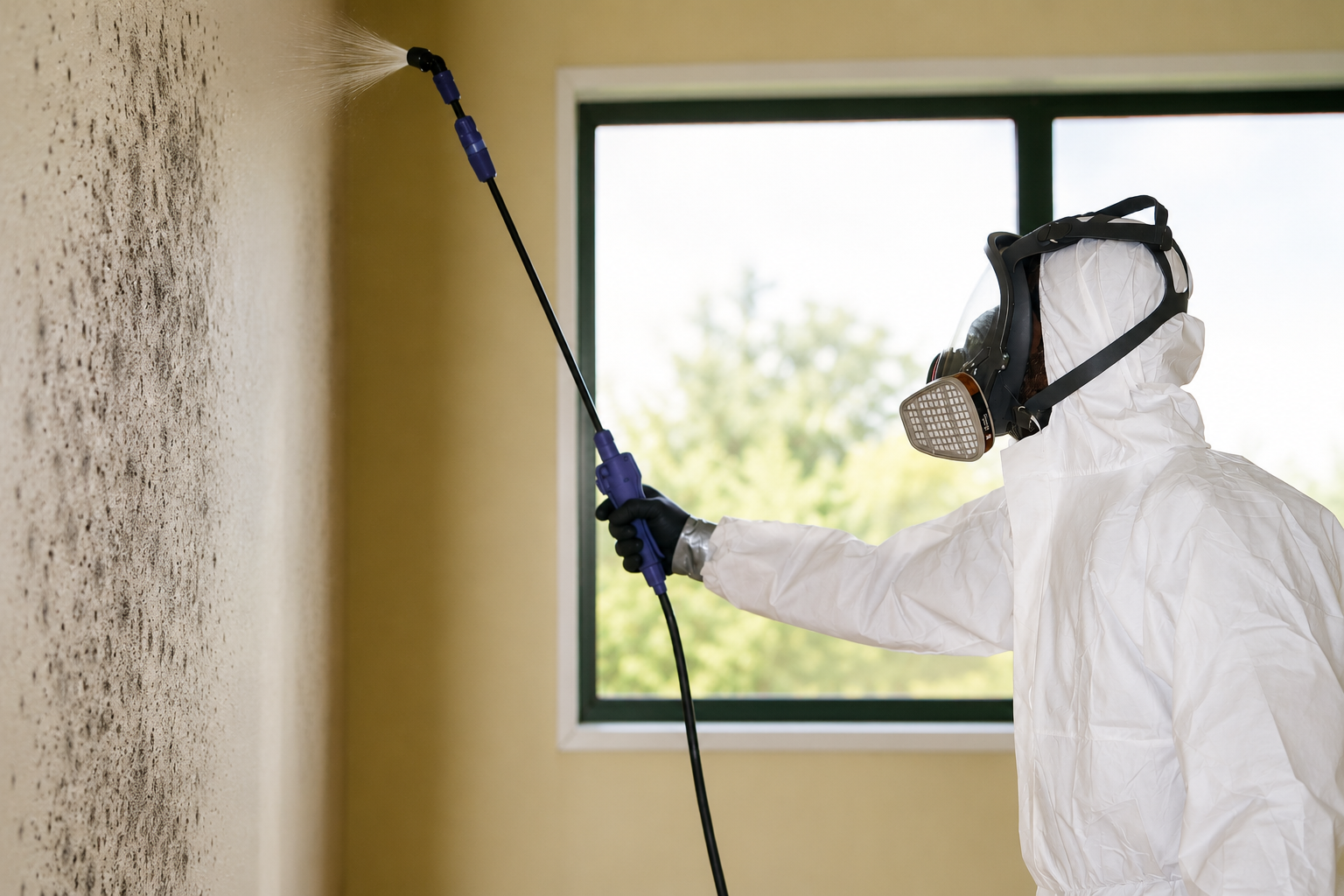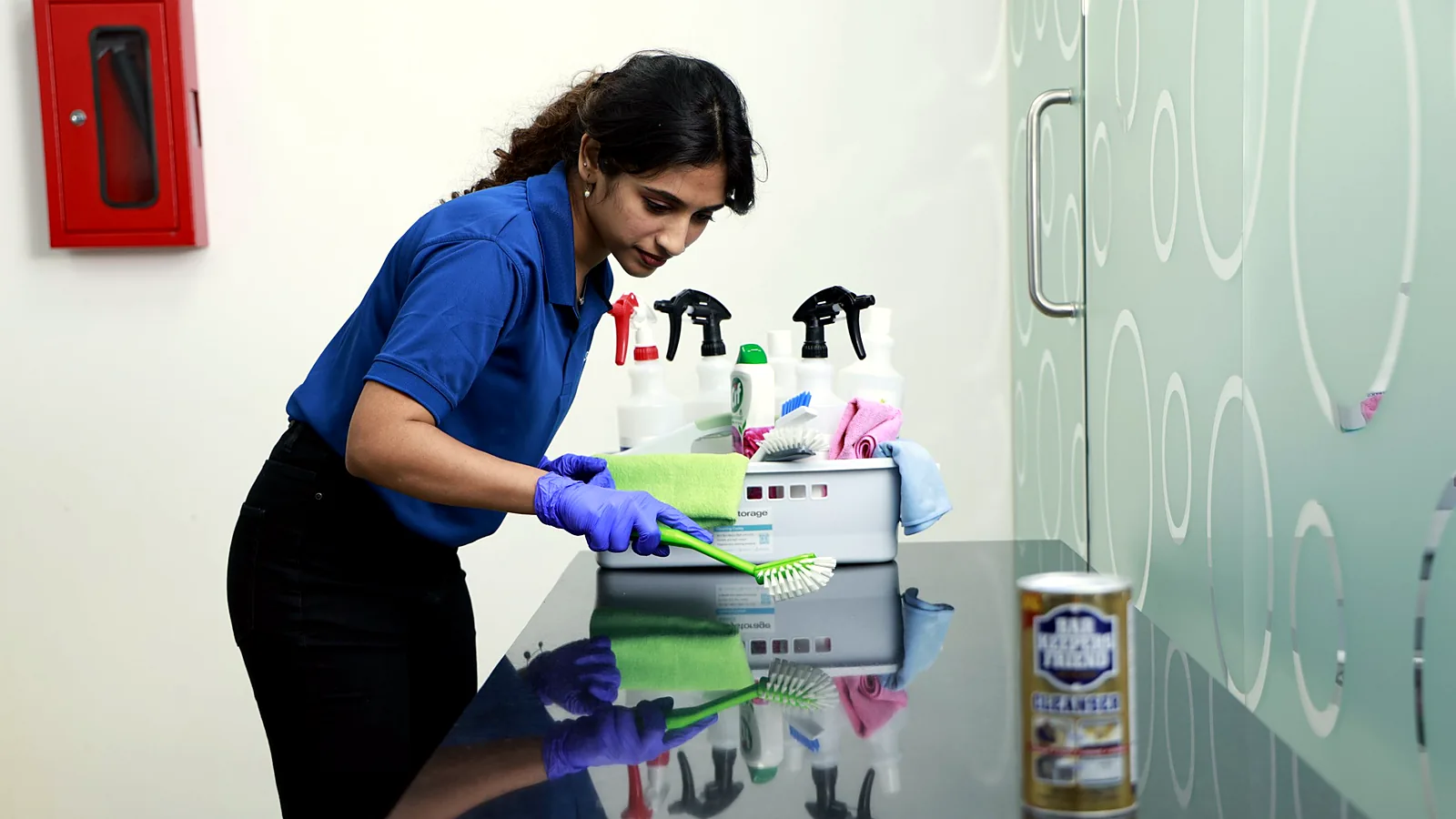
Wiping a dusty surface with a dry cloth is different from using a damp cloth. A dry cloth removes loose dust, but adding water helps loosen certain particles so they are easier to remove.
Choosing the right cleaning product works the same way. The product needs to suit both the surface and the type of dirt if you want effective cleaning without damage.
Grease, soap scum and mineral deposits need different cleaning solutions, and every surface material has its own compatibility requirements. An unsuitable product can leave residue, cause discolouration or permanently damage the surface.
Homes, offices and commercial properties across New Zealand contain a wide mix of surface materials, each requiring an appropriate cleaning approach. Choosing the right cleaning products helps protect these surfaces, maintain hygiene and achieve effective cleaning results. In this guide, we explain how to choose suitable cleaning products for different surfaces in New Zealand, considering surface compatibility, cleaning chemical properties and the types of dirt and stains you are dealing with.
QUICK ANSWER:
To choose the right cleaning product for any surface, check three things in this order:
- The surface material and finish – is it porous, coated, acid-sensitive or heat-sensitive?
- The type of soil – organic (food, oils, body fats), inorganic (limescale, minerals, rust), oily, or a colour stain.
- The task – routine cleaning, stubborn stain removal or disinfection.
Then follow the label for dilution, dwell time and rinsing, and patch-test anything unfamiliar.
Identifying Cleaning Challenges Before Selecting the Right Products
I often hear facility managers in Rotorua complain that their cleaning company isn’t cleaning properly because stubborn stains remain on sinks, toilets and other fixtures.
The problem is not always poor cleaning. Sometimes it is the cleaning chemical being used. Rotorua’s geothermal environment can contribute to sulphur-related staining, and these stains need a different cleaning approach.
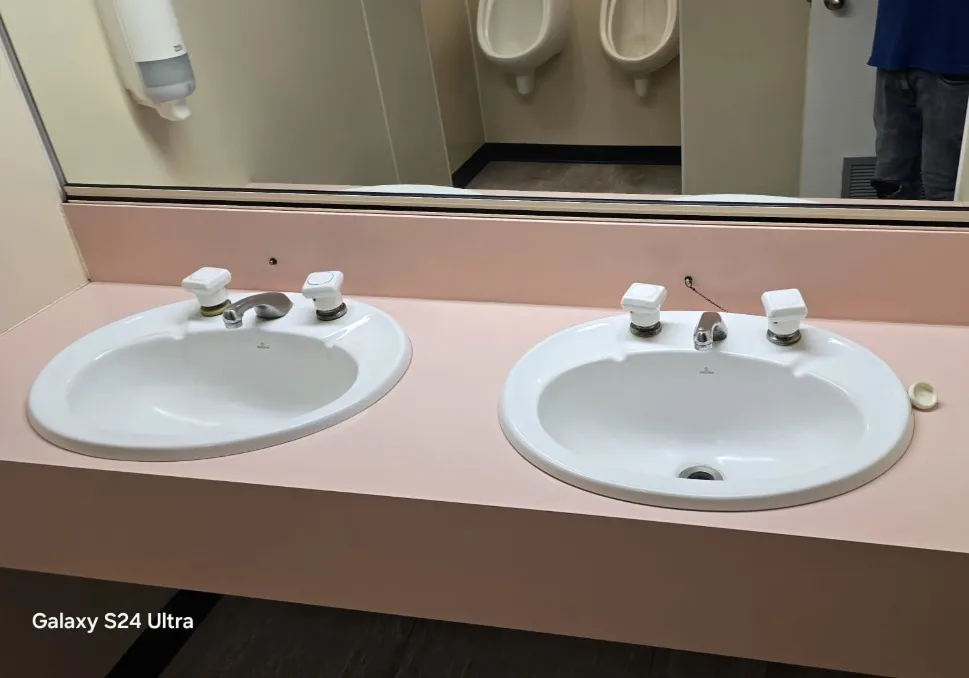
Organic stains generally come from substances such as food, oils and biological matter, while inorganic stains are associated with mineral deposits and other non-organic substances. They do not respond to the same cleaning products.
For example, sulphur-related inorganic stains may not come off easily with the alkaline cream cleansers commonly used for scrubbing. In these cases, an acid-based cleaner that is compatible with the surface can be more effective.
WHAT I TELL FACILITY MANAGERS
Sometimes the issue is not the cleaning itself, but the chemical being used. Sulphur stains are inorganic stains. Most people use an alkaline-based cream cleanser for scrubbing, but stains like sulphur may need an acid-based cleaner.
At QualGroup, we use an oxalic-acid-based cleaning product to tackle inorganic stains, always on surfaces it is compatible with.
Selecting the right chemical is only one part of the process. Changing the product alone does not always solve the problem, because the cleaning method matters too. At QualGroup, we look at the nature of the stain and the surface material to identify the cause of a stubborn stain before choosing an appropriate cleaning solution.
| Stain type | Typical examples | Usually responds to |
|---|---|---|
| Organic | Food residue, body oils, fats, biological matter | Alkaline cleaners |
| Inorganic | Limescale, hard water marks, mineral and sulphur-related deposits, rust | Compatible acidic cleaners |
For a deeper look at how different soils react with cleaning agents, read our guide to cleaning chemical types and how they work.
Types of Cleaning Products Based on pH Levels
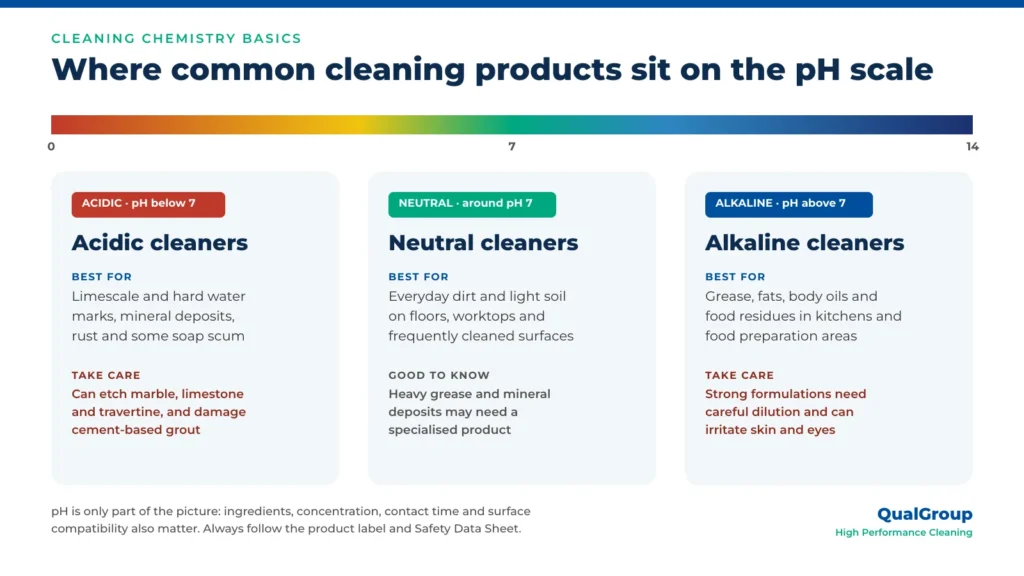
Cleaning products can be classified by their pH level, which influences the types of dirt they remove and their compatibility with different surfaces.
Acidic Cleaners
With a pH below 7, acidic cleaners help dissolve mineral deposits such as limescale, hard water marks and certain soap scum stains. They are commonly used for bathroom descaling, but they can etch or damage acid-sensitive materials such as marble and limestone.
Neutral Cleaners
A pH close to 7 makes neutral cleaners suitable for many routine cleaning tasks. They remove everyday dirt and light soil from floors, worktops and other frequently cleaned surfaces. Always check the manufacturer’s instructions before using them on delicate materials.
Alkaline Cleaners
Grease, fats, body oils and food residues are commonly tackled with alkaline cleaners, which have a pH above 7. They are useful for kitchen surfaces, cooking equipment and commercial food preparation areas. Strong formulations need careful dilution to avoid damaging certain finishes.
| Product type | pH level | Best suited for |
|---|---|---|
| Acidic cleaners | Below 7 | Limescale, mineral deposits and hard water marks |
| Neutral cleaners | Around 7 | Everyday dirt and routine cleaning |
| Alkaline cleaners | Above 7 | Grease, fats, oils and food residues |
Types of Cleaning Products Based on Their Function
Cleaning products can also be grouped by what they are designed to do – dissolve residues, remove stains or control microorganisms.
Solvent-Based Cleaners
Solvent-based cleaners dissolve or loosen substances that water alone cannot easily remove. They are commonly used on grease, oil, wax, adhesive marks and tar.
Bleaching Agents
Bleaching agents break down coloured compounds to reduce stains and discolouration. Chlorine-based and oxygen-based products are commonly used for suitable laundry and stain-removal tasks.
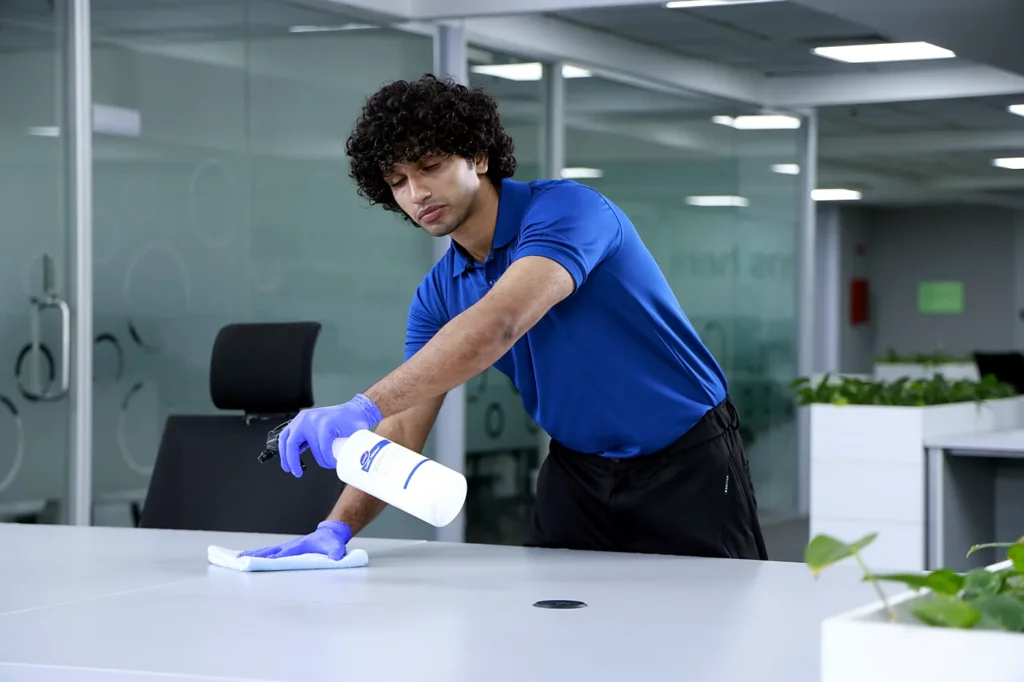
Disinfectants
Disinfectants reduce or inactivate microorganisms such as bacteria, viruses and fungi on suitable surfaces. They are commonly used in bathrooms, kitchens, healthcare facilities and workplaces. Remember that cleaning and disinfecting are different steps – our guide to cleaning, sanitising and disinfecting explains the difference.
| Product type | Main purpose | Common uses |
|---|---|---|
| Solvent-based cleaners | Dissolve stubborn residues | Grease, oil, wax and adhesives |
| Bleaching agents | Reduce stains and discolouration | Laundry and stain removal |
| Disinfectants | Reduce or inactivate microorganisms | Bathrooms, kitchens and workplaces |
Selecting Suitable Cleaning Products for Different Surfaces
Before cleaning, identify whether a surface is porous or non-porous. Porous materials absorb moisture and chemicals, which makes them more sensitive to harsh cleaners. Choose products based on the surface type, the soil and the manufacturer’s instructions.
MY FIRST RULE
I think the surface material is the most important consideration. If the wrong product is used, the surface can easily be destroyed. Acid can etch natural stone such as marble, and in tile and grout cleaning the grout lines can be damaged by acid.
That is why I look at the surface before the soil when choosing a product.
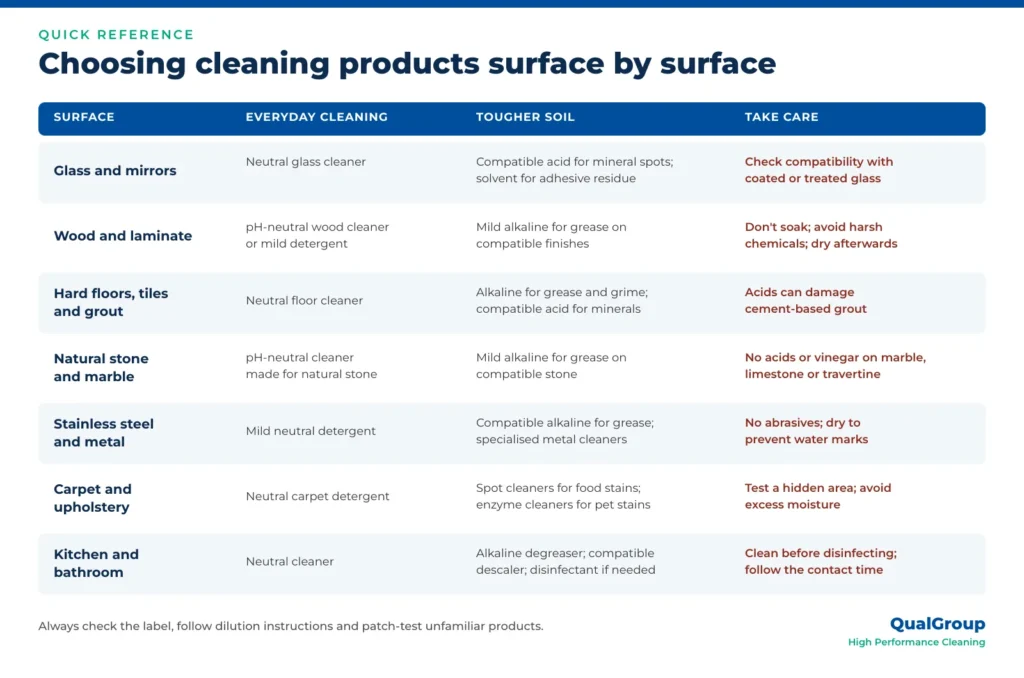
Glass and Mirror Surfaces
Common glass surfaces include windows, shower screens, office partitions, glass doors and display panels. These surfaces commonly collect:
- Dust and fingerprints
- Grease and oily marks
- Water spots and mineral deposits
- Adhesive residues
Use neutral glass cleaners for routine cleaning, compatible acidic cleaners for mineral deposits and solvent-based products for adhesive residues. Always check product compatibility with coated or treated glass.

Wooden and Laminate Surfaces
Timber, engineered wood and laminate are widely used in flooring, furniture, cabinetry and interior fittings. Their finishes can be affected by excessive moisture and strong cleaning chemicals. Common dirt and stains include:
- Loose debris and dust
- Fingerprints and hand marks
- Grease and food spills
- Scuff marks
- Water stains
Choose pH-neutral wood cleaners or mild detergents for regular maintenance. Mild alkaline solutions can tackle grease on compatible finishes. Avoid soaking the surface or using harsh chemicals that could damage protective coatings, and dry the surface after cleaning to prevent moisture damage.
Hard Floors, Tiles and Grout
Common hard flooring materials include ceramic tiles, porcelain, vinyl, concrete, natural stone and sealed flooring. These surfaces can collect:
- Dust and tracked-in mud
- Grease and oil deposits
- Food and beverage spills
- Soap scum and limescale
- Scuff marks and embedded grout dirt
Use neutral cleaners for regular maintenance, alkaline products for grease and stubborn grime, and compatible acidic cleaners for mineral deposits. Take extra care with acids around cement-based grout. For more on floor care, see protecting your floors through cleaning.
Natural Stone and Marble
Natural stone such as marble, granite, limestone and travertine is commonly used for flooring, benchtops, bathroom vanities and decorative walls. It can collect:
- Dust and everyday grime
- Food and beverage spills
- Oil and grease stains
- Water marks
- Mineral deposits
Use pH-neutral cleaners formulated for natural stone to remove everyday dirt. Mild alkaline cleaners may suit grease on compatible stone. Avoid acidic products, including vinegar-based solutions, on marble, limestone and travertine, as they can cause etching and dull patches.
Stainless Steel and Metal Surfaces
Stainless steel, aluminium and chrome-plated fittings are common in kitchen sinks, appliances, taps, handrails and commercial fixtures. These surfaces can collect:
- Fingerprints and smudges
- Grease and oil deposits
- Dust and surface grime
- Water spots and mineral deposits
- Soap residues
Use mild neutral detergents for routine cleaning and compatible alkaline cleaners for grease. Specialised metal cleaners can help maintain specific finishes. Avoid abrasive products that scratch, and dry surfaces after cleaning to prevent water marks.
Carpet and Upholstery
Carpets, rugs and upholstered furniture contain natural or synthetic fibres that trap dirt, absorb spills and develop stains. Common soils and stains include:
- Dust and fine particles
- Mud and tracked-in dirt
- Food and beverage stains
- Grease and body oils
- Pet stains and odours
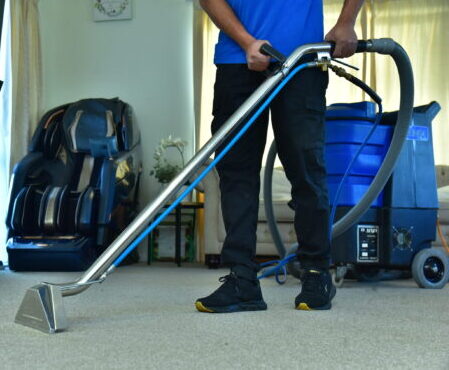
Use neutral carpet detergents for routine cleaning, fabric-safe alkaline cleaners for general grime, specialised spot cleaners for food and beverage stains, compatible degreasers for oily residues and enzyme-based cleaners for pet stains. Always check fabric compatibility, test products on a hidden area and avoid excessive moisture. For stubborn marks, our professional stain removal and carpet cleaning services can help.
Kitchen and Bathroom Surfaces
Kitchen and bathroom surfaces include benchtops, sinks, splashbacks, taps, tiles, toilets and shower fittings. Common dirt and stains include:
- Cooking grease and food residues
- Soap scum and limescale
- Water marks and mineral deposits
- Body oils and product residues
- Mould and mildew stains
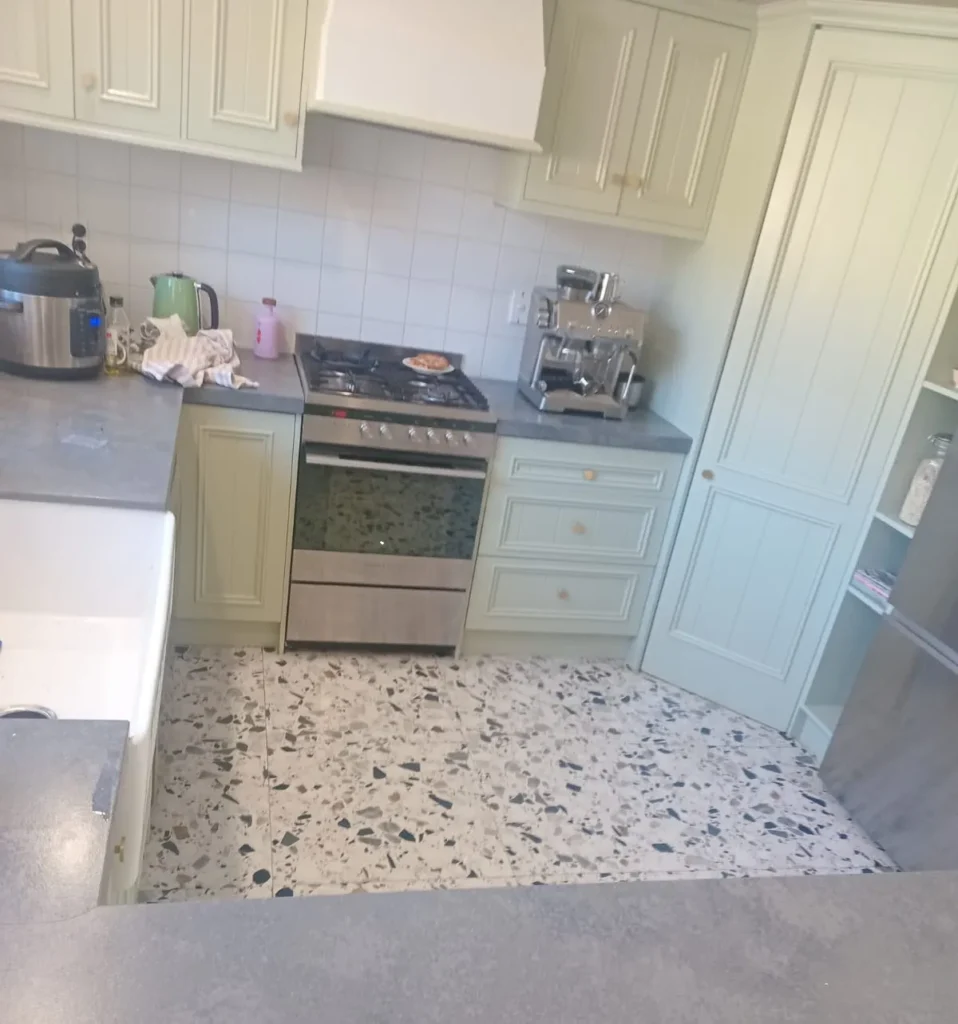
Use alkaline degreasers for kitchen grease, neutral cleaners for routine cleaning, compatible acidic cleaners for limescale and suitable disinfectants when disinfection is required. For food-contact surfaces, follow the label instructions on rinsing. Clean surfaces before disinfecting and follow the recommended contact time.
Note: Always consider the surface material, finish and type of soil before choosing a cleaning product. Check the manufacturer’s recommendations, follow the correct dilution and application instructions, and test the product on a small, inconspicuous area to avoid damage or discolouration.
Common Mistakes to Avoid When Choosing Cleaning Products
Choosing the wrong product, or using the right one incorrectly, can reduce cleaning effectiveness, damage surfaces and create health and safety risks. Avoid these common mistakes:
- Choosing cleaning products without considering the type of soil, surface material or fabric.
- Using one cleaner for every surface or ignoring manufacturer instructions.
- Applying incorrect dilution ratios or not following the recommended contact time.
- Using incompatible cleaning products that reduce cleaning or disinfecting effectiveness.
- Using harsh chemicals or abrasive tools on delicate surfaces.
- Skipping a patch test before applying an unfamiliar product.
- Overlooking health and environmental factors, such as chemical exposure risks, environmental impact or certifications.
Dilution, dwell time and rinsing are covered in detail in how to use cleaning chemicals safely, and product health and environmental credentials in what makes a cleaning product healthy and environmentally responsible.
How Professional Cleaners Select the Right Cleaning Products
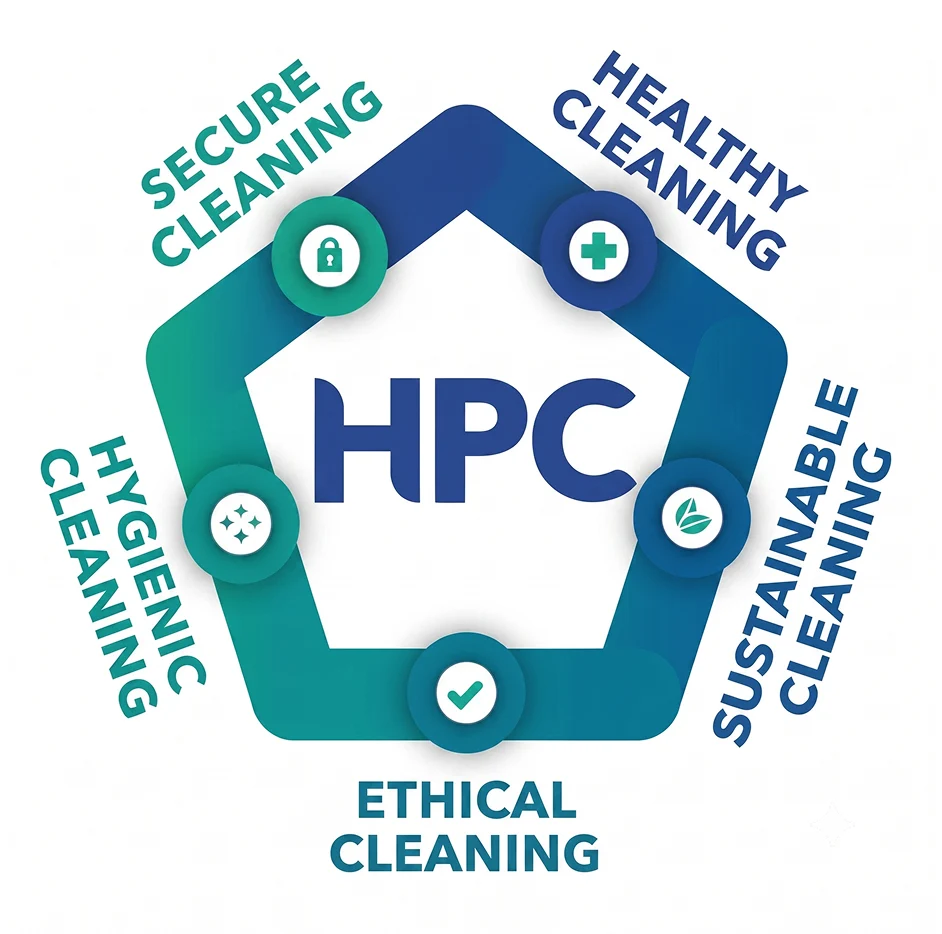
At QualGroup, our High Performance Cleaning (HPC) methodology guides how we select and use cleaning products. It brings together five principles: healthy, hygienic, sustainable, secure and ethical cleaning.
1. Assess the Surface and Type of Soil
We identify the surface material, its condition and the type of contamination, such as grease, organic dirt or mineral deposits. This helps us select an effective cleaning solution without damaging the surface or leaving unwanted residues.
2. Select Suitable Cleaning Products for Healthy Cleaning
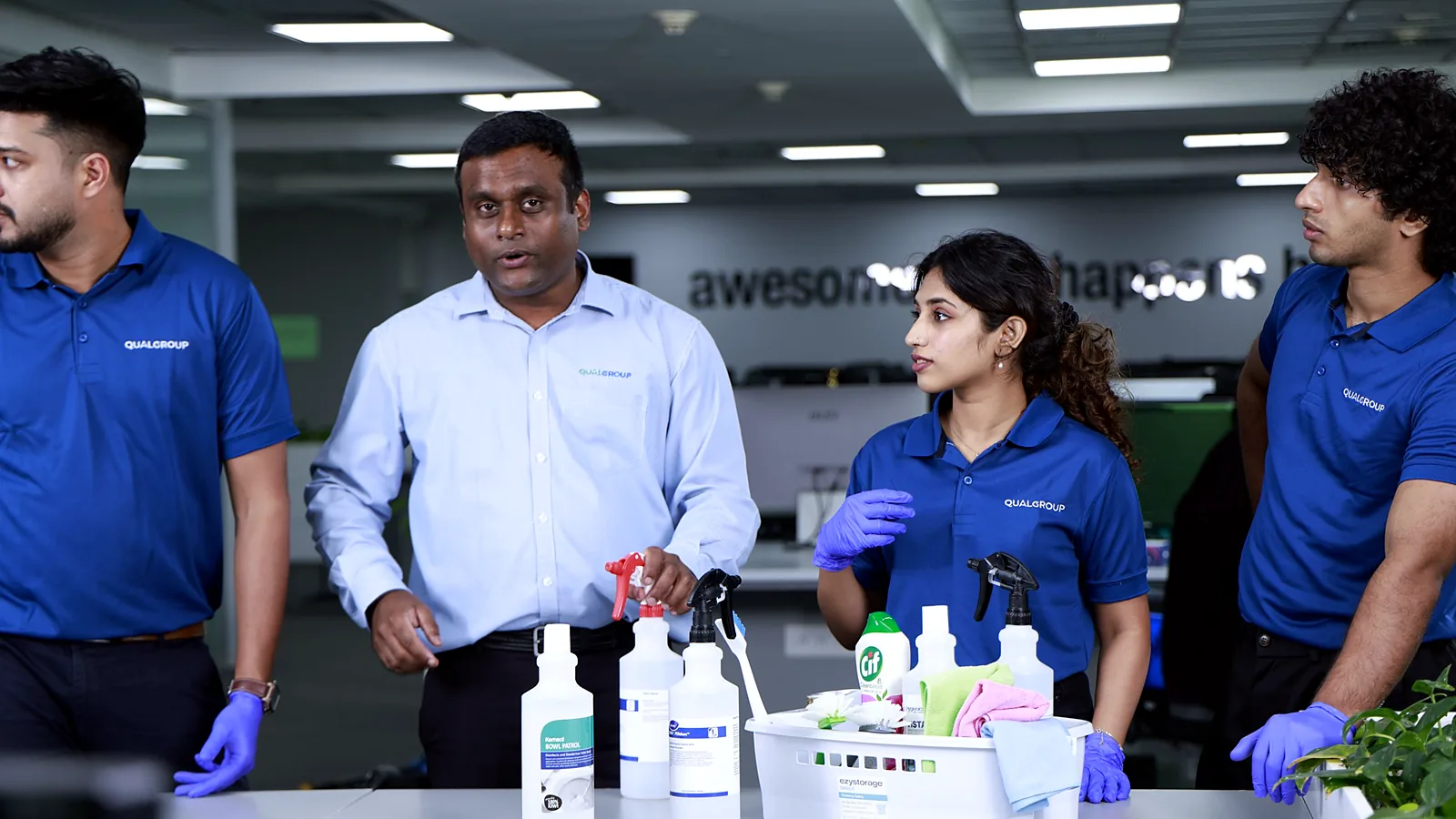
Our cleaning caddies hold the products most commonly needed in New Zealand facilities: a general-purpose cleaner, an acid-based toilet cleaner, a window cleaner, a suitable disinfectant and a neutral floor cleaner.
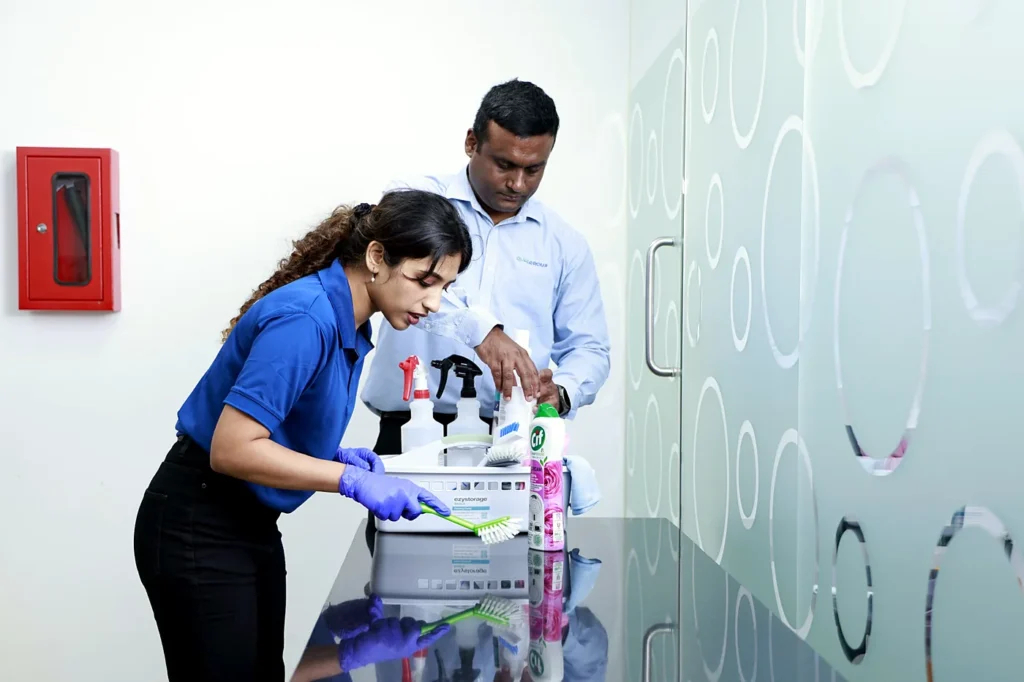
When selecting products, we consider biodegradable, fragrance-free and low-VOC formulations where suitable. These choices help reduce unnecessary chemical exposure, limit the release of volatile organic compounds into indoor air and support better indoor air quality. We also check chemical compatibility and product instructions so cleaning is effective without compromising surface safety.
3. Follow Correct Dilution and Application Instructions
The right product can still produce poor results if it is applied incorrectly. Stronger concentrations do not necessarily clean better, and over-dilution can reduce effectiveness. Our cleaning staff follow product instructions for application, dilution and contact time – especially with disinfectants, where the recommended contact time must be observed for the product to work as intended.
WORTH REMEMBERING
Keep in mind that chemicals alone will not do the job. Other aspects are just as important: dwell time, manual or mechanical action (agitation) and temperature.
4. Apply Sustainable and Hygienic Cleaning Methods
Our cleaning professionals follow a systematic approach that combines effective soil removal, appropriate disinfection and high-touch surface cleaning. Suitable cleaning sequences and separate equipment help prevent cross-contamination, while concentrated solutions, reduced packaging and efficient water use help minimise waste.
5. Protect People and Maintain Secure Cleaning Practices
Our cleaning staff use appropriate PPE, including gloves, masks, eye protection and protective clothing, depending on the task and product instructions. We also follow building access and security procedures while carrying out cleaning.
These steps are taught through QualClean Academy, our training programme for frontline cleaners and supervisors.
CONTINUE THE GUIDE SERIES
- What are cleaning chemical types and how do they work? – the chemistry behind acids, alkalis, solvents, bleaches and disinfectants.
- How to use cleaning chemicals safely: dilution, dwell time and application – getting results without damage or risk.
- What makes a cleaning product healthy and environmentally responsible? – VOCs, fragrance, certifications and disinfectant claims.
Get the Right Cleaning Solutions for Your Property
Choosing suitable cleaning products helps protect surfaces, maintain hygiene and achieve effective cleaning results. The right approach depends on the material, the type of contamination and your cleaning requirements.
Riya and I started QualGroup in Rotorua in 2014. We both come from healthcare, and I hold a Diploma in Infection Control Management. That background still guides our approach to hygiene, surface care and cleaning standards. Environmentally preferable products, responsible chemical use and sustainable methods help reduce unnecessary environmental impact while caring for building occupants.
Need professional cleaning support? Contact QualGroup to discuss cleaning suited to your property’s surfaces, hygiene requirements and cleaning needs.
Frequently Asked Questions
How do I choose the right cleaning product for different surfaces?
Choose a cleaning product based on the surface material, the type of stain or dirt, and the cleaning task. Check the label for surface compatibility and patch-test unfamiliar products.
What is the difference between acidic, neutral and alkaline cleaners?
Acidic cleaners remove mineral deposits and limescale, neutral cleaners suit routine cleaning, and alkaline cleaners break down grease, oils and organic dirt.
Can the same cleaning product be used on all surfaces?
No. Different surfaces need different cleaning products. Using an unsuitable chemical can cause discolouration, etching or surface damage.
What cleaning products are suitable for hard surfaces?
Neutral or surface-specific cleaners suit many hard surfaces, such as tiles, sealed floors and laminates. The right choice depends on the material and the type of dirt.
What cleaning products are suitable for marble and natural stone?
Use pH-neutral cleaners formulated for natural stone. Avoid acidic products that can etch or dull marble and other sensitive stone surfaces.
Which cleaning products are suitable for glass and mirrors?
Use non-abrasive glass cleaners formulated to remove fingerprints, dust and smudges without leaving streaks or residue.
Why should you avoid using the wrong cleaning chemicals?
The wrong chemical can cause surface damage, discolouration, corrosion and unwanted chemical reactions. It can also reduce cleaning effectiveness.
Are pH-neutral cleaning products suitable for everyday cleaning?
Yes. pH-neutral cleaners suit routine cleaning of many surfaces. Heavy grease, mineral deposits and stubborn stains may need a specialised product.