In Commercial cleaning , the biggest challenge isn’t always the cleaning itself — it’s the communication gap . The communication gap in commercial cleaning refers to the consistent breakdown in information exchange between clients, cleaning management, and front-line cleaning staff. There’s a common saying inside workplaces including, offices , schools , and facilities: “It’s very hard to get hold of cleaners.” One solution to this challenge is the use of cobots in cleaning, which facilitate better coordination and boost efficiency by combining robotic precision with human flexibility.
This article is for facility managers, business owners, and anyone responsible for maintaining workplace cleanliness. Bridging the communication gap is essential for maintaining high standards and customer satisfaction in commercial cleaning.
Because most cleaning occurs after hours, managers arrive the next morning with no easy way to clarify expectations, communicate issues, or confirm whether all tasks were fully complete according to standards the night before. This disconnect makes it difficult to maintain consistent standards, manage recurring issues, or ensure hygiene expectations are met. Setting clear expectations is crucial so everyone understands their roles and responsibilities. Good communication practices, such as active listening, are also essential to bridge the gap between managers and cleaning staff. Ambiguity in communication is a major cause of breakdowns, particularly for remote or multi-site cleaning teams.
This article explores why communication breaks down, how it impacts workplace hygiene and satisfaction
, and what managers truly need from a professional cleaning provider to achieve reliable
, high-performance cleaning every day.
Introduction to the Industry
The cleaning industry plays a crucial role in supporting the health, safety, and productivity of businesses and organizations across New Zealand. As a commercial cleaning company, delivering consistent, high-quality cleaning services is not just about maintaining appearances—it’s about creating safe, hygienic environments that foster wellbeing and productivity for everyone who uses the space. A strong company culture fosters open communication and helps prevent miscommunication and disputes, which is essential for maintaining productivity and a positive workplace.
Service quality is at the heart of customer satisfaction in the cleaning business. Today’s clients expect more than just spotless floors and tidy workspaces; they want a cleaning partner who understands their unique needs, listens actively, and communicates effectively. Excellent customer service in the cleaning industry means being responsive, proactive, and transparent—qualities that build trust and long-term relationships. Putting communication principles into practice, such as active listening, is crucial to improve communication and build trust with clients. Employee satisfaction also contributes to high-quality service delivery.
However, communication gaps remain one of the most significant challenges facing the industry. When expectations aren’t clearly set or feedback isn’t acted upon, even the best cleaning solutions can fall short. These gaps can lead to misunderstandings, missed tasks, and ultimately, a decline in customer satisfaction. That’s why it’s essential for cleaning companies to identify and bridge these gaps through open communication, proper training, and the use of digital tools. Improving communication within teams leads to better performance and morale.
Investing in ongoing staff training ensures that every team member understands both the technical aspects of cleaning and the importance of clear communication. Knowledge sharing and the role of knowledge workers are key to reducing communication gaps and improving workplace efficiency. Digital tools and reporting systems make it easier to track cleaning tasks, respond to issues in real time, and keep everyone on the same page. Investment in these tools is a long-term benefit for the business, supporting transparency and accountability. By prioritising indoor air quality, adopting eco-friendly cleaning solutions, and implementing sustainable practices, a cleaning company can further enhance the customer experience and demonstrate a commitment to health and environmental responsibility.
Each team member performing their job effectively is crucial for customer satisfaction and business success. When discussing standards and expectations, it’s important to align cleaning activities with relevant metrics and information to ensure service quality. Regular maintenance extends the lifespan of office assets and boosts employee productivity. An organized workspace is essential for maintaining focus and reducing stress.
Ultimately, understanding and meeting customer expectations is what sets leading cleaning businesses apart. By focusing on service quality, effective communication, and continuous improvement, commercial cleaning companies can create significant increases in customer satisfaction, build strong client relationships, and establish a reputation for excellence in the industry.
Understanding Customer Expectations
Understanding customer expectations is essential for any commercial cleaning company aiming to deliver high-quality cleaning services and achieve outstanding customer satisfaction. Every client has unique needs, priorities, and standards—what works for one business may not suit another. That’s why it’s crucial for cleaning companies to actively listen to customer feedback and concerns, using these insights to tailor their services accordingly.
A cleaning company committed to excellent customer service will regularly engage with clients through surveys, focus groups, or one-on-one meetings. These touchpoints help identify what matters most to each customer, whether it’s infection prevention, sustainable cleaning solutions, or flexible scheduling. By gathering and acting on this feedback, companies can make significant changes to their cleaning processes, ensuring that every service is aligned with client expectations.
This proactive approach not only helps identify areas for improvement but also builds trust and long-term relationships. When customers see that their input leads to real improvements in service quality, their satisfaction increases—and so does their loyalty. In the competitive cleaning industry, understanding and exceeding customer expectations is not just a nice-to-have; it’s essential for delivering quality service and standing out from the crowd.
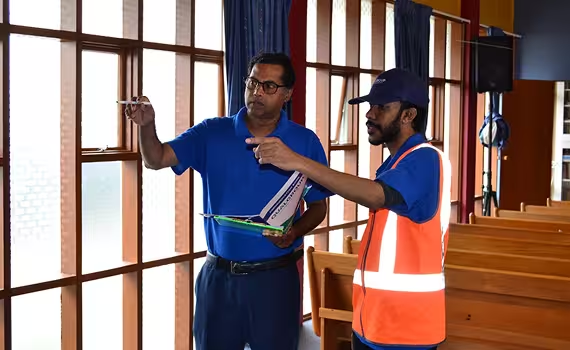
Common Misconceptions About the Cleaning Industry
Misunderstandings about the cleaning industry can create unnecessary communication gaps between cleaning companies and their clients. One of the most common misconceptions is that cleaning services are limited to basic tasks like vacuuming floors or wiping down surfaces. In reality, a quality cleaning company goes far beyond the basics, prioritizing indoor air quality, proper waste management, and the use of eco-friendly cleaning solutions to create a healthier, safer environment for everyone.
Another widespread misconception is that all cleaning companies are the same, and that cleaning services are a simple commodity. However, the difference between providers can be significant. A reputable cleaning company invests in proper training for its staff members, adopts the latest technology, and implements robust management systems to ensure consistent, high-quality service. These investments lead to better communication, fewer mistakes, and a higher standard of cleanliness.
It’s also important to recognize that the cleaning industry is constantly evolving. Companies that stay ahead of the curve by embracing new cleaning solutions, ongoing staff training, and transparent communication practices are better equipped to meet—and exceed—customer expectations. By understanding these common misconceptions, clients and cleaning companies can work together more effectively, leading to improved service quality and stronger partnerships.
Real-World Communication Challenges in Commercial Cleaning
The biggest frustrations with commercial cleaning rarely come from poor skill—they come from missing communication systems. Our customers consistently report similar challenges with previous providers:
- Hard to reach cleaners : After-hours cleaning makes it difficult to chase the team when issues arise.
- Limited visibility : Managers have no clear way to see what tasks were completed or missed until problems are discovered the next day.
- Delayed responses from supervisors: Emails can require multiple follow-ups, and phone calls may go unanswered.
- Recurring issues : Even after a problem is reported and addressed, the same cleaning issue can resurface weeks later without proper tracking.
- Inefficient workflows : Without structured reporting or escalation, small problems quietly grow into recurring frustrations.
- Unresolved communication issues : Can lead to conflicts within the team and with clients, harming team dynamics and overall effectiveness.
Language barriers, lack of structured feedback, and the belief that “no news is good news” are key contributors to communication issues in commercial cleaning. Additionally, undefined or vague expectations from clients often lead to assumptions and missed tasks, further widening the communication gap. Using the right communication tool is essential to prevent misunderstandings and ensure clarity between all parties.
These challenges highlight the importance of structured reporting systems, two-way communication tools, and accountability measures to ensure cleaning tasks are completed efficiently and consistently. Assigning a dedicated “point person” for clients ensures clear communication and accountability in the cleaning process. Managers must also be attentive to what clients are genuinely concerned about, such as cleanliness standards and staff friendliness, which are sometimes overlooked. Effective communication with customers includes promptly informing them of schedule changes, which demonstrates dependability and helps manage expectations.
The Importance of Regular Feedback in Commercial Cleaning
In New Zealand workplaces, many managers hesitate to raise issues. Kiwis are generally polite, respectful, and non-confrontational. Even when problems are noticed, they are often ignored or quietly tolerated rather than communicated to the cleaning provider. In most cases, this lack of open communication results in persistent issues that go unresolved
Unfortunately, this approach almost always leads to one of two outcomes:
- Ongoing cleaning failures
- Money wasted on a service that never improves
From QualGroup’s experience of over a decade in the commercial cleaning , we’ve identified a clear and consistent pattern in retail cleaning services.
Sad but true — managers who give regular feedback receive better cleaning outcomes. Making feedback a regular practice is essential for bridging the communication gap and ensuring continuous improvement. Identifying communication gaps can be done by asking your team questions during one-on-ones and team meetings.
When feedback is not provided:
- Cleaners assume everything is acceptable
- Issues repeat unnoticed
- Standards slowly decline
- Frustration builds silently
- Contracts eventually fail without warning
Feedback is not complaining — it’s part of the process.
Professional cleaning companies expect feedback. In fact, good cleaners rely on it .
The Consequences of Poor Communication
When communication breaks down, it affects more than workflow. Facilities experience:
- Hygiene risks : Missed sanitisation or high-touch points.
- Repeated mistakes : No proof that all tasks are complete according to established checklists or standards.
- Frustrated staff': Employees notice inconsistencies in cleaning standards.
- Conflicts: Communication breakdowns can lead to conflicts among staff and between management and cleaning teams, harming team dynamics.
- Time drains for managers: Extra effort chasing responses or clarifying issues.
Up to 90% of commercial cleaning complaints are linked to communication failures—not cleaning skill. Identifying red flags such as missing reporting systems, absent communication books, or slow supervisor responses is crucial to prevent ongoing problems.
Common Communication Breakdowns You Should Watch For
Commercial cleaning problems usually stem from predictable red flags:
- No communication book
- No digital reporting or ticketing system
- No escalation pathway for urgent issues
- No documented scope of work on-site, with no clear expectations set or documentation that is relevant to the team's needs
- No quality check records or audit trails
- Supervisors slow (or unresponsive) to email and phone
Selecting the right communication tool is essential for maintaining clarity and efficiency in your cleaning operations.
If you’re experiencing even one of these, your cleaning issues will continue no matter who your provider is.
How QualGroup Bridges the Communication Gap
Even skilled commercial cleaning teams can struggle when communication systems are weak. Without a clear way to report issues, confirm that all tasks are complete, or request updates, small problems can escalate unnoticed.
At QualGroup, we solve these issues with two complementary systems: a structured communication book and a digital reporting system . These tools are designed to improve communication and foster good communication practices by setting clear expectations and guidelines for all team members. They create clarity and consistency, ensuring that every team member knows what is expected and what has been completed. Regular review meetings are held to assess performance, discuss improvements in cleaning services, and ensure that communication routines are put into practice to maintain high standards.
The Communication Book
For day-to-day communication, including small issues such as minor breakages or special requests, we provide a Communication Book that is kept on your premises.
This book is the first thing our cleaning staff check when they arrive on site. We use it to acknowledge your instructions and to record when tasks have been completed, ensuring nothing is missed or forgotten. Our team practice active listening by carefully reading and acknowledging client instructions in the Communication Book. Active listening begins with one simple step: close your mouth. This approach enhances customer service skills and leads to better problem-solving, helping us bridge the communication gap in commercial cleaning.
Benefits of the Communication Book
Our communication book bridges the gap between after-hours cleaning teams and daytime managers. It provides:
- Two-way communication: Managers log concerns, and cleaners respond directly.
- Issue tracking: Every task or request is recorded—nothing is lost.
- Clear accountability: Everyone knows what was completed.
- Instant transparency: Managers can review actioned items the next morning.
- Team efficiency: Cleaner workflows are optimised while maintaining high standards.
“The QualGroup communication book worked extremely well. We could easily leave concerns, and the cleaners acknowledged and addressed them promptly. It gave us confidence that our space was genuinely being taken care of.” – Client Feedback .
Digital Reporting Systems: Smart Cleaning Technology
Modern smart cleaning technology takes reporting to the next level. Selecting the right digital tool is essential for enhancing communication and reporting accuracy. Digital tools allow teams to log:
- Real-time task updates
- Before/after photos
- Completed checklists
- Urgent issues with automatic escalation
- Performance reports over time
Knowledge sharing and access to information through digital systems help reduce communication gaps and improve workplace efficiency. Usage sensors can provide data to prioritize daily cleaning tasks based on actual space usage rather than fixed schedules. Using CRM software helps track client preferences and history effectively, ensuring communication is tailored and client needs are met.
With professional cleaning reporting , managers gain transparency, faster responses, digital audit trails, and confidence that every task is tracked and completed.
How QualGroup Does It
Our digital ticketing and reporting system ensures no task is missed, supervisors review logs daily, and managers can access records anytime for verification. This supports our High-Performance Cleaning (HPC) programme and guarantees consistently high-quality results.
Personalizing Cleaning Services
Personalizing cleaning services is essential for building strong client relationships and ensuring customer satisfaction. No two businesses are exactly alike, and a one-size-fits-all approach rarely delivers the best results. A forward-thinking cleaning company will take the time to understand each client’s unique requirements, including their preferred schedule, budget constraints, and specific cleaning tasks.
Assigning a dedicated account manager to each client is a proven way to foster open communication and gather ongoing feedback. This point of contact can regularly check in with clients, address concerns promptly, and make adjustments to the cleaning plan as needs evolve. Additionally, leveraging digital tools allows cleaning companies to create customized cleaning schedules and checklists, ensuring that every task is completed to the client’s satisfaction.
By personalizing cleaning services, companies demonstrate that they value their clients’ input and are committed to delivering a tailored, high-quality experience. This approach not only improves customer satisfaction but also helps build long-lasting relationships based on trust, transparency, and consistent results.
Emergency Preparedness and Response
Emergency preparedness and response are critical elements of a professional cleaning company’s service offering. Unexpected incidents—such as spills, floods, or contamination events—can have a major impact on indoor air quality and the overall safety of a facility. That’s why it’s essential for cleaning companies to have a clear, well-communicated plan in place for handling emergencies.
A robust emergency response plan should outline procedures for quickly containing incidents, communicating effectively with both clients and staff, and restoring affected areas to a safe, clean condition. Investing in new technology, such as emergency response apps or real-time notification systems, can further enhance a cleaning company’s ability to respond rapidly and efficiently.
By prioritizing emergency preparedness, cleaning companies not only protect the health and safety of their clients but also demonstrate their commitment to quality and reliability. This proactive approach builds confidence and trust, ensuring that clients know they can count on their cleaning partner when it matters most.
How Client Feedback Helps Our Own Cleaning Standards
At QualGroup, we actively encourage ongoing feedback because we know it leads to better service, higher accountability, and stronger long-term partnerships . Our systems are designed to make feedback easy, visible, and productive — not personal or confrontational.
Routine Site Visits
Our customer service team regularly (without overwhelming you) checks in via email or short surveys to gather your feedback. Our Operations Manager also visits your site on a routine basis to ensure you are satisfied with the service being delivered.
Complaint Escalation Process
If a formal complaint is raised, our customer service team creates a ticket and escalates it to the operations team immediately. The operations team resolves the issue as quickly as possible, and once the resolution is confirmed, our customer service team follows up with you to ensure the matter has been resolved and that you are satisfied with the outcome.
Steps in Our Feedback Process
- All feedback is logged in our CRM system, where we create action plans and track outcomes.
- This allows us to refer back to previous discussions, monitor recurring issues, and ensure continuous improvement.
- As part of our client onboarding process, we develop a Client Information Sheet that captures all site-specific instructions — for example, keeping lights on in certain rooms or any unique operational requirements.
- All new staff are inducted using this information, so you don’t have to repeat the same instructions over and over again.
Ongoing Feedback Loops Improve Cleaning Quality
At QualGroup, maintaining consistent service quality is central to our approach. We actively monitor performance, follow up on issues, and use feedback to continually refine our processes. Ensuring all cleaning tasks are complete according to established checklists is essential to maintaining high standards and meeting customer expectations. This ensures that repeated issues are prevented and high standards are maintained. Implementing these feedback loops has led to a significant increase in customer satisfaction and overall service quality.
Client Feedback
“QualGroup goes above and beyond to ensure we are satisfied. They follow up on complaints, address issues fast, and make sure they never happen again. We feel genuinely heard.”
The Future of Cleaning Services
The future of cleaning services is being shaped by rapid advances in technology, evolving customer expectations, and a growing focus on health and sustainability. Cleaning companies that want to lead the industry must be willing to invest in new technology—such as automated cleaning equipment and smart reporting tools—to deliver more efficient, consistent, and transparent service.
Sustainable cleaning practices are also becoming a top priority. Clients increasingly expect their cleaning company to use eco-friendly cleaning solutions, reduce waste, and support overall wellbeing. By adopting these practices, companies not only protect the environment but also enhance the customer experience and improve customer satisfaction.
Open communication will remain at the heart of successful cleaning relationships. Companies that prioritize clear, two-way communication and actively seek customer feedback will be best positioned to adapt to changing needs and deliver quality service. By focusing on innovation, sustainability, and strong client relationships, cleaning companies can create a positive customer experience, meet the highest standards of service, and secure their place as leaders in the future of the cleaning industry.
What Managers Really Need
To bridge the communication gap and achieve reliable, high-performance cleaning, managers need:
- Clear communication channels: Ensure open, two-way communication between clients, cleaning management, and front-line staff.
- Structured feedback systems: Implement regular feedback loops and scheduled check-ins to proactively address issues. Encourage knowledge sharing among team members to reduce communication gaps and improve workplace efficiency.
- Technology-based reporting: Use cleaning apps and task-tracking software for real-time updates, digital audit trails, and transparent reporting. Select the right tool for communication and reporting to maintain consistency and clarity.
- Dedicated point person: Assign a single contact for clients to ensure clear communication and accountability throughout the cleaning process.
- Bilingual training and documentation: Provide training and materials in multiple languages to overcome language barriers within the cleaning workforce.
- Defined expectations: Set clear expectations by clearly documenting the scope of work and site-specific instructions, ensuring all documentation is relevant to the team's needs to avoid assumptions and missed tasks.
- Regular quality checks: Conduct routine site visits and audits to maintain standards and address concerns promptly.
By focusing on these actionable needs, managers can close the communication gap, improve cleaning outcomes, and ensure a consistently hygienic and productive workplace.
Close the Communication Gap with QualGroup
Most workplace cleaning frustrations aren’t about skill, they’re about communication . Without clear reporting and accountability, tasks get missed, issues repeat, and managers spend more time chasing answers than focusing on their work.
QualGroup fixes this . Using our communication book and reporting system, every concern is logged, every task tracked, and every standard verified. The result? Consistent quality, faster issue resolution, better hygiene
, and peace of mind for managers.
We make it easy to see the difference with a free, no-obligation site audit , which includes:
- Facility Walkthrough: We assess your cleaning environment in detail
- Gap & Risk Analysis: Identify inefficiencies and potential issues
- Expert Recommendations: Practical guidance, whether or not you choose QualGroup
Explore our Commercial Cleaning and High-Performance Cleaning services located in Tauranga , Rotoura and Hamilton or request your free site visit today and see how QualGroup keeps your workplace spotless, hygienic, and stress-free.