During the height of the COVID-19 pandemic, I watched facility managers across New Zealand spend significant money on fogging services and feel genuinely reassured afterward. The machines looked impressive. The certificates looked official. And within days, people in those facilities were sick again.
This article is about re-contamination: how fast it happens, which surfaces are most vulnerable, why fogging appeals to us psychologically even when the science does not support it, and what a frequency-based cleaning system actually looks like in a NZ workplace.
For the technical explanation of why fogging fails without manual cleaning first — and why dwell time and cleaning sequence matter — see our Complete Guide to Sanitisation and Disinfection for NZ Workplaces. This article picks up where that one leaves off.
How Quickly Does a Disinfected Surface Actually Re-Contaminate?
Research on high-touch surfaces in healthcare environments consistently shows that frequently touched surfaces can be re-contaminated within one to two hours of cleaning — sometimes faster in high-traffic areas. A reception desk cleaned at the start of the day may have been touched by dozens of hands before morning tea. A lift button cleaned at 8am has been pressed hundreds of times by lunch.
This is not a failure of the cleaning product. It is simply how occupied environments work. Microorganisms travel on hands, clothing, droplets, and shared objects — and they do so continuously, regardless of what happened to that surface an hour earlier.
Why Does Fogging Feel Like the Answer?
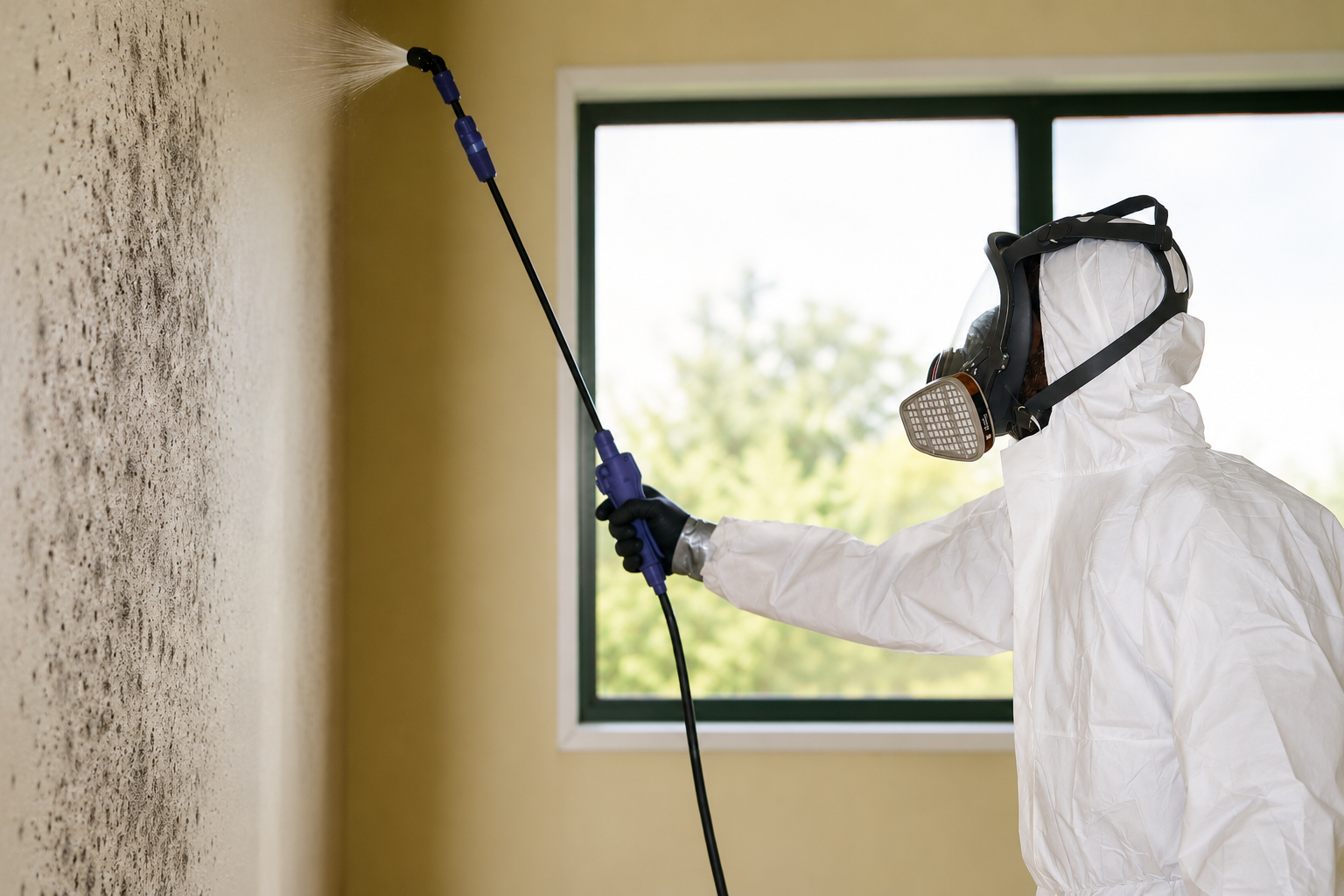
To understand fogging – it is the spraying of hydrogen peroxide and silver ion solution on surfaces to rid of contamination. Understanding the psychology here matters because it explains why facilities keep purchasing fogging services even after they have not worked.
When surfaces re-contaminate this quickly, the instinct is to do something that covers everything at once. Something that reaches every corner, every crevice, every surface simultaneously. Fogging looks like exactly that. A machine disperses chemical mist throughout an entire room in minutes. It is visible, dramatic, and on the surface — reassuring.
The problem is that fogging addresses the wrong question. It asks: “How do we cover every surface at once?” The right question is: “Which surfaces carry the most risk, and how frequently do they need to be cleaned?”
Which Surfaces Re-Contaminate the Fastest?
Re-contaminate within minutes in a busy facility:
- Main entry door handles and push plates
- Reception desk surfaces and sign-in screens
- Shared bathroom tap handles
- Lift buttons
- Shared phone handsets
Re-contaminate within one to two hours:
- Kitchen benchtops and appliance handles (fridge, microwave, urn)
- Meeting room table surfaces and chair arms
- Printer and photocopier touch panels
- Light switches in shared areas
- Toilet flush buttons and cubicle door locks
Re-contaminate within a few hours to half a day:
- Individual desk surfaces in open-plan offices
- Personal keyboard and mouse (in shared-desk environments)
- Bathroom soap dispenser pumps
- Stair handrails
Lower re-contamination risk — touched less frequently by fewer people:
- Window ledges
- Skirting boards
- Walls and ceilings
- Floors in low-traffic areas
What Cleaning Frequency Does Your NZ Workplace Actually Need?
The right cleaning frequency is not determined by the clock or by convention. It is determined by re-contamination rate, which is driven by foot traffic, the number of people sharing each surface, and the vulnerability of the people in the building.
Standard commercial office (20–50 staff, moderate traffic)
Surface Type | Minimum Cleaning Frequency |
Entry door handles and push plates | 3 times daily |
Shared bathroom surfaces (taps, flush buttons, dispensers) | 3 times daily |
Kitchen benchtops and appliance handles | 3 times daily |
Meeting room tables and chair arms | After each use or twice daily |
Lift buttons and stair handrails | Twice daily |
Individual desk surfaces | Daily |
Floors and low-touch surfaces | Daily |
Childcare centre (constant close contact, vulnerable occupants)
Surface Type | Minimum Cleaning Frequency |
Nappy-change areas | After every use |
Food preparation and eating surfaces | Before and after every meal |
Bathroom tap handles, toilet flush buttons | After every use or hourly |
Shared toys and learning materials | Daily minimum; more during illness periods |
Door handles and entry surfaces | 3–4 times daily |
Sleep mats and cots | After each use |
Aged care facility (vulnerable population, high transmission risk)
Surface Type | Minimum Cleaning Frequency |
Resident room call buttons and tap handles | Twice daily minimum |
Dining room tables, chair arms, serving equipment | Before and after every meal |
Shared bathroom handrails and flush buttons | After every use or hourly |
Mobility aids (walkers, wheelchairs) | Daily |
Shared lounge surfaces and remote controls | Twice daily |
Reception and visitor surfaces | 3 times daily |
Healthcare and medical clinic
Surface Type | Minimum Cleaning Frequency |
Treatment room surfaces and examination tables | Between every patient |
Reception desk and EFTPOS terminals | Hourly during operating hours |
Waiting room chairs and armrests | Twice daily minimum |
Clinical touchpoints (light switches, door handles) | Hourly |
Bathroom surfaces | Twice daily minimum |
These frequencies are baselines. During flu season, a gastro outbreak, or periods of high absenteeism, they should increase — particularly for the highest-risk surfaces.
A Personal Observation: The Shift That Changes Everything
That experience shapes how we approach every decontamination and sanitisation consultation at QualGroup.
What Does a Frequency-Based Hygiene Plan Actually Look Like?
A frequency-based hygiene plan starts with a risk assessment, not a product catalogue. It asks four questions about every surface in the facility:
- How many people touch this surface each day?
- How many different people touch it — one person’s personal desk, or every visitor who walks through the door?
- What is the consequence if this surface transmits an infection — inconvenience, or a vulnerable person becoming seriously ill?
- What is the realistic re-contamination timeline given the foot traffic?
At QualGroup, every commercial cleaning contract includes a site-specific hygiene maintenance plan that maps re-contamination risk by surface and sets cleaning frequencies accordingly. It is reviewed regularly — not set once and forgotten. And it is monitored through regular audits and cleanliness testing, not assumed to be working because the cleaner showed up.
How Does This Relate to Fogging?
The facilities that have the lowest rates of illness transmission are not the ones that fog most often. They are the ones that clean the right surfaces, at the right frequency, with the right products, using trained staff who understand why it matters.
That is the difference between looking clean and being clean. And in a childcare centre, aged care facility, or corporate office in Hamilton, Tauranga or Rotorua, that difference is not academic.
What QualGroup Clients Say
Start Investing in Frequency with Commercial Cleaners You Can Trust
If your current cleaning plan cannot tell you how often your door handles are cleaned, your kitchen tap handles are disinfected, or your shared equipment is wiped down — it is time for a different conversation.
QualGroup offers a free site audit for workplaces across the Bay of Plenty and Waikato regions, including Tauranga, Hamilton, Rotorua, Whakatane, and Taupo. We will assess your re-contamination risk by surface, review your current cleaning frequencies, and recommend a practical hygiene maintenance plan built around your facility’s actual risk profile.
Or call us directly on 0800 800 353.
FAQs: Surface Re-Contamination and Cleaning Frequency
In an occupied workplace, a correctly disinfected surface can re-contaminate within minutes on a high-traffic surface. The goal is not to maintain a permanently disinfected surface — it is to clean high-risk surfaces frequently enough to keep re-contamination in check.
No. Fogging treats a surface at a single moment in time. The moment that surface is touched, breathed near, or exposed to a contaminated object, re-contamination begins. Fogging cannot substitute for a frequency-based cleaning schedule.
At minimum, three times daily in a standard office. In a childcare centre, aged care facility, or healthcare clinic, they should be cleaned more frequently — every one to two hours during operating hours in high-risk environments.
In a limited role — treating soft furnishings, grout, and hard-to-reach surfaces as part of a proper decontamination response — fogging has value. As a standalone service replacing manual cleaning and scheduled high-touch point maintenance, it does not deliver reliable infection control.
Entry door handles and push plates — touched by every person who enters or exits the building, often without hand hygiene immediately before or after. In most workplaces, these are cleaned once or twice a day at best.
Through a site-specific risk assessment that maps each surface by re-contamination rate, foot traffic, the number of people sharing the surface, and the vulnerability of the building’s occupants. Contact our team for a free site audit.