One of the most common questions I hear from business owners is this:
It’s a fair question — and one that many New Zealand businesses misunderstand. The difference between commercial deep cleaning vs regular cleaning is not about effort. It’s about purpose.
What Is Commercial Cleaning — and Where Does Deep Cleaning Fit?
Commercial cleaning refers to structured, scope-based cleaning designed for workplaces — offices, healthcare facilities, childcare centres, retail environments, and shared commercial buildings.
- Regular commercial cleaning
- Commercial deep cleaning services
If you’d like a detailed breakdown, our guide to what commercial cleaning includes explains the full scope of modern professional cleaning services in NZ.
What is Regular Commercial Cleaning?
It typically includes:
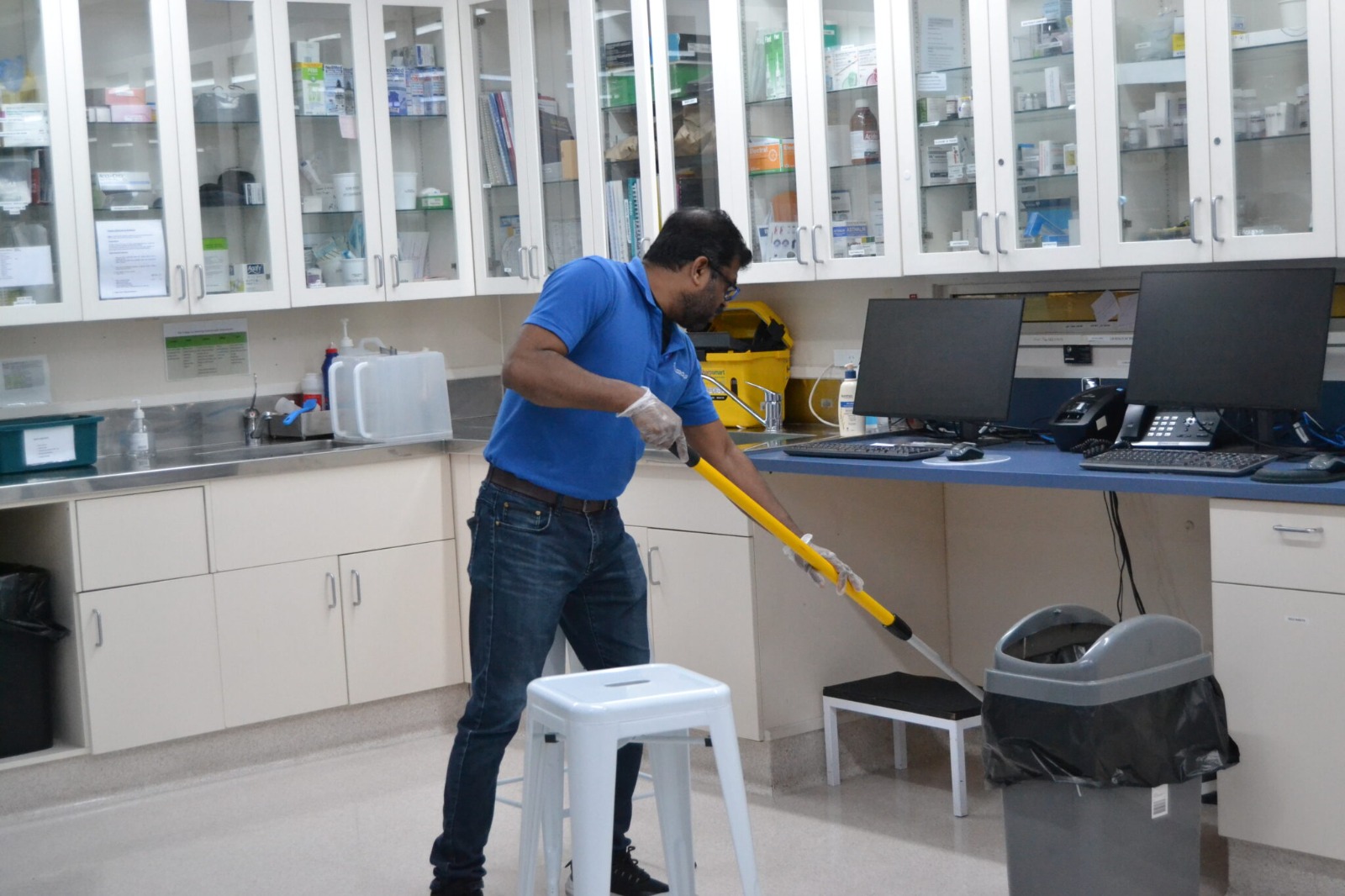
- Vacuuming and mopping floors
- Emptying bins
- Cleaning kitchens and bathrooms
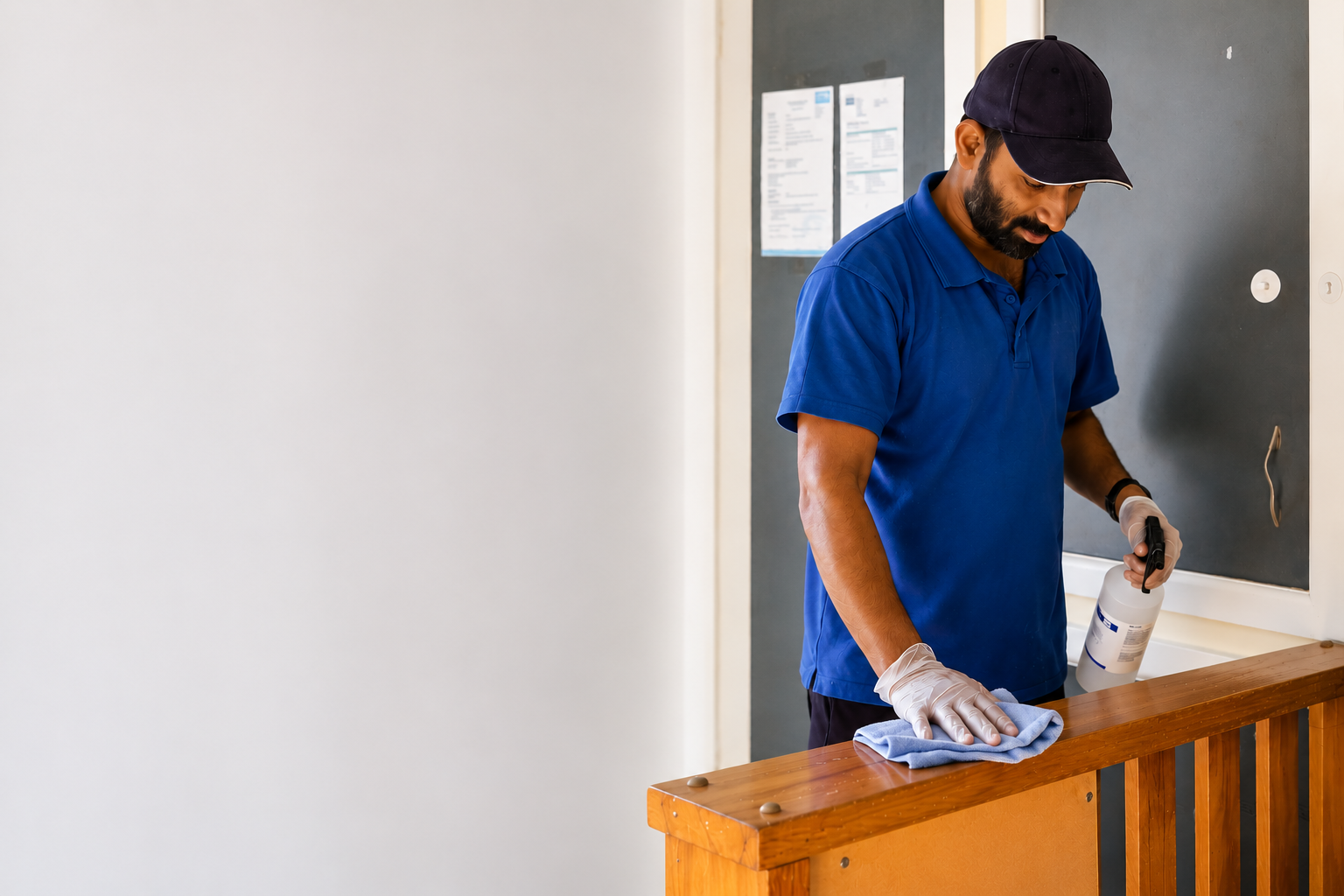
- Surface wipe-downs
- Dusting accessible areas
However, regular commercial cleaning does not remove embedded grime, mineral build-up, deep carpet contamination, or accumulated residue.
What is Commercial Deep Cleaning?
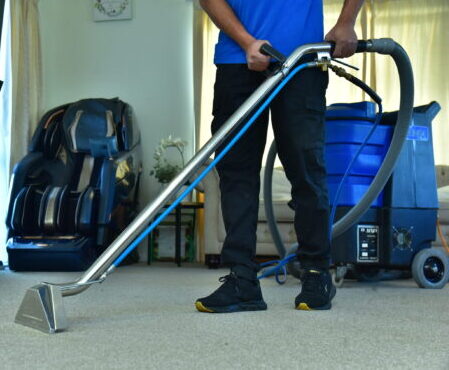
- Carpet extraction and low-moisture restoration
- Floor scrubbing and resealing
- Washroom descaling and grout treatment
- High-level dust removal
- Detailed kitchen degreasing
- Intensive sanitisation of high-touch areas
It uses specialist equipment, trained staff, and methodical sequencing.
In environments such as childcare centres or healthcare facilities, deep cleaning supports infection prevention and compliance readiness.
Difference Between Deep Cleaning and Regular Cleaning (Comparison Table)
Area | Regular Cleaning | Deep Cleaning |
Frequency | Daily / Weekly | Quarterly / Biannual / Annual |
Purpose | Maintain appearance | Remove build-up & restore hygiene |
Equipment | Standard tools | Specialist machinery & techniques |
Focus | Visible surfaces | Hidden contamination & residue |
Compliance Support | Limited | Strong audit support |
Long-Term Impact | Short-term upkeep | Asset protection & IAQ support |
Why Doesn’t Regular Cleaning Remove Everything?
- Embedded carpet soil
- Mineral scale in washrooms
- Grease vapour in kitchens
- Dust in vents and ceiling spaces
Carpet fibres, for example, can hold multiple times their weight in dust and allergens. High-touch surfaces can reaccumulate contamination within hours in shared environments.
A Real-World Example: When “Clean” Wasn’t Actually Clean
Early in my commercial cleaning career, I visited an office that had been cleaned daily for years.
When we conducted a scheduled carpet extraction, the recovery tank filled with almost black water.
When Do Businesses Need Deep Cleaning?
- Seasonal change (especially pre-winter hygiene preparation)
- Pre-audit or compliance inspections
- After illness outbreaks
- End-of-lease or tenancy change
- High-traffic wear and visible surface dulling
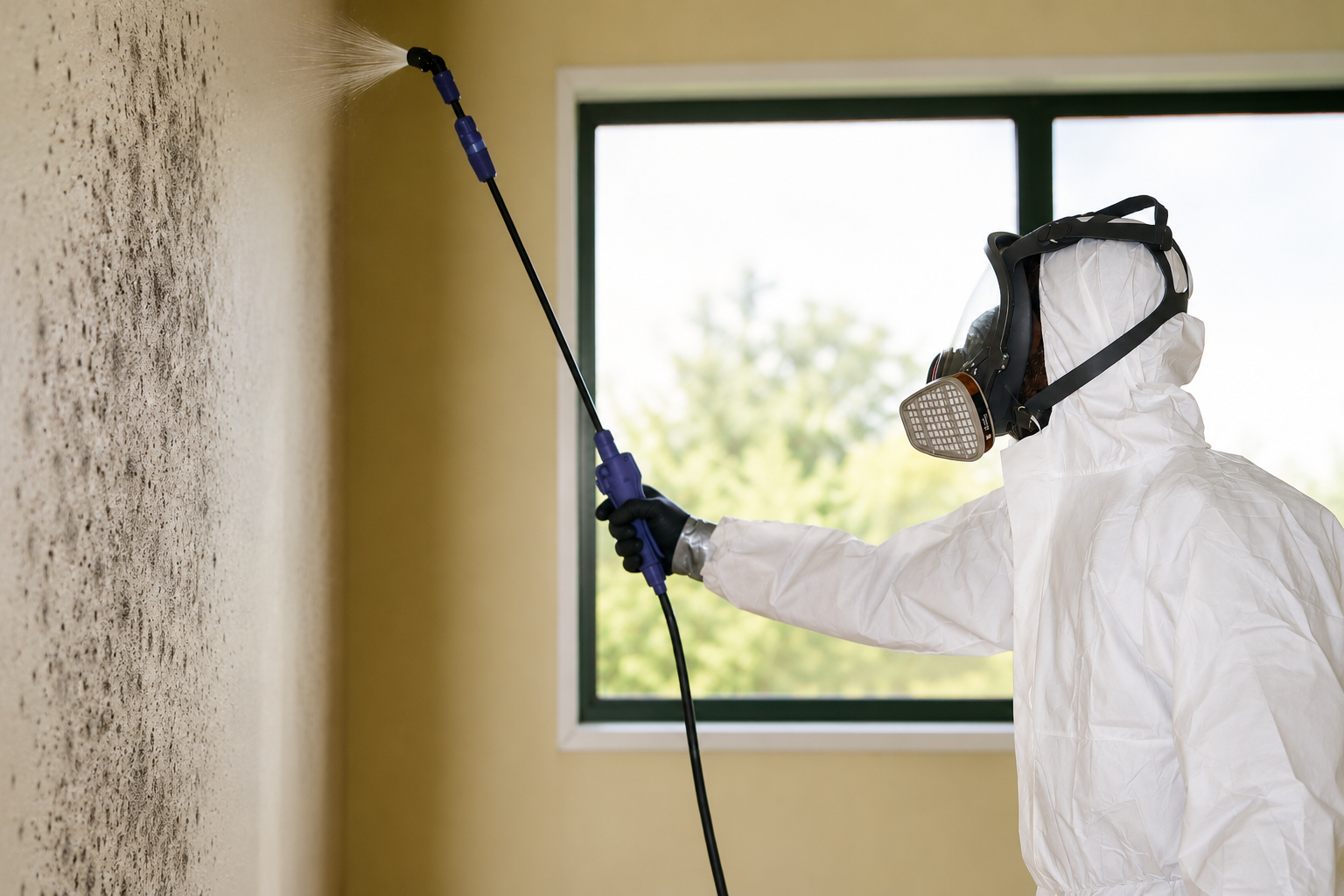
Where illness response is required, specialist decontamination and sanitisation services may also be necessary.
What Happens If You Skip Deep Cleaning?
- Persistent odours
- Reduced indoor air quality
- Premature floor wear
- Surface staining
- Increased long-term maintenance costs
How Regular and Deep Cleaning Work Together
- Removes embedded grime
- Restores hygiene baseline
- Improves routine cleaning efficiency
- Extends asset life
At QualGroup, we align this layered approach with our High Performance Cleaning (HPC) framework — structured, risk-based cleaning rather than reactive intervention.
For a broader overview of how our industry-leading cleaning methodology ensures cleaning services are delivered with maximum efficiency, visit our resource on What Is QualGroup High Performance Cleaning (HPC)?
How I Approach Deep Cleaning at QualGroup
- Site-specific risk assessment
- Defined scope and sequencing
- Specialist equipment selection
- Careful chemical selection to protect IAQ
- After-hours or staged scheduling to reduce disruption
We integrate deep cleaning into ongoing Commercial Cleaning Services across Tauranga, Rotorua and Hamilton to ensure continuity rather than fragmentation.
What Does Your Business Need? Deep Cleaning or Regular Cleaning?
Regular commercial cleaning maintains your environment. Commercial deep cleaning protects it.
When structured together, they form a professional, resilient cleaning programme.
At QualGroup, we believe informed decisions create stronger outcomes. If you’re unsure whether your workplace needs a deep clean or a review of your current cleaning programme, you can contact our team here for a free commercial cleaning audit and a customised cleaning plan tailored to your business.
Frequently Asked Questions
Most offices benefit from quarterly or biannual deep cleaning. High-risk environments may require more frequent scheduling.
Yes. Daily cleaning maintains surfaces. Deep cleaning removes embedded build-up that routine cleaning cannot address.
Not usually. With structured planning, deep cleaning is often completed after hours or in controlled stages.
Yes, due to specialist labour and equipment. However, it reduces long-term maintenance and asset replacement costs.
Healthcare, childcare, hospitality, retail stores and high-traffic commercial offices typically require more frequent deep cleaning.