Walk into almost any early childhood centre, and you’ll find bleach in the cleaning cupboard. It’s long been associated with hygiene, compliance, and “doing the right thing.”
At QualGroup, we provide professional childcare cleaning services across Tauranga, Rotorua, and Hamilton. As your trusted childcare cleaning partner, we understand that maintaining a safe and hygienic environment for little ones is a top priority. One of the most common questions we receive is: should bleach be used daily in childcare environments, particularly following Ministry of Education hygiene guidance and New Zealand regulations.
The short answer? It depends. According to New Zealand’s Ministry of Education hygiene guidelines, bleach is mainly used as a disinfectant rather than a cleaning agent. This aligns with health education resources that emphasise bleach’s role in sanitising surfaces after thorough cleaning with soapy water to remove dirt and organic matter. Cleaning and disinfecting are not the same thing, and understanding that difference is key to protecting children’s health, preserving surfaces, and maintaining safe, compliant standards.
As specialists in High-Performance Cleaning (HPC) for childcare centres, we base our approach on evidence, safety protocols, and industry best practices to ensure effective and child-friendly hygiene.
Cleaning vs Disinfecting in Childcare Centres (NZ Guidelines)
What is the difference between cleaning and disinfecting?
-
-
Cleaning removes dirt, food residue, grease, and organic matter from surfaces. Surfaces must be cleaned with soap and water to remove organic matter before applying disinfectent, as dirt reduces effectiveness.
-
Disinfecting kills germs after the surface has been cleaned. Disinfectent must remain visibly wet on a surface for a specific contact time, traditionally 2 to 10 minutes, to be effective against germs.
-
Bleach is a disinfectant, not a cleaning agent. Applied to a dirty surface — such as a sticky table, paint-splattered floor, or toy shelf — it becomes less effective. Organic matter can inactivate disinfectants, which may result in more chemical exposure without better hygiene outcomes.
Safe cleaning products for childcare centres should prioritise residue-free soil removal, followed by targeted disinfection only when required. Cleaning solutions are carefully selected to be suitable for little ones, supporting healthy spaces and reducing unnecessary chemical exposure.
Biofilm Exists on Nearly Every Surface
Biofilm refers to a complex, organised community of bacteria and other microorganisms that adhere to surfaces. It can be found on countertops, sinks, toilets, bathtubs, faucets, refrigerators, stoves, floors, remote controls, mobile phones, lamps, door handles, eyeglasses, toys, and more. Without removing biofilm through proper cleaning, surfaces remain unclean and unprotected.
QualGroup’s High-Performance Cleaning (HPC) methodology prioritises the careful selection of cleaning chemicals and procedures to uphold the highest hygiene and safety standards. Our process involves a thorough two-step approach: first, surfaces are meticulously cleaned to remove visible dirt and organic matter, then targeted disinfection is applied where necessary.
We utilise Accelerated Hydrogen Peroxide (AHP), a cutting-edge, hospital-grade disinfectant and cleaner renowned for its powerful oxidation and biofilm removal capabilities. AHP delivers rapid, broad-spectrum sanitising—often within 1 to 3 minutes—effectively eliminating viruses and bacteria while remaining non-toxic, non-irritating, and eco-friendly. It safely decomposes into water and oxygen, reducing chemical residues and environmental impact. This expert technique demonstrates QualGroup’s strong commitment to providing safe, effective cleaning solutions tailored specifically for childcare centres and other sensitive environments, ensuring compliance with health standards.
Why Bleach Is Commonly Misused in Childcare Centres
Many centres default to bleach because of the belief that “stronger must be better.” Past outbreak responses and long-standing habits reinforce the idea that visible chemical smell equals cleanliness.
However, daily bleach use is not always necessary. Consistent cleaning with the right products is safer, kinder to surfaces, and compliant with NZ regulations.
Risks of Daily Bleach Use in Childcare Environments
Routine bleach use can:
-
-
Leave chemical residues on floors, tables, and toys
-
Affects indoor air quality, particularly in enclosed classrooms
-
Causes skin, eye, or respiratory irritation
-
Damage finishes over time, dulling surfaces and breaking down protective coatings
-
Children are more vulnerable to harmful chemicals due to their close proximity to the floor and tendency to put objects in their mouths.
In environments where children crawl, sit, and touch surfaces constantly, these risks are amplified. Maintaining surface integrity is critical to creating safe and welcoming childcare centres.
Why Bleach Is Unsuitable for Routine Floor Cleaning
Bleach is alkaline and aggressive. Most vinyl and sealed-floor systems require a neutral floor cleaner to preserve shine and finish. Repeated bleach use increases porosity, accelerates wear, and shortens the life of strip-and-seal coatings — leading to costly maintenance and disruptive floor restoration cycles.
Daily floor cleaning should prioritise residue-free, neutral solutions, reserving disinfectants for high-risk scenarios.
QualGroup’s Professional Childcare Cleaning Service Approach
At QualGroup, we separate daily cleaning from targeted disinfection. Our High-Performance Cleaning approach is evidence-based, documented, and compliant with NZ best practices. We select residue-free, eco-friendly products that are safe for children and approved by third-party authorities. Disinfectants are applied only where genuinely required, following strict dilution, dwell-time, PPE, and ventilation standards. Cleaning plans and products are carefully selected to be suitable for childcare environments, ensuring the creation of healthy spaces for little ones.
This structured system ensures safe, compliant, and effective hygiene while protecting children and surfaces.
“I have dealt with QualGroup at our childcare centre in Rotorua for several years. They are a professional company, offering a good service and are always happy to go the extra mile with us!! Highly recommend their services.” – Dave Kvalsvig
When Disinfectants Are Appropriate
Targeted disinfection is appropriate during:
-
-
Daily cleaning of high-risk touchpoints such as door handles, light switches, and similar surfaces
-
Illness outbreaks
-
Bodily fluid incidents
-
Practical Cleaning & Disinfection Tips
-
-
Clean and disinfect high-touch surfaces frequently; this two-step high-touch point cleaning improves hygiene and significantly reduces infection in childcare centres.
-
Clean surfaces, including high chair trays, immediately after meals and play to prevent dirt accumulation and the spread of germs.
-
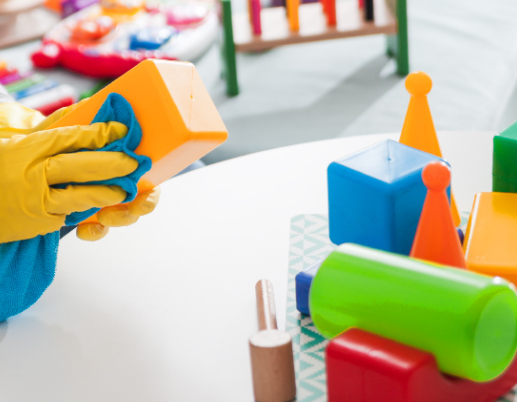
Mouthed toys should be cleaned and disinfected daily.
-
Separate washable and non-washable toys
-
Rinse food-contact areas and surfaces like diaper changing tables after bleach (if bleach is used) application to avoid skin irritation.
-
Maintain cleaning logs and audit sheets
-
Store chemicals securely and use PPE
-
Toilets, basins, taps, partitions, and changing surfaces should be cleaned and disinfected daily to protect children and staff.
-
What do NZ guidelines say about bleach in early childhood centres?
The Ministry of Education outlines hygiene requirements but does not mandate daily blanket disinfection of all surfaces. It is important to note that not all disinfectants are effective against the broad spectrum of germs that can cause illness, and proper dilution, safe storage, and proper disposal are essential. Childcare facilities must meet local and state health licensing regulations, which may differ from general guidelines in New Zealand.
Environmental responsibility also matters. Using eco-friendly, certified products reduces unnecessary chemical load while maintaining standards — an approach aligned with QualGroup’s broader sustainability focus.
Benefits of Professional Childcare Cleaning Services
Choosing a professional cleaning service for your childcare centre brings a host of benefits that go beyond just a sparkling clean environment. A safe and healthy environment is crucial for the well-being of both students and staff, and professional cleaners are trained to deliver hygienic results that meet the highest standards. By outsourcing cleaning, institutions can reduce the risk of illness and infection, as well as minimize employment relations issues that can arise from managing in-house cleaning staff.
Professional cleaning services are tailored to the unique needs of each facility, taking into account the size, layout, and specific requirements of different areas. This customized approach ensures that every classroom, common area, and play space is maintained to optimal cleanliness, supporting a healthy environment for learning and development. With a focus on high standards and attention to detail, professional cleaning providers help childcare centres create a welcoming, hygienic space where children can learn and grow safely.
Cleaning Services and Options
Childcare centres have diverse cleaning needs, and a professional cleaning provider like QualGroup offers a wide range of services to meet those requirements. From daily cleaning and sanitising of high touch areas to deep cleaning and targeted disinfecting of classrooms and bathrooms, experienced cleaners can develop a tailored cleaning plan for each institution. Additional services such as carpet cleaning, window cleaning, and building washes are available to ensure every part of the facility is maintained to the highest standards.
A key advantage of working with a professional cleaning provider like QualGroup is the use of non-toxic, environmentally friendly cleaning products that are safe for children, staff, and the environment. Whether it’s disinfecting surfaces, maintaining hygienic classrooms, or providing specialised carpet cleaning, these services are designed to support a healthy, safe, and supportive learning environment, and the same principles apply to QualGroup’s specialised healthcare cleaning services. By choosing a trusted cleaning provider such as QualGroup, childcare centres can be confident that their facilities are clean, hygienic, and ready to meet the needs of their children every day.
Sector-Specific Impact
Comprehensive training for cleaning staff is crucial to maintain high standards in childcare cleaning, reflecting QualGroup’s commitment to delivering high-performance commercial cleaning services across New Zealand. Training programs for cleaning professionals encompass essential cleaning skills and processes, health and safety protocols, and hygienic practices tailored to childcare environments. Regular upskilling ensures that cleaning personnel stay updated with the latest techniques and standards, enabling them to consistently provide a quality, safe, and compliant service.
Qualclean Academy’s structured training delivers measurable cleaning outcomes tailored to the unique needs of different childcare and early learning environments and underpins 5 reasons to trust QualGroup for reliable cleaning:
-
- Daily Cleaning vs Disinfection – Ensures routine hygiene while minimizing chemical exposure
- High-Touch Surfaces – Targeted cleaning reduces the spread of germs
- Floors & Play Areas – Neutral cleaners preserve finishes and safety
- Toys & Learning Materials – Washed and disinfected appropriately for child safety
Build a Safer, Smarter Cleaning Programme
Safe childcare hygiene is about using the right products, at the right time, in the right way — not stronger chemicals.
Our mission and vision remain focused on creating cleaner, healthier environments that inspire productivity and well-being, ensuring every corner contributes to a better tomorrow.
Join the hundreds of businesses that trust QualGroup not just for cleanliness, but for the health of their staff, children, and visitors every day.
Take control of your childcare hygiene — clean smarter, safer, and more effectively with QualGroup
Selecting a Professional Childcare, commercial, and specialised cleaning service in Tauranga, Rotorua & Hamilton
When choosing a provider, look for:
-
- Demonstrated childcare-specific experience
- Documented chemical safety systems
- Police-vetted staff
- Clear KPIs and audit checklists
- Site management processes
A reliable childcare cleaning partner should deliver comprehensive cleaning solutions on a regular basis, incorporating a proper cleaning plan and professional cleaners. Cleaning teams should use the latest equipment and follow strict hygiene protocols. Review their understanding of cleaning chemicals in early childhood centres and request references from other NZ centres. QualGroup provides structured, compliant cleaning solutions across Bay of Plenty and Waikato regions and are happy to answer your questions. Get in touch with us here.
FAQs
- Is bleach safe to use daily in childcare centres?No — it should be used strategically, not as a routine cleaner. Bleach must be used carefully, properly diluted, and stored out of reach of children.
- What is the difference between cleaning and disinfecting?Cleaning removes dirt; disinfecting kills germs after cleaning. Surfaces must be cleaned with soap and water before disinfecting.
- Can bleach damage childcare centre floors?Yes. Repeated use can break down floor polish and accelerate wear.
- What cleaning products are safest for children?Residue-free, eco-certified, neutral cleaners designed for childcare settings and carefully selected to be suitable for little ones.
- When should disinfectants be used in childcare settings?During outbreaks, bodily fluid incidents, or high-risk contamination events.
- Are eco-friendly cleaning products effective in childcare centres?Yes — when selected appropriately and used correctly.
- How should bleach be handled and stored in childcare centres?Always add bleach to water, not water to bleach, to reduce fumes.
Wear protective gear such as gloves and eye protection when mixing or using bleach.
Store bleach and cleaning supplies in a locked, secure cabinet out of the reach of children.
Store bleach in a cool, dark place, as sunlight degrades its effectiveness.
Prepare fresh bleach solutions daily, label with product name, concentration, and date mixed.
Bleach solutions lose their effectiveness within 24 hours of being mixed with water.
Apply bleach solutions in a well-ventilated area, preferably not in the presence of children.
Never mix bleach with ammonia, acids like vinegar, or other cleaners, as this can create toxic gases.