Keeping a work environment clean is essential — but how often should commercial cleaning services actually be done? This blog post provides practical guidance on commercial cleaning services, helping you determine the right cleaning schedule for your facility.
Many NZ businesses are unsure whether they’re over-cleaning and overspending, or under-cleaning and increasing hygiene risks. In commercial environments, maintaining cleanliness and upholding high standards is critical for safety, hygiene, and operational efficiency. 94% of customers prefer businesses with clean premises. A clean environment can boost employee productivity by 2–15%. Commercial cleaning services maintain the cleanliness, hygiene, and professional appearance of non-residential environments.
Recently, a client asked me a very practical question:
“How often does my business actually need professional cleaning services? I think we might be over-cleaning.”
He runs a medium-sized operation with around 40 staff. Roughly 100 customers visit the busy premises each day. He feels that these days he is spending a lot of money on commercial cleaning, and his concern was valid: Are we cleaning more than necessary, and can we optimise the cost?
My answer was simple: Almost any organization with physical premises can utilise commercial cleaners to ensure a safe and professional environment. But with a structured, evidence-based cleaning schedule, you can absolutely control costs without compromising clenliness.
This article will help you understand exactly how often each area of your business enviornment needs professional cleaning so you can:
✔ Avoid over-cleaning
✔ Maintain strong NZ workplace health standards
✔ Build an efficient, cost-effective commercial cleaning schedule
✔ Compare providers and identify who actually understands cleaning frequency
With over a decade of providing commercial cleaning across Tauranga, Rotorua, and Hamilton, QualGroup has seen what works — and what doesn’t.
Understanding Commercial Cleaning Frequency for NZ Businesses
Some areas of an office — like high-touch points, reception, and bathrooms — will always need daily attention. But beyond those daily cleaning essentials, an effective cleaning plan relies on the right frequency for the right task. Not every area needs cleaning every day, and not every task should wait weeks — the key is balance.
A thorough initial assessment forms the foundation of an effective professional cleaning programme. This assessment helps identify the specific cleaning needs of your business, taking into account the unique requirements of your industry, property type, and workplace demographics. Different industries have unique cleaning needs based on their operations, regulations, and client expectations. Understanding workplace demographics helps create a cleaning programme that matches your needs.
Careful planning is essential when developing and refining a cleaning schedule. This includes assessing your facility, scheduling tasks appropriately, and making ongoing adjustments to ensure the cleaning programme remains efficient and effective.
That’s why QualGroup offers a complimentary initial cleaning assessment and provides you with a tailored cleaning proposal, highlighting the benefits of professional cleaning services.
QualGroup employs a proven five-tier frequency framework designed to uphold cleaning standards while optimizing cost efficiency:
High-Touch Point Cleaning – infection-control essentials for shared surfaces
Spot Cleaning – quick daily cleaning to remove fresh dirt
Full Cleaning – scheduled weekly or multi-weekly routine cleaning sessions that reinforce daily maintenance and prevent dirt buildup
Deep Cleaning – monthly or quarterly detailed cleaning sessions for harder-to-reach areas
Restorative Maintenance – annual cleaning and care to protect long-term assets like floors and carpets
Regular cleaning forms the foundation of an effective cleaning schedule, ensuring ongoing hygiene and cleanliness in commercial spaces. This structured approach ensures NZ workplaces remain hygienic, presentable, and cost-effective year-round.
High-Touch Point Cleaning (HTP)
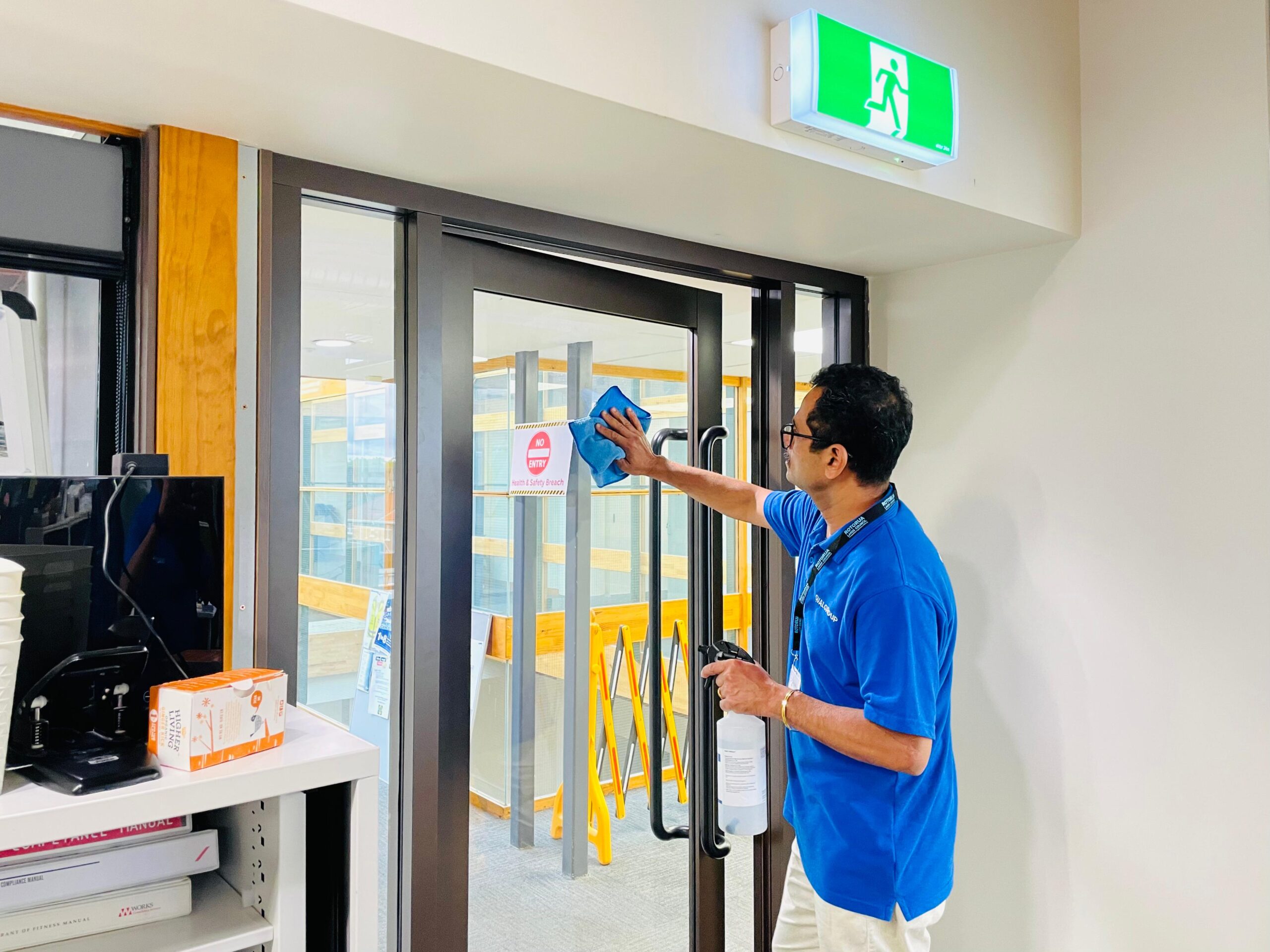
High-touch point cleaning is now non-negotiable in NZ workplaces.
These are surfaces touched hundreds of times a day:
Door handles
EFTPOS keypads
Taps
Toilet flush buttons
Shared office equipment
Light switches
Furniture
Computer equipment
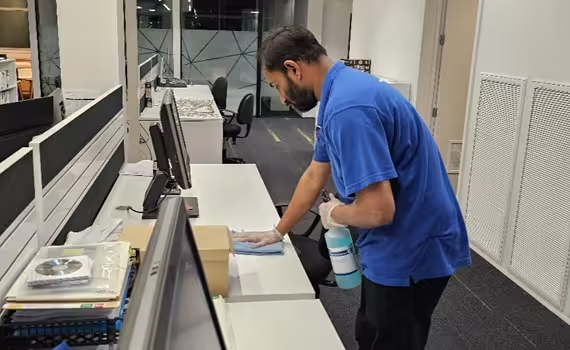
HTP cleaning reduces the spread of infection — particularly in busy environments such as retail, early childhood centres, healthcare, and multi-office workplaces.
As discussed in our article on post-COVID hygiene, HTP plays a critical role in preventing and controlling infections. Healthcare facilities require highly regulated, medical-grade disinfection to prevent infection spread.
Recommended Frequency
HTP surfaces should be cleaned and disinfected at least once or twice a day, with increased frequency in high-traffic environments or during periods of elevated illness.
In offices and public facilities, high-touch points—such as door handles, lift buttons, and shared desks—may need attention every few hours, while items or equipment should be cleaned after each significant use.
Spot Cleaning: Daily Touch-Ups
Spot cleaning refers to quick, targeted cleaning throughout the day to remove recent dirt and maintain appearance. Incorporating daily cleaning tasks is essential for maintaining hygiene in commercial environments. It is important to focus on high-use or high-risk areas during spot cleaning to ensure effective hygiene and operational efficiency. Regular spot cleaning prevents areas from becoming dirty and helps maintain a clean, professional environment. Cleaning helps reduce the spread of germs, allergens, and bacteria, improving overall employee well-being. Spot cleaning plays a key role in maintaining hygiene between scheduled deep cleans.
Common spot-cleaning tasks that require daily attention
Wiping fingerprints from glass
Spot vacuuming visible debris and high traffic areas
Cleaning counters or spills
Touch-ups in kitchens or break rooms
Unloading the dishwasher
Spot mop floors
While full toilet cleaning is not considered part of spot cleaning, it is still included in the daily cleaning routine.
Recommended Frequency
Spot cleaning tasks should be done daily to maintain a professional, welcoming appearance and prevent minor issues from becoming bigger problems.
Full Cleaning: Scheduled Weekly or Multi-Weekly Cleaning
Full cleaning covers a complete, structured clean of your workplace based on an office cleaning schedule, which includes:
Weekly cleaning tasks and weekly tasks, such as deeper cleaning activities that may not require daily attention but are essential for maintaining hygiene
Vacuuming all floors, with a focus on using professional or industrial-grade equipment as part of weekly cleaning routines to maintain carpets and floors
Mopping hard floors
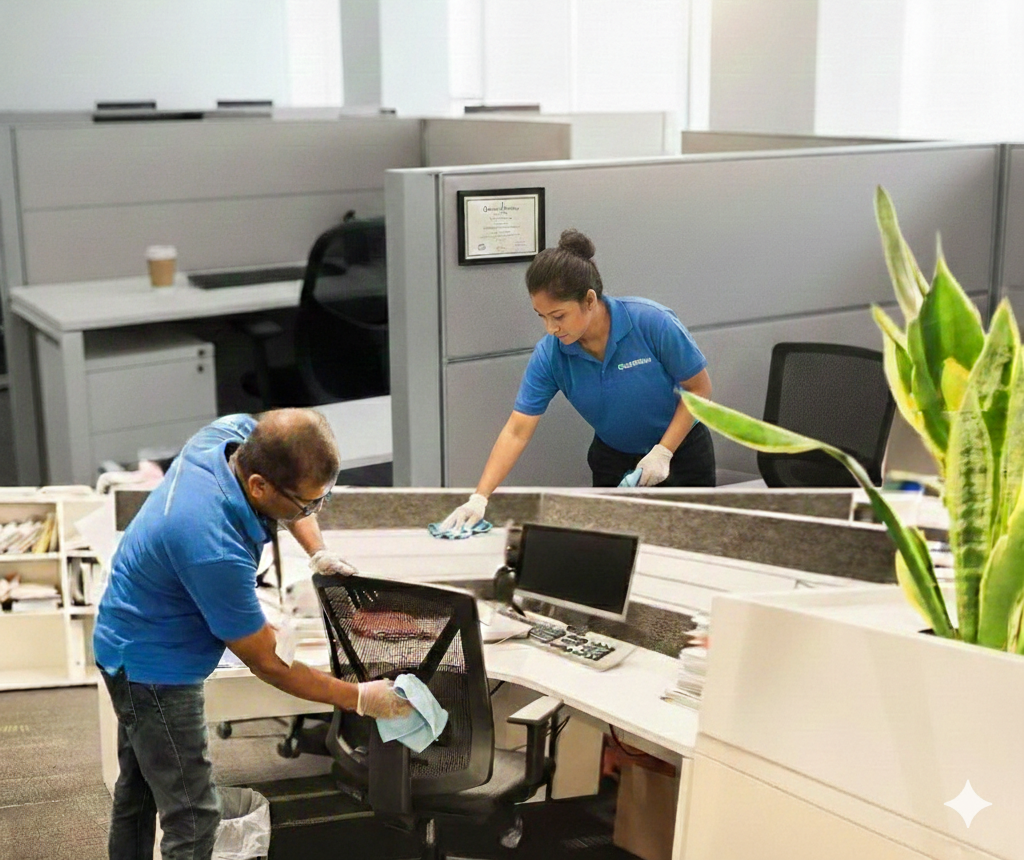
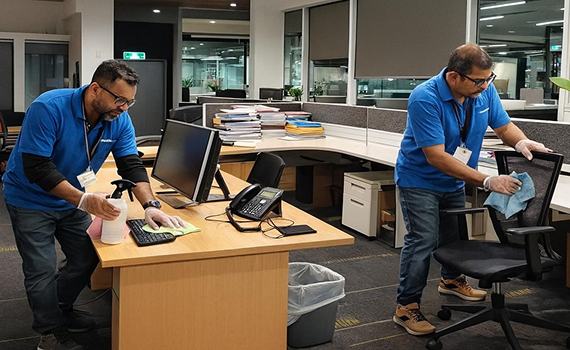
Cleaning desks and horizontal surfaces
Cleaning window sills
Washroom servicing
Kitchen cleaning
Rubbish removal
Recommended Frequency
Most medium-sized workplaces (20–80 staff) choose 2–5 times per week, depending on foot traffic.
Deep Cleaning: Monthly or Quarterly
Deep cleaning targets areas that accumulate grime, bacteria, and hidden dirt over time. Monthly cleaning, including scheduled monthly cleaning tasks and monthly tasks, is essential for maintaining high standards of hygiene and organization. Monthly cleaning tasks require more time and specialized equipment to ensure long-term upkeep of office spaces, especially for deep-cleaning areas that are not addressed in daily routines.
Deep cleaning includes:
Machine scrubbing hard floors
Machine buffing or burnishing
Carpet encapsulation cleaning
High dusting
Kitchen degreasing
Bathroom descaling
Wash curtains, fabric décor, and thoroughly sanitize washrooms as part of the deep cleaning process
Many of our clients in Rotorua often face sulphur staining due to geothermal activity. For these workplaces, we recommend periodic deep scrubbing with specialised chemicals and approved tools to restore surfaces safely.
Recommended Frequency
Standard office: Every 6 months
Busy office: Every 3–6 months
High-traffic environments (e.g., retail): Every 1–3 months
Sensitive industries (e.g., healthcare, food) need more frequent and thorough deep cleaning to maintain health standards.
Seasonal deep cleaning
QualGroup uses the Christmas shutdown to complete deep office cleaning tasks such as floor polishing, carpet cleaning, tile and grout cleaning, and window cleaning — so your team starts the new year in a clean, healthy environment.
Restorative Maintenance: Annual Care
Restorative cleaning protects long-term workplace assets such as floors, carpets, and fittings.
Annual cleaning tasks include:
Recommended Frequency
Restorative maintenance cleaning should be considered at least once a year. This reduces long-term costs and preserves property value.
How to Determine Cleaning Frequency for Your Business
Every workplace is different — so your cleaning plan should be too. When creating a commercial cleaning schedule, consider:
Key factors
Staff numbers – more people = more cleaning
Customer foot traffic – high traffic increases germs, spills, and visible wear
Industry type – healthcare, childcare, hospitality, and educational facilities require stricter NZ hygiene standards
Location – ground-floor sites gather more outdoor debris
Client visits – customer-facing areas must be maintained daily
QualGroup uses a structured Cleaning Activity Level (CAL) framework to tailor cleaning plans to risk, occupancy, and operational demands.
Common Pitfalls in Cleaning Frequency
Without a structured plan, businesses tend to:
Over-clean low-risk areas (increasing cost)
Under-clean high-touch or high-risk areas
Ignore deep cleaning, leading to asset damage
Skip documentation, creating compliance risk
Reporting, Documentation & Accountability
A professional cleaning provider should track and document all work through:
Digital cleaning logs
Hazard reporting
Incident records
Supervisor audits
Before/after photos for deep or restorative cleaning
If your provider can’t show you what was done and when — that’s an issue.
How QualGroup’s High-Performance Cleaning (HPC) Optimises Frequency
QualGroup’s HPC system ensures that cleaning frequency is:
Evidence-based
Cost-efficient
Aligned with NZ hygiene standards
Auditable and transparent
Using medically inspired workflows, colour-coded systems, fluorescent auditing, and monthly quality checks, HPC ensures every task is done at the right frequency — not too much, not too little.
This results in:
✔ Lower long-term costs
✔ Better hygiene
✔ Fewer complaints
✔ Consistent, measurable cleaning outcomes
Ready to Build a Smarter, More Cost-Efficient Cleaning Schedule and Cleaning Checklist?
A clean and tidy office presents a professional image to clients, visitors, and employees. A clean and tidy working environment can improve employee morale and lead to increased productivity.
A structured cleaning plan isn’t just a hygiene strategy — it’s a business efficiency tool.
If you’re unsure whether you’re over-cleaning, under-cleaning, or simply paying too much…
Speak to QualGroup today for a free commercial cleaning audit and a customised cleaning plan tailored to your business.
Or compare your current provider to our 7-stage High-Performance Cleaning (HPC) process for better hygiene, greater efficiency, and greater long-term value.
Maintaining a clean, healthy workspace is a fundamental aspect of running a successful business.
Take control of your workplace hygiene and efficiency—let QualGroup help you clean smarter, safer, and more cost-effectively